So. Here we are. Winter storage starting August 23! When, as it seems, the best sailing season in the Mediterranean should actually be just around the corner. If only! Maybe it used to be that way. Sometime in the past. Back then! Or have we perhaps just become too sensitive? We, who met while sailing on the Baltic Sea in late November at minus 8° C. Without any heating on board! We, who used to set sail on the Flensburg Fjord in late March while it was snowing. We, who weathered a storm with wind force 11 between Bora Bora and Tonga. Are we getting old—or are we already old?! Unthinkable! And of course, we don’t think so. Nevertheless, here we are now in Cartagena, Spain. One or two of you might have shaken your heads. But honestly, we feel quite comfortable with our decision. No weather-related stress, no outrageously high harbor fees, no risk to us, Lucky, or La Ola. Instead, we’re looking forward to new discoveries in the area, meeting new people, and new boat projects. So let’s go! Let’s start with the simple things. It’s time to do laundry. We ran the first load right after we arrived in Cartagena. The second one the next morning. The bedding is a very, very urgent priority. Despite the air conditioning, we’ve let so much sweat soak into the fabric over the last few days that it doesn’t exactly smell great anymore. The tablecloth on the cockpit table also needs washing urgently. But only if you know what to look for. The Portuguese patterns are—let’s just say—very forgiving of stains. If you don’t know that, you won’t notice anything at first glance. But on the second or third glance, you certainly will. And of course, we know exactly which stains we caused. So before we start growing mushrooms on the tablecloth, it needs to be washed as soon as possible, too. We defrost and clean the refrigerators and the freezer and dispose of any spoiled food. The pantry shelves suffer the same fate. Luckily, the amount of food that needs to be thrown out is manageable. On the plus side, we find things we’ve been missing for weeks. Next exciting task: vacuuming! We do it more often, of course, but somehow it looks dirty again right after we’re done. This is partly due to the laminate flooring, which simply attracts dirt and won’t let it go. It’s also partly because of Lucky. We don’t hold it against him, but in these hot temperatures, it feels like he sheds his entire coat every single day. On top of that, he’s constantly dragging little cat litter pellets around. They just get stuck between his paws and fall off at random—but evenly distributed—spots. Not to mention the dust. It’s constantly floating around. Fine, wafer-thin dust, like from an hourglass. It settles as a blanket over everything inside and outside the ship. So it’s time once again to scrub, vacuum, mop, and wipe. Life on board is tough!
OK, all joking aside. The first few days in Cartagena just blend into everyday life. Nothing exciting to report. No adventures to speak of. But in the end, La Ola is back in presentable shape. Everything’s clean, everything’s tidy, and everything’s ready for the winter season. By the way, the wind is howling right past our ears. Sails are flapping, the rigging is howling, and there’s definitely a lot of activity in the marina. Thunder rumbles and a few raindrops fall. It’s nothing too bad, but you can imagine how uncomfortable it would be out there at anchor. And when you look at the news and pictures from other parts of the Mediterranean, we definitely made the right decision to head for this safe harbor. A meteorological tsunami in Mallorca and Menorca, flash floods in Tarragona, flooding and landslides in inland Spain, a tornado in southern France, and a subtropical cyclone moving from the Azores across Portugal and Spain. This is likely just the beginning of a late-summer period of extreme weather influenced by the Super El Niño year.
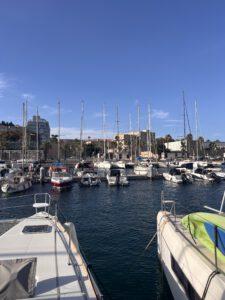
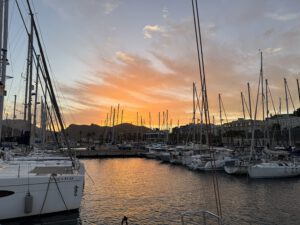
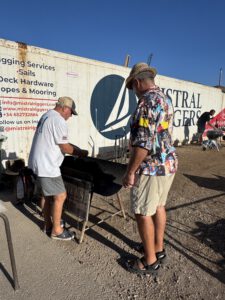
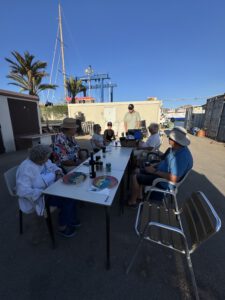
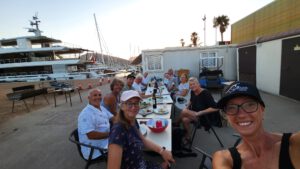
Now that La Ola is back in perfect working order, we can once again devote ourselves to the finer things in life: shopping! Finally, we can receive packages again. Amazon and the like had practically written us off as customers. Not a single order for several months! And now, within just a few hours, we’re getting a flurry of orders. The wish list is long, and we’re working our way through it slowly but surely. Of course, we’re also hopping on our bikes again to do some in-person shopping. We’re visiting Lidl, Carrefour, and the slightly farther-away El Corte Inglés. We’re restocking our onboard supplies. Plus, it’s time to make new social connections. Cartagena has an active liveaboard community with its own Facebook group. We join the group right away, of course, and are already right in the thick of things. Every Sunday, everyone meets for a barbecue behind the marina office. Everyone brings something, and each person pays one euro for the charcoal. It’s an international crowd, and everyone gets along great. We’re also making more connections through Trans-Ocean, Ocean-Posse, and NoForeignLand—and, of course, the evening marina walk. That’s a definite plus when you’re traveling on a boat! Where else would you be able to meet so many new people so quickly on land when you move?!
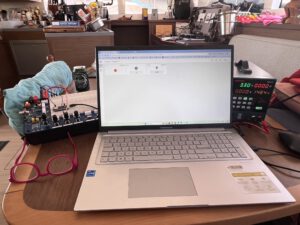
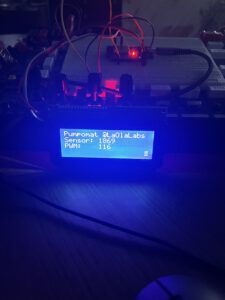
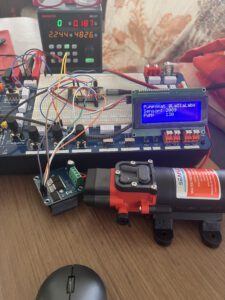
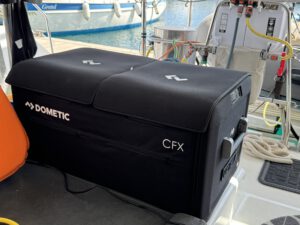
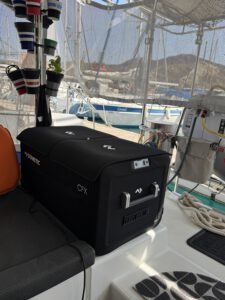
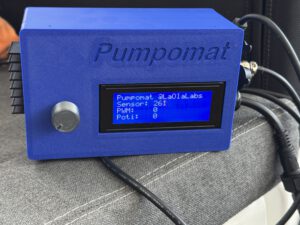
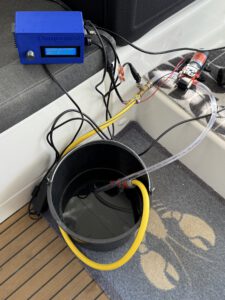
Yes, and we’re getting started on the first winter projects and renovations. The air vent from our air conditioner in the owner’s cabin is too loud. So Axel has come up with a sound-absorbing design that should significantly dampen the noise. However, this requires building a box, and we don’t have the right tools or the necessary furniture-making skills. Thanks to the marina staff, we quickly find a carpenter. He takes a look at the situation and gives us a quote. The 40 x 60 cm box is supposed to cost a whopping 1,500 euros! No gold trim included! Shocked, we look for alternatives and find what we need. Online, custom-made, and in walnut veneer, we get a suitable box for 150 euros. A tenth of the price—you can’t complain about that. We order the box, and it’s scheduled to be delivered sometime within 30 days. Will it look good then? We’ll see! We also want to expand our cooling capacity and order a Dometic compressor cooler. We’ve seen our friends Julia and Paul using one on Spisea and have always been envious of their supply of chilled drinks. We don’t just want to use the cooler for drinks; we also plan to store our fruits and vegetables in it in the future. At 35°C, most things from the supermarket start to go bad after just a few hours—literally. And Axel has started a new, very extensive 3D-printing project. Not only is he printing parts, but he also has to program a control system and order and install various prefabricated components. So he’s basically unreachable right now, lost in thought deep within some engineering drawings and electronics tinkering. Let’s see what it turns out to be in the end—and whether the thing actually works!
Last but not least: We’re planning a little vacation back home! Axel’s parents are celebrating their iron wedding anniversary—65 years!!! That’s really something special, and we always love coming to Germany to celebrate. Plus, after three years, we’re finally planning a week-long vacation again. And yes, I can hear the indignant outcry pretty clearly. “But you guys are on vacation all the time!!!” No, we’re not. We just live differently than others. But we don’t go on vacations. We live on the road and are always traveling. Anyway, so now—after a long time—we’re taking a vacation again. We spent our last vacation with our friends Andrea and Pit in Champagne in 2023. Our next vacation will take us into completely new territory! Something we’ve never done before! But more on that when the time comes. In any case, we’ll be in Bremen from late November through early December. We’d obviously love to see more than just family at the iron wedding anniversary celebration! Maybe we’ll even manage to meet up with a friend or two?! A visit to the Bremen Christmas market is definitely a must. It’s just too bad that we’ve gotten rid of almost all our warm winter clothes by now. Let’s hope it doesn’t get too cold.

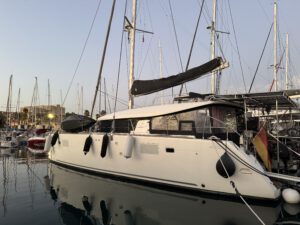
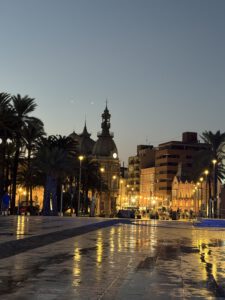
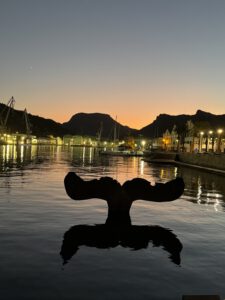
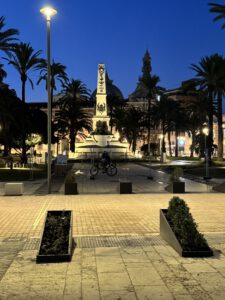
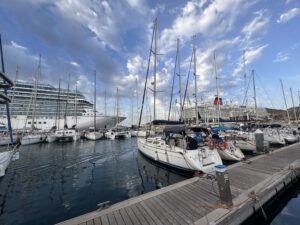
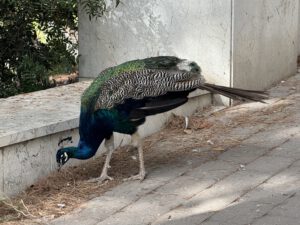
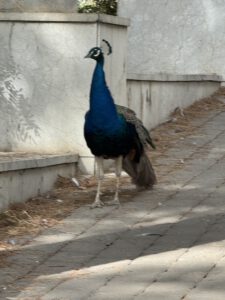
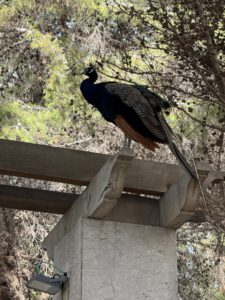
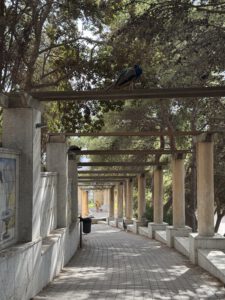
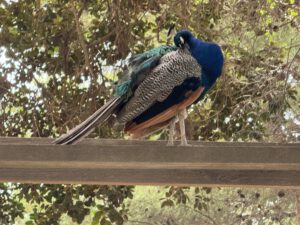
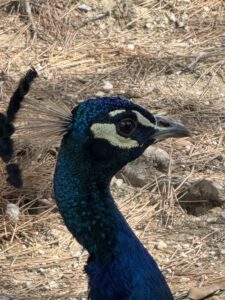
After just a few days, there are already a few distinctive features that set Cartagena apart for us. For one thing, there’s the deep hum behind us. It’s not constant, and it never happens at night. It doesn’t start until the early morning hours. It’s not bothersome, but we wouldn’t mind if it went away. Apparently, it’s the same during the winter months. That’s when there’s only the occasional cruise ship around to cause the hum. There’s another sound we know all too well from the Daverden Mill: peacock cries! At the mill, it was very bothersome and quite annoying at night. Here, the peacocks roam freely in Parque Torres and are far enough away that their cries aren’t bothersome. And they make for a lovely sight there, too. A distinctive smell also wafts through the harbor from time to time. As soon as we entered Cartagena, we spotted some strange-looking cargo ships and quickly checked to see what they were. On the bright side, they’re also cruise ships—though not for people, but for animals. Livestock carriers, to put it more realistically. And the smell that wafts through the harbor every now and then from one of the freighters suggests that cows are the passengers/cargo.
Meanwhile, the weather continues to keep us on our toes. Thunderstorms and rain bring not only turmoil but also red Saharan sand onto the deck. Unfortunately, it can’t be simply rinsed off anymore; instead, it has to be laboriously removed with a high-pressure washer. And we, too, get hit by a meteorological tsunami. We don’t notice it in the marina in Cartagena, but on the surrounding beaches, the water recedes and the authorities issue a swimming ban. They also warn people not to stay near the water in case it returns quickly with strong currents. Fortunately, nothing else happens, and the commotion was for nothing.
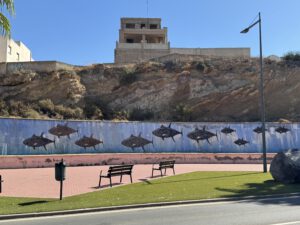
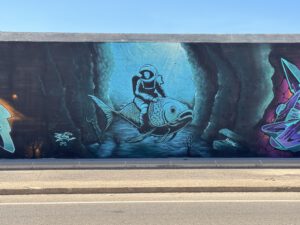
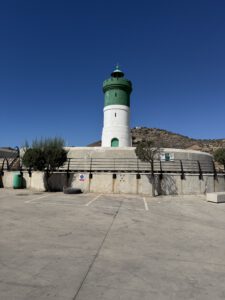
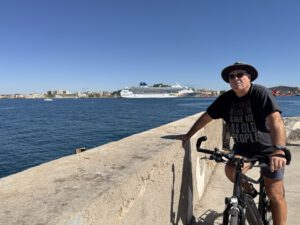
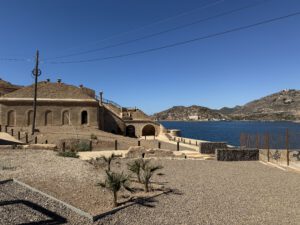
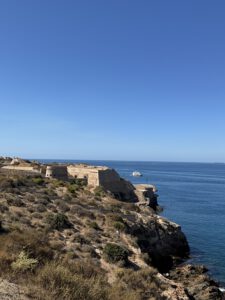
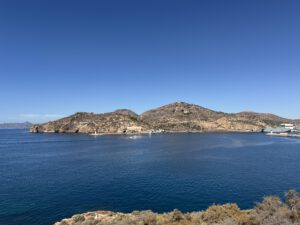
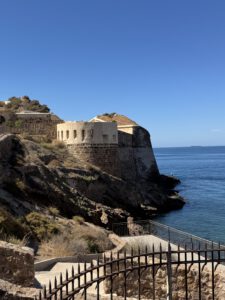
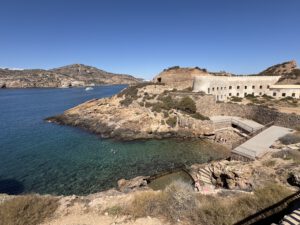
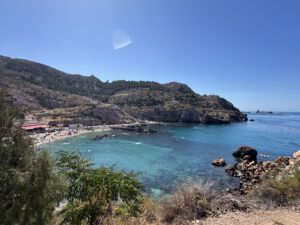
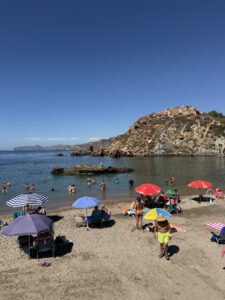
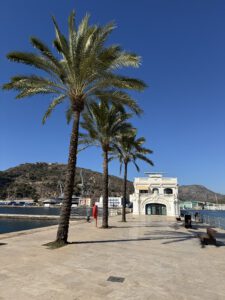
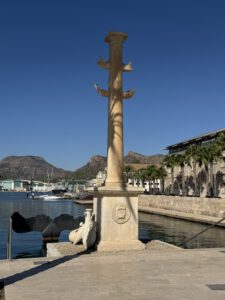
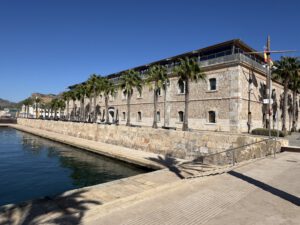
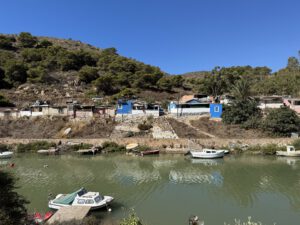
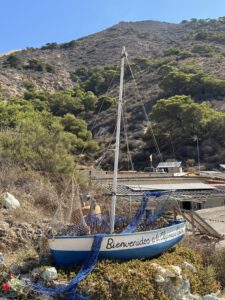
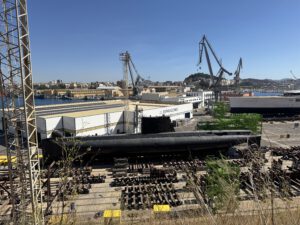
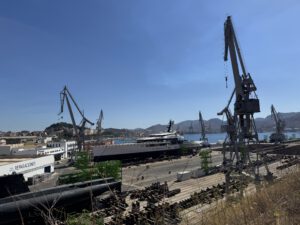
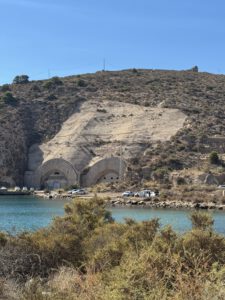
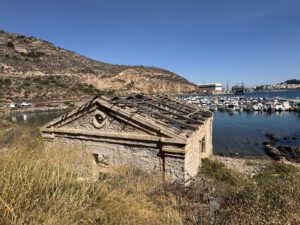
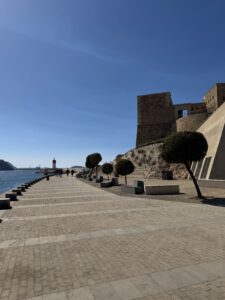
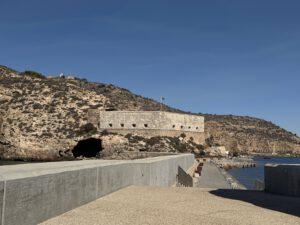
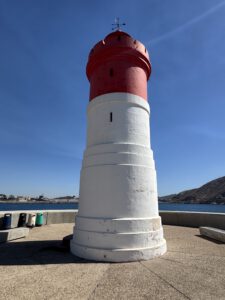
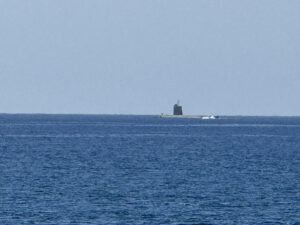
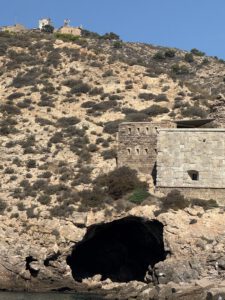
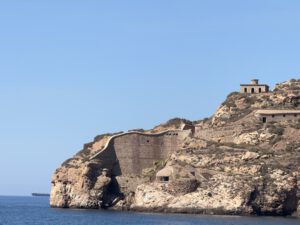
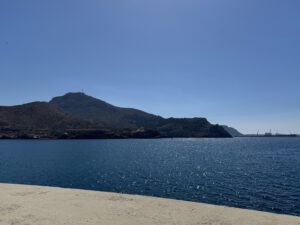
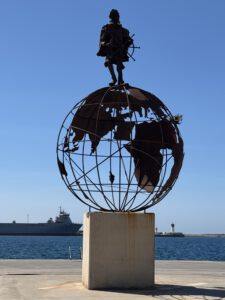
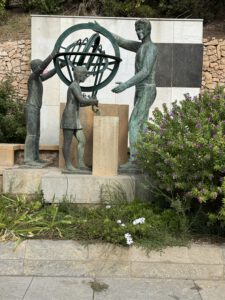
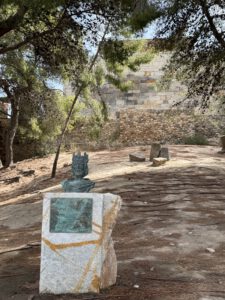
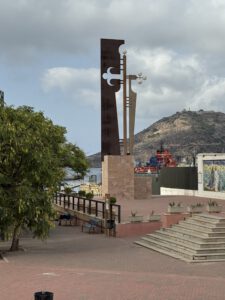
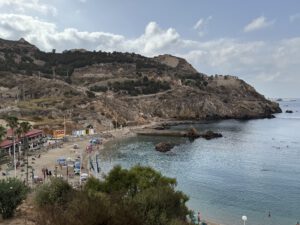
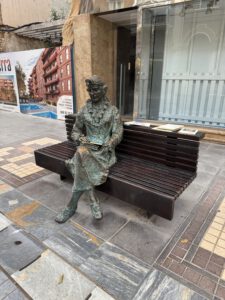
The unpredictable weather also has its advantages, as the temperatures are much more bearable. It cools down nicely at night, in particular, and we can sleep well again without air conditioning. And we can go on bike rides again without worrying about heatstroke. There are numerous bike paths, and we’re exploring the east and west sides of Cartagena Bay. There are countless fortifications and beautiful beaches that can be reached via a well-developed network of bike paths. We start by exploring the eastern side of Cartagena Bay and ride to the Faro de La Curra, which marks the starboard side of the harbor entrance. Along the pier leading to the lighthouse, a high wall protects against crashing waves. It’s decorated along its entire length with graffiti and murals, some of which are quite artistic. We continue along the coast, past the Batería de San Leandro, to the Batería de Santa Ana Acasamatada. The fortress is largely well-renovated and maintained, and a bike path runs right through the complex. In a small cove in front of the Batería de Santa Florentina, you can see a few swimmers in the crystal-clear water. A little further along, at Cala Cortina Beach, it’s significantly busier, though not overcrowded. Here, numerous beachgoers are splashing about in the water and have set up their umbrellas and chairs on the beach. We treat ourselves to a cold beer and a few tapas at the beach bar before heading back to the ship. The next day, we explore the western side of the bay. Walking along the harbor promenade, we first pass the Maritime Museum. We plan to visit it on a nice rainy day in winter. We continue past the military arsenal and finally cross the Puente de Quitapellejos and a rainwater canal that’s currently very dry. We follow the course of the canal and eventually reach the fishing village of La Algameca Chica. What we had imagined to be picturesque and charming unfortunately looks quite run-down and left to decay. So, disappointed, we turn around and drive back a short distance before heading toward Faro de Navidad, between Baluarte IX de la Muralla de Carlos III and the Navantia shipyard. From above, on the shipyard grounds, we catch a glimpse of the decommissioned submarine Tonina. It is currently being restored and is eventually slated to be displayed in the Túneles de El Espalmador as a new submarine museum. Next to it, we spot the 109-meter-long megayacht Brava Eugenia. It is currently undergoing a refit in Cartagena and reportedly belongs to billionaire and Dallas Cowboys owner Jerry Jones. After a short distance, we reach the former El Espalmador submarine base and catch a glimpse of the massive gates. They’re still locked, and there’s little sign of work on a museum. Unfortunately, the area in front of the gates is littered with trash. Apparently, word hasn’t gotten around everywhere yet that you shouldn’t just dump trash and plastic in nature. Unfortunately, we see this in many places throughout Spain. Nevertheless, people swim carefree right next to the trash, and surprisingly, the water is crystal clear. We pass the small El Chalet marina and reach the Fuerte de Navidad and the lighthouse of the same name. The red Faro de Navidad marks the port side of the entrance to Cartagena and, like its counterpart on the other side, is a popular gathering spot for anglers. Below the fortress lies the Cueva de los Aviones, where findings indicate that the area was already inhabited by Neanderthals 50,000 years ago. We head back into the city and pass by the sculpture of Capitán Alatriste. He looks like a character from a novel—and he is. Arturo Pérez-Reverte, a writer from Cartagena, made him the protagonist of his historical novels, sending him on numerous adventures in the 17th century. Before we reach the marina, we take a short detour to the cruise terminal. When there are no cruise ships there, it’s open to the public, and we can take a look at the monument to Juan Sebastián Elcano, who is considered the first person to sail around the world. A short while later, we’re back on board and looking forward to relaxing a bit in the shade.
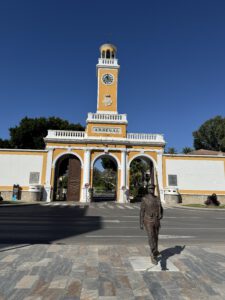
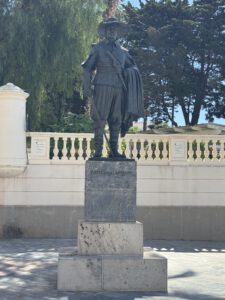
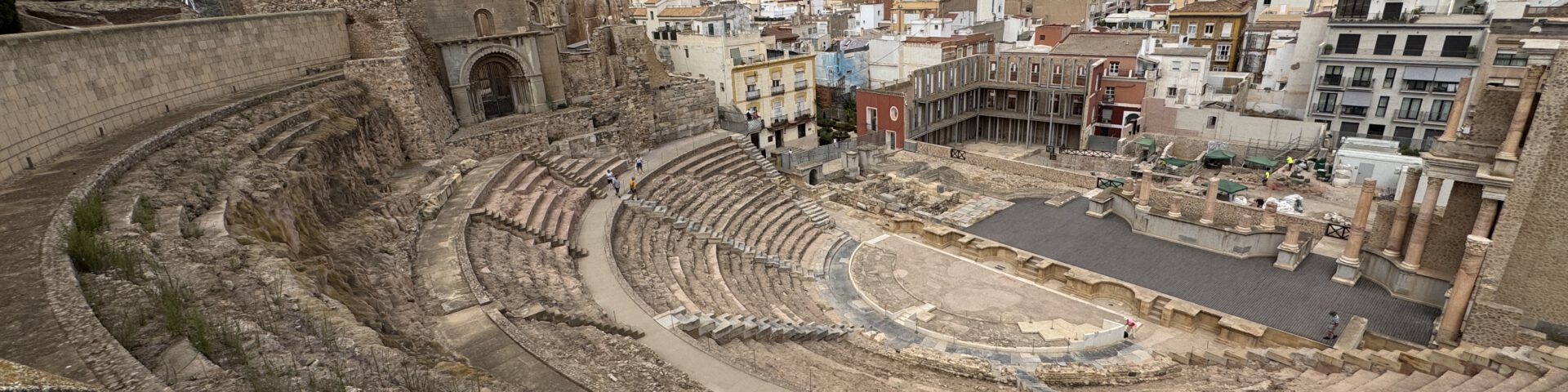
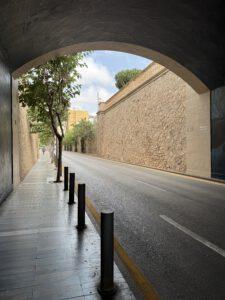
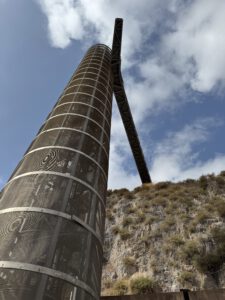
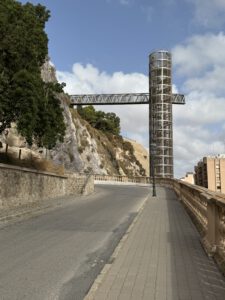
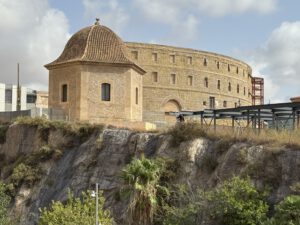
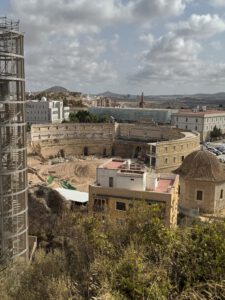
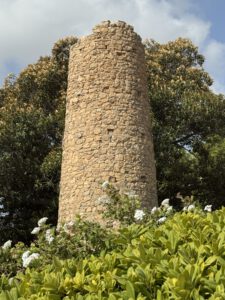
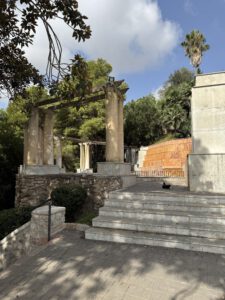
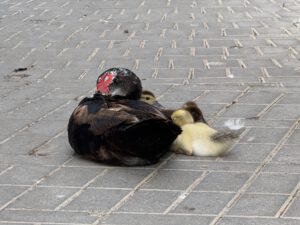
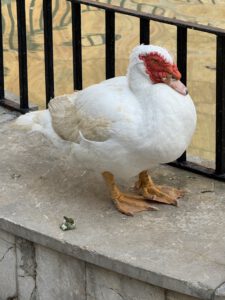
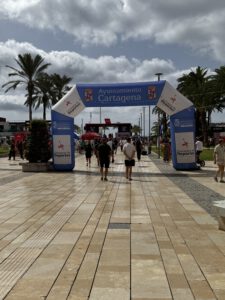
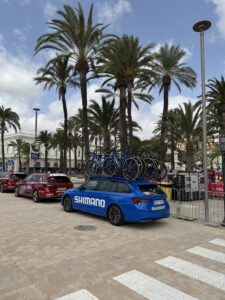
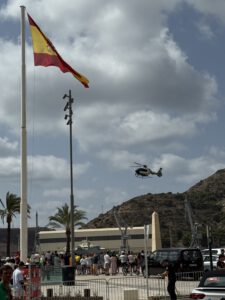
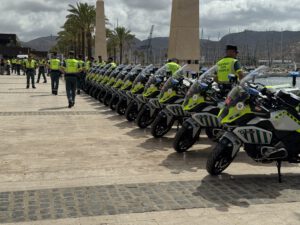
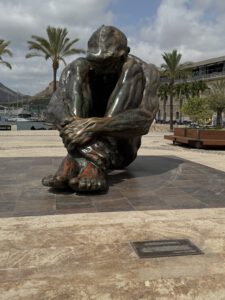
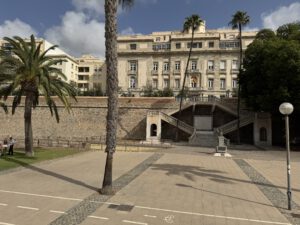
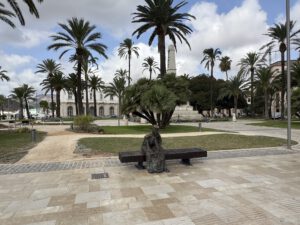
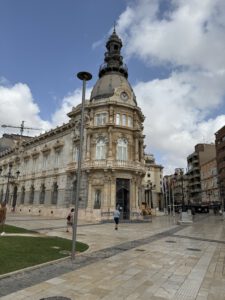
While Axel is working on his latest craft project, I take a short stroll through the city on September 2. I head through the tunnel toward the elevator to Parque Torres. I decide to skip the elevator and walk up the hill instead. It’s another sweaty climb, since temperatures have risen back above 30° C. Halfway up, I have a good view of the elevator—for which you’d better not be afraid of heights. I can also see behind the facade of the former bullfighting arena and the Roman amphitheater located beneath it, which is unfortunately closed for renovations at the moment. Panting slightly, I finally reach the park and am glad to find a bit of shade and a cooling breeze. Passing the 9th-century Torre Linternes, I head to the duck pond and continue along a pergola-lined path. There, peacocks sit on the beams or stroll along the path. They’re used to people and aren’t shy, but unfortunately, they don’t fan their tails either. I reach the Plaza Puerta de la Villa and already have a fantastic first view of the city and the harbor. A short walk uphill and I enter the medieval Castillo de la Concepción. I buy a ticket for 5 euros, which grants me an even better view. I walk through the grounds and cool off in the small, air-conditioned museum before heading back down the hill. Through the Puerto de la Villa, I reach the Teatro Romano. With so many ancient buildings and ruins clustered so closely together, it almost feels a bit like being in Rome. The theater has been well-restored and is very impressive to look at. Right next to it stands its more modern counterpart, the Auditorio Paco Martin. Maybe we’ll manage to catch a performance there in the coming weeks or months? Passing the ruins of the old cathedral, I reach downtown and come across a crowd of people, event tents, and a large stage at the Palacio Consistorial de Cartagena. It doesn’t take long to figure out that today, as part of the Vuelta—a cycling race across all of Spain—a stage is being held starting from Cartagena. We already know the teams from Vilamoura, but there’s definitely much more hustle and bustle at the starting line here. Various helicopters carrying film crews, dozens of motorcycle police officers, and numerous police vehicles and officers are on hand to ensure security. That’s a good thing, since Spain has experienced several terrorist attacks in the past. The huge bronze sculpture El Zulo, situated right next to the event site, serves as a reminder of this. I finally head back on board, where Axel is still sitting in front of his electronics kit, tinkering away. We prefer to spend the rest of the day in the shade and don’t move around any more than necessary. It’s too warm, and thanks to the very high humidity, it’s once again like an open-air sauna—without the steam.

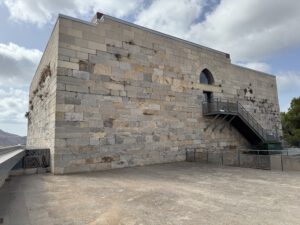
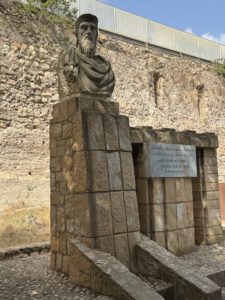
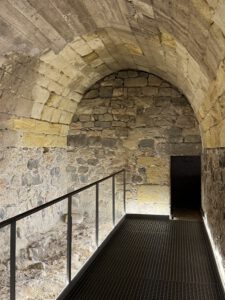
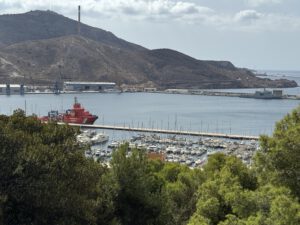
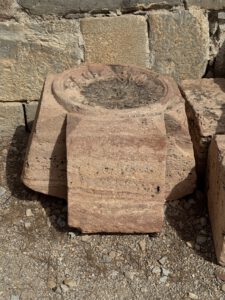
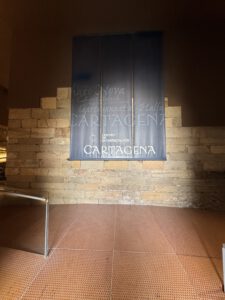

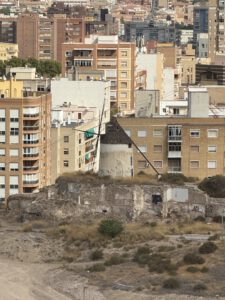
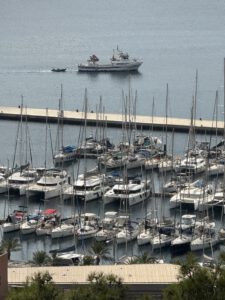
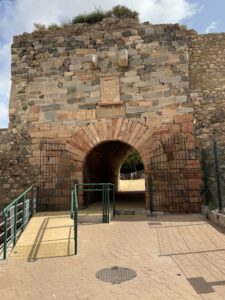
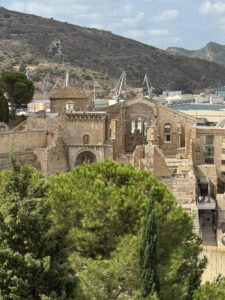
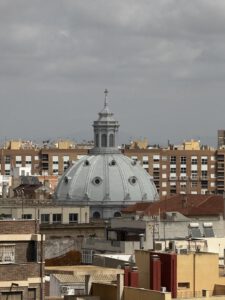
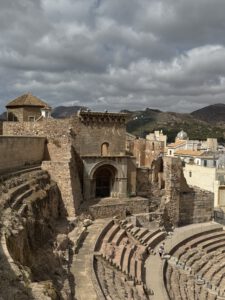
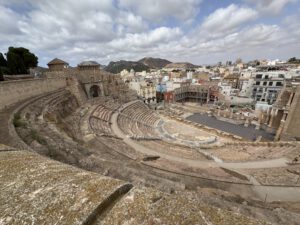
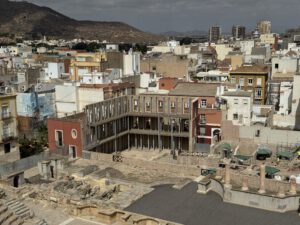
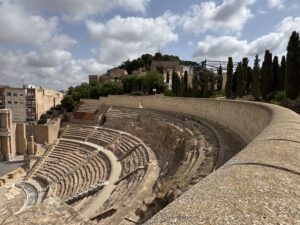
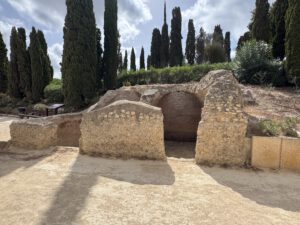
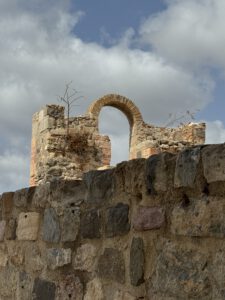
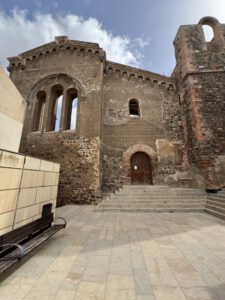
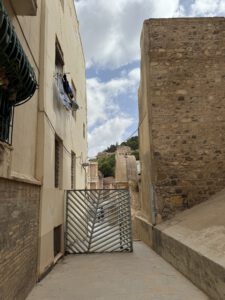
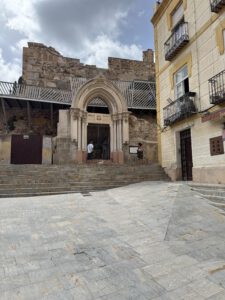
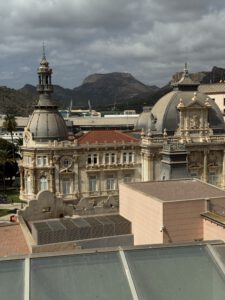
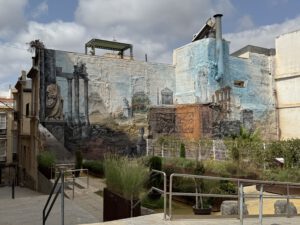
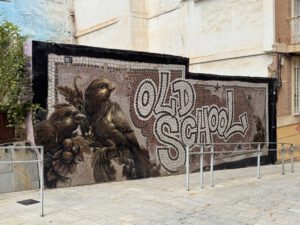
Unlike our last winter marina in Vilamoura—a large resort town with little historical significance—this year we have a berth in the heart of a city with a long and eventful history. The city was founded in 227 B.C. by the Carthaginian general Hasdrubal as Qart Hadasht (“New City”). It served as the main military base on the Iberian Peninsula for the Carthaginian general Hannibal (who led his elephants across the Alps) during the Punic Wars. In 209 B.C., the city was conquered by the Roman general Scipio Africanus. Under the name Carthago Nova (“New Carthage”), it flourished as a center for silver and mineral mining. The Roman Theater, among other landmarks, dates from this period. After the fall of the Western Roman Empire, the Byzantines briefly took control, followed by the Moors beginning in the 8th century. In 1245, as part of the Reconquista (“Reconquest”), King Alfonso X (“the Wise”) of Castile reclaimed the city for the Christian kingdom. In the centuries that followed, Cartagena temporarily lost some of its influence but remained an important defensive and naval port due to its strategic location on the Mediterranean. This is still evident today in the numerous fortresses and gun emplacements along the bay and the large military base. Beyond that, Cartagena stands out today as a tourist and cultural hub that combines its ancient archaeological sites with a maritime identity and a modern harbor atmosphere.
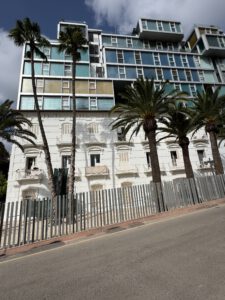
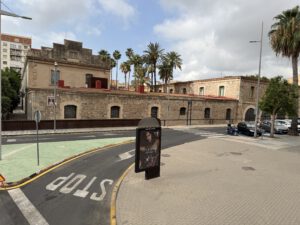
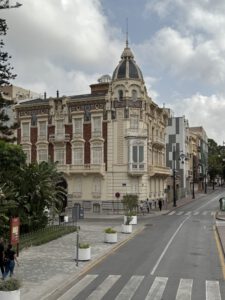
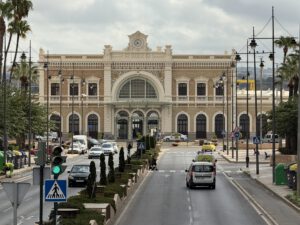
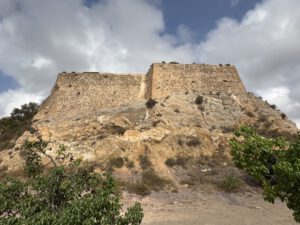
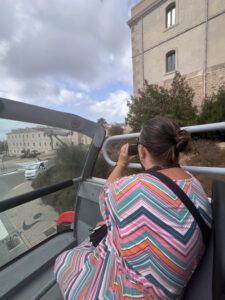
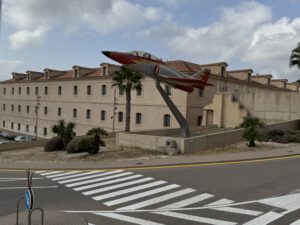
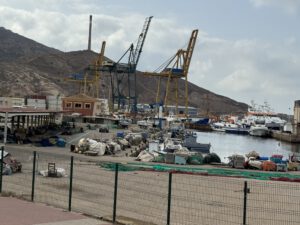
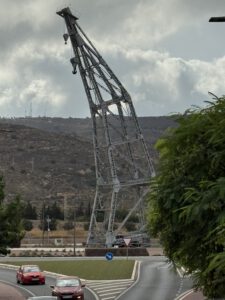
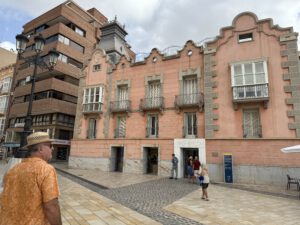
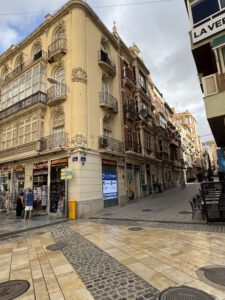
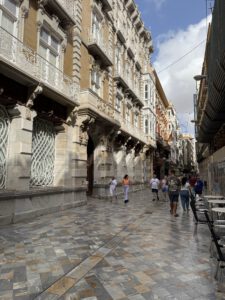
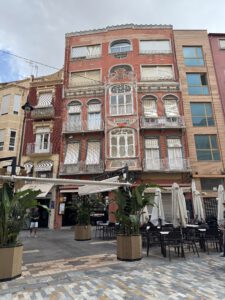
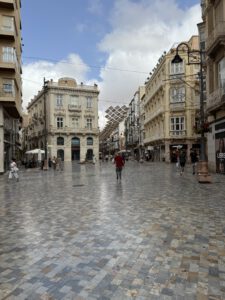
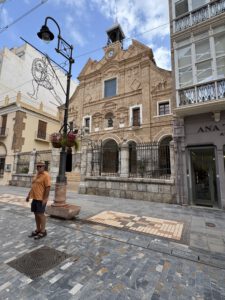
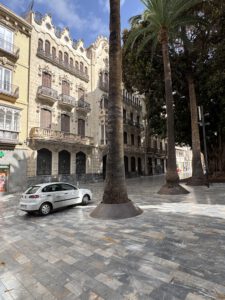
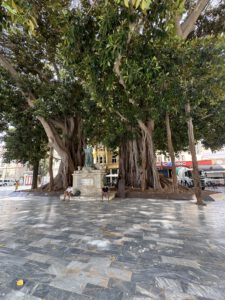
To get a general overview of the city’s sights, we book a city tour on an open-top double-decker bus for 8 euros per person. The bus departs just a few meters from the marina, so we arrive at the designated meeting point well ahead of time. We sit on a bench in the shade of a huge tree and wait. We’re supposed to be there at 9:45 a.m., but nothing is happening. The bus is supposed to leave at 10:00 a.m., but no bus is in sight. So we wait patiently—it’s our strong suit, after all—a little longer. At 10:10 a.m., something finally happens, and the ticket office opens. When we ask where the bus is, we’re told—with little understanding of the delay—“in 10 minutes.” We exchange our voucher—which we’d printed out as instructed—for two tickets. Given that we’d booked online and already received digital tickets, this was a somewhat cumbersome process. But at least the bus arrives, and we get front-row seats. Then we finally set off. We drive past the Maritime Museum and the Naval Arsenal, listening to a wealth of information through our headphones. Then, at Plaza de España, we turn onto the wide Paseo Alfonso XIII and stop first at a café. The bus driver jumps out to grab a breakfast roll. Why not? The tour continues, and we listen to the explanations about the various buildings. In the past, Cartagena was a center for ore mining, and the wealthy mine owners had large Art Nouveau villas and palaces built for themselves. Many of them are still in very good condition today, and some are open to the public. We pass the Military History Museum and the train station, which was also built in the Art Nouveau style. We’ve already had a chance to admire the magnificent train station building, since it’s right next to “our” Lidl. We continue past the Castillo de Despeñaperros. Next to an old barracks—which now houses part of the university—we can admire a CASA C-101 Aviojet, which was erected here as a monument to the military’s aerobatics squadron. Next is the former Hospital Real de Marina de Cartagena, which is also now part of the university. Behind it, we catch a glimpse of the old bullring and the Roman amphitheater located beneath it. Autopsies used to be performed in the domed building right next to it. The bus takes us on to the harbor. We follow the route we’ve already taken on our bikes, passing the fishing port and the container terminal. To our left lies the Santa Lucia fishing district. To the right is the statue of Santiago and a huge cross, which marks the starting point of one of the many pilgrimage routes to Santiago de Compostela. Passing the old floating crane—which now stands on a traffic circle—we head toward Cala Cortina Beach. We could get off here for a swim, but we stay seated and ride back into the city. At our starting point, we get off the bus at 11 a.m. and continue on foot for a short city tour. Since there are no pilgrims around, the city center is pleasantly empty. We walk along Calle Mayor and eventually turn right onto a side street. Somehow, there are amazing buildings, Roman ruins, and plenty of cafés and tapas bars to see around every corner. We resist the culinary temptations and eventually end up back at the marina. We arrive on board just in time to pick up our new cooler. We set it up in the cockpit, turn it on, and fill it up. To stock it, we quickly bike over to Lidl again and return with drinks and vegetables. By evening, we’re already enjoying chilled wine and are happy that we can now be self-sufficient in fruits and vegetables for a little longer. In the evening, we whip up a delicious pan of scampi and wind down the day comfortably in the forward cockpit.
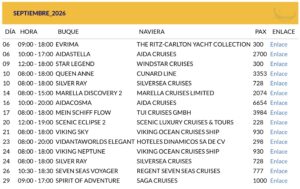
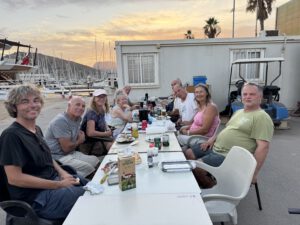
After five days without any rumbling, two cruise ships sneak in right away over the weekend. First up is the luxury option, the Evrima. Just 300 passengers. A four-day trip on that ship will set you back over 6,000 euros. And yes, that’s for the cheapest cabin, and the price is per person. But the ship makes almost no noise as it docks. So, pleasant neighbors. A little later, the AIDA Stella slips in just as quietly. It carries 2,700 passengers and is significantly cheaper. But even without that loud hum, it’s also okay as a neighbor. We go grocery shopping again. For a change, we go to Carrefour instead of our usual store, Lidl. We have pizza on Fridays, and on Sundays we have a barbecue with the other sailors. Rob and Sue always organize the barbecue. The crowd always includes both familiar faces and new ones—sailors from all over the world. Americans, Brits, Dutch, Belgians, Scots, and—!!!—Icelanders are there this time. You quickly and easily find out where to find what in town, who delivers what, and who repairs what. And if you’re ever in doubt, the person sitting next to you is often happy to help with your next project. Axel, for example, is thrilled that he’s found Guy, a Belgian who owns a 3D printing company, to help with his latest 3D project. And I’m getting tips on how to deal with those pesky mosquitoes and keep them away from me.

The new week is off to a relaxed start. Have we really been in Cartagena for two weeks already?! Surprisingly, I’m already looking into our next winter home. We had originally planned to spend the winter of 2027/2028 in Sicily. But somehow, the last few months have shown once again that we prefer to take our time and spend as much time as possible in beautiful places—and above all, we don’t want to be rushed by the weather. So we’ve decided not to sail quite as far next year and instead to look for a winter berth further north. The requirements for such a berth aren’t all that easy to meet. First of all, the berth has to be safe. Protected from bad weather and strong winter storms—but also from vandals and thieves. Then, the berth shouldn’t be too far removed from civilization. We’ll be staying on board, after all, and need shops and restaurants within walking or biking distance. And they should be open in the winter, too. A surrounding area with tourist attractions is, of course, also important, because we don’t want to just sit on board all day—we also want to explore the land and its culture. Our search initially takes us to Sardinia. We’ve heard many good things about the island and know sailors who’ve left their yachts there for the winter—though they’re stored on land. In Olbia on the east coast, there’s a good marina for this. However, its location isn’t quite ideal for us—it’s a bit outside the city and right next to the airport. In Cagliari, in the south, there are berths located right in the city. Unfortunately, though, last winter Storm Harry swept across Sardinia and destroyed jetties and yachts in Cagliari. So it’s not safe enough for us. Other marinas and harbors in Sardinia are out of the question from our perspective. Too unsafe, too expensive, and too quiet in the winter. So maybe we should take a look at the neighboring island of Corsica? But unfortunately, we don’t find what we’re looking for there either. Prices are exorbitantly high even in winter, and most marinas aren’t well-protected enough in our view. So we continue our search on the mainland. Southern France and the Côte d’Azur? The climate isn’t quite as good. We can’t afford Monaco. So, Italy? Liguria has beautiful scenery, but unfortunately, the prices are sky-high too. The search continues northward. Genoa and La Spezia seem too far north to us, and the climate isn’t ideal. The marina in Rome already has no space left for us the winter after next! But between Genoa and Rome lies Livorno. The “Venice of Tuscany.” Livorno is a large port city and, as such, bustling even in winter. And during last year’s winter storms, there was no major damage reported in Livorno. However, in September 2025, summer thunderstorms caused heavy rain and flooding. Pisa, Lucca, and Florence are located in the hinterland. Siena and the wine-growing regions of Tuscany are also easily accessible. I’ve found out that there’s a new marina there, located close to the old town. Not only is there plenty of space, but they also offer a good price for winter storage. Perfect! Now we can plan the next sailing season. Roughly speaking, we’ll head toward Barcelona first or go directly to the Balearic Islands. We’ll spend as much time as possible in the Balearic Islands before heading back to the mainland toward the Costa Brava. Then we’ll cruise along the French coast for a few months all the way to Italy. Whether we’ll make a detour to Corsica and Sardinia remains to be seen. In any case, we’ll be in Livorno starting in October. But, as always, sailors’ plans are just smoke and mirrors and are constantly subject to unexpected changes. And Madeira and the Canary Islands are supposed to be pretty nice, too… Hihi!
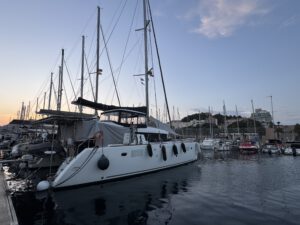
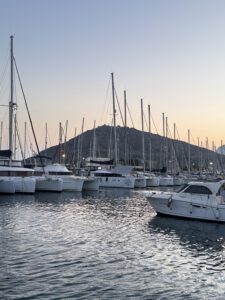
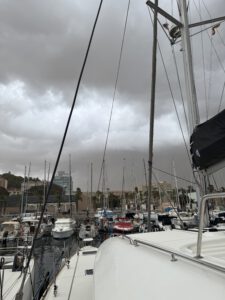
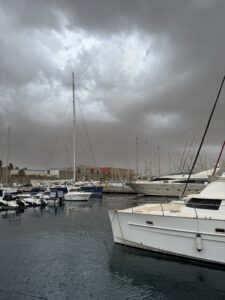
While we’re getting more and more comfortable in Cartagena, lousy weather is once again rolling in over the Mediterranean. Winds of 50–60 knots are expected to blow out of the Gulf of Lions and move on past the Balearic Islands. While Cartagena isn’t expected to get quite as much wind, heavy rain at 30 mm per hour is forecast. The “fun” might even be accompanied by hail and strong gusts. Just to be on the safe side, we’re preparing La Ola for all eventualities. The sun awnings are taken down. The mainsail is trimmed properly once more and secured firmly in the lazy bags. Our beanbags are moved into the cockpit, and the lines and fenders are checked once more. In the end, all we can do is wait for the weather to arrive. It takes until evening, but fortunately, it turns out to be more of a visual spectacle than the forecast had suggested. The sky turns an ominous black and a hazy yellow. There’s definitely hail lurking in the clouds. All around us, the hills vanish into a wall of fog. A few cold gusts howl over us, and it drizzles a little. But that’s all there is to it. No hail, no heavy rain, no storm. Other places around us, however, have been hit much harder. There are pictures of flooded streets and storm damage coming in from the regions of Valencia, Murcia, and the Balearic Islands. In the evening, we have a visit from Ninke and Jan from the catamaran Bridges. We met the two of them at a barbecue, and now we’re having a lively conversation about Lagoon catamarans in particular and sailing stories in general. Meanwhile, it’s actually raining a little harder, and hopefully the deck will get a good rinse.
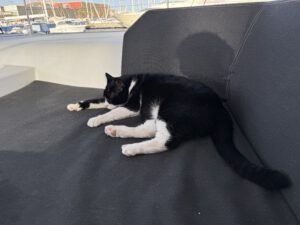
The next morning, the sun is shining again, and we’re woken up by the hum of cruise ships. Two of them have docked right behind us. Later that morning, Alexander from the sailboat Vision—a Sunbeam 53—stops by to say hello. So far, we’ve only been in touch via Instagram, but as of yesterday, they’re also in Cartagena for the winter, and of course we immediately start sharing some Sunbeam experiences. Afterward, Axel disappears into the boat to continue working on his project. Meanwhile, I rinse the remaining dirt off the boat, because unfortunately, yesterday’s rain only did half the job. What sounds like a small task turns out, once again, to be a job that takes several hours. The fine Sahara sand settles into every tiny crevice and sticks there. So I’m not just hosing down the boat—I’m dancing across the deck with a microfiber cloth tied to my foot. I spin pirouettes, draw circles with my big toe, and bend down every now and then for the finer details. All the while, I expertly switch our trusty Gardena spray gun between waterfall mode and triple-scrub jet. I rinse a brown sauce out of the cushions in the forward cockpit. As a “decoration,” fine cat hairs float out of the cushions onto the deck. Meanwhile, the cat in question is lying in the salon, hoping he won’t get washed too. Of course, he doesn’t, and in the end, everything looks good again. In the evening, we have a delicious salad, and afterward, we can enjoy the rest of the evening.
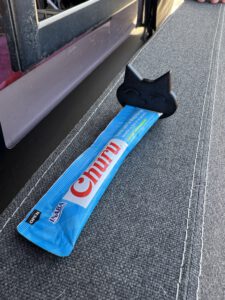
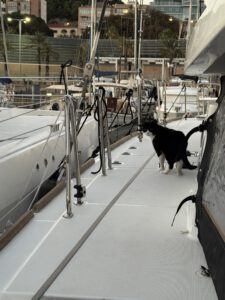
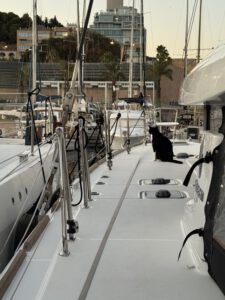
On Fridays, after breakfast, we head out on our bikes to go shopping again. Lidl has Oktoberfest items, so we stock up on wheat beer, white sausage, and pretzels. It’s a shame Lidl or Aldi doesn’t ever have “Northern German Days”! We’d love to stock up on North Sea shrimp salad, kale, and other Northern German specialties again. Instead, we grab some shrimp, aioli, and a baguette and enjoy them in the evening. Lucky is happy as always to get a few bites. He’s even happier that Axel printed him a squeezing tool for his cream treats. That way, not a single crumb is left in the bag. To our great surprise, Lucky has actually caught the bug for exploration after all! While we’re sitting in the Frobt cockpit in the evening, Lucky just walks right over to our new neighbor! Just like that! Well, we are moored pretty close together, and amidships, it’s just a small hop away. But as if it were the most natural thing in the world, he walks across the deck next door and pauses briefly to consider whether he should risk a peek inside through the open front window. Just then, however, the neighbors return, and Lucky decides it’s better to quickly flee back to “his” catamaran. But still! A first step has been taken, and we’re curious to see if he’ll eventually make it across the gangway to the dock.
The weekend is off to a leisurely start once again. Sleeping in, breakfast with eggs, and then reading the daily news from around the world. Not just the news on news sites, but also emails, WhatsApp messages, and other updates from friends, acquaintances, and relatives. A never-ending flood of messages that connects us to home. We stay in touch this way—not with everyone, but with many—and, of course, we’re happy about it. During our trip with Hello World, that wasn’t so easy back then. Back then, we didn’t have a constant internet connection, let alone WhatsApp, Facebook, or Instagram. This way, we can “be there” when our friends Teresa and Rob in Seattle finally get their Yohela back in the water after a refit. We’re there with our friend Hedi as she travels through Canada’s magnificent nature. We feel for Axel’s sister Anja as she sits on the couch with a broken metatarsal. We tag along with Torben as he plays golf, chuckle at Claudia’s philosophical thought of the day, or travel with Dietmar and Sönke to the Cannes Yacht Festival. And of course, so much more! We don’t feel like we’re far away—we feel close to everyone. Even if you might not even notice it yourselves. What we’re not so good at are birthdays. Unfortunately, we forget them on a regular basis and miss the chance to send our congratulations. However, it’s always been that way, and it doesn’t mean we don’t like someone anymore! Okay, enough rambling. Eventually, we’ll get our act together and take care of the dishes, the Saturday cleaning, and, of course, the boat projects. In the afternoon, we head over to the sailing yacht Vision for coffee, and for the first time in ten years, we’re sitting in the cockpit of a Sunbeam 53 again. Alexander, Jennifer, and the twins Valentin and Emil are unfortunately leaving Cartagena the very next day, since they have to return home for work. But if they come back next year, we’ve already casually agreed to meet up again.
The next two weeks are going to be exciting in Cartagena! Our friends from the Troll are coming, we’ll be meeting our friend Dietmar after 16 years again, and we’ll be diving deep into history. Of course, we’ll be reporting on everything!