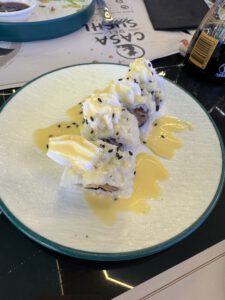
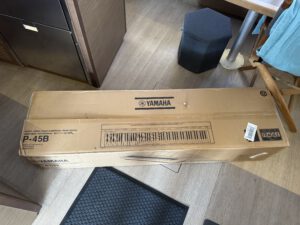
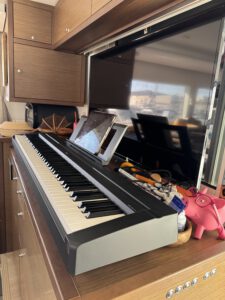
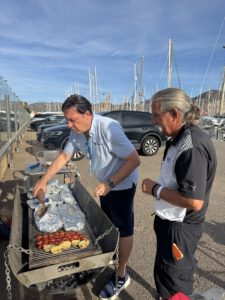
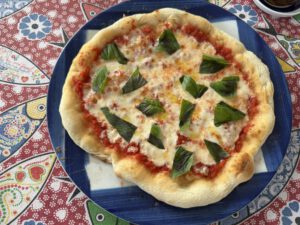
The next few days just slip by. On Sundays, we have barbecues with the marina residents and make new friends among other German sailors. On Mondays, it’s the usual boat routine: cleaning, doing laundry, and grocery shopping. Axel works on his—now quite varied—3D printing projects and boat improvements. In addition, our friends from the motor yacht Troll arrive in Cartagena, and Axel is happy to have Hildebrand as an experienced 3D-printing sparring partner. And I, too, have set myself a “project” for the winter—and probably for the next few years as well. Back in 2021, I tried to learn to play the piano—back then on a “real” piano. It was borrowed, and because of COVID, I had no teacher. It actually went quite well, but unfortunately my job back then didn’t leave me any time to really practice and make progress. Now that I definitely have the time, I want to give it a second try. Of course, a real piano—or even a concert grand—won’t fit on board La Ola. Too big and too heavy. But an electronic piano should be doable. So I’ll order one right away, and it’ll be delivered a few days later. That said, it’s shockingly big! But what can you do? We’ll just have to deal with it. I plan to learn using an app again this time. I’ve been doing that with my ukulele for the past two years, and the same app is available for the piano, too. Advance ticket sales for my first concert are starting soon! And hopefully with a bug-free ticket portal. When I bought a few tickets in Cartagena, I was actually asked for my sweet potato instead of my first name! Amid all these projects, there are also some less busy hours! We go out for sushi and enjoy pizza aboard La Ola with Brigitte and Kay from Kat Noa. New, very nice friends who are also spending the winter here. Culinary-wise, this certainly won’t be our last evening together!

Starting on September 18, we’ll delve deeply into the history of Cartagena. As previously reported, Cartagena was founded in 227 B.C. by the Carthaginian general Hasdrubal as Qart Hadasht (“New City”). During the Punic Wars, it served as a military base for the Carthaginian commander Hannibal. In 209 B.C., the city was conquered by the Roman general Scipio Africanus. Under the name Carthago Nova (“New Carthage”), it flourished in the Roman Empire as a center for silver and mineral mining. To commemorate the Romans’ takeover of the city from the Carthaginians, a major festival is held every September. And we’re right in the middle of it!
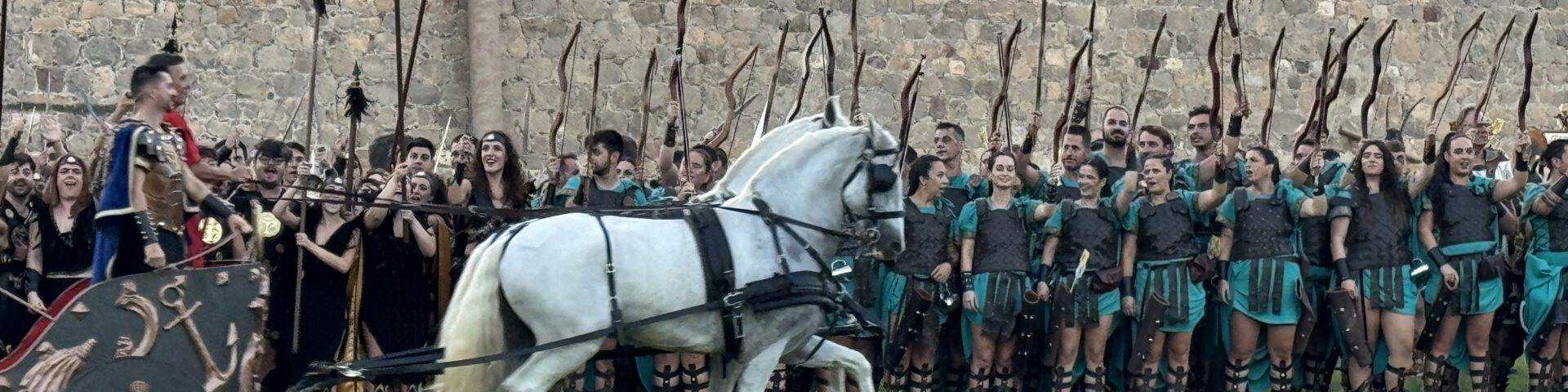
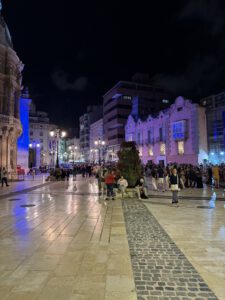
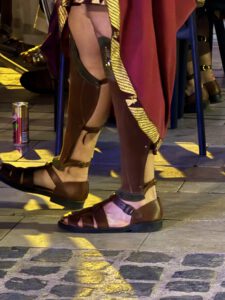
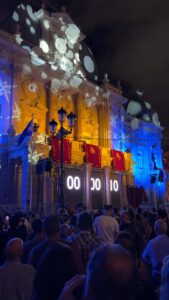
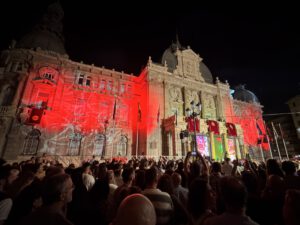
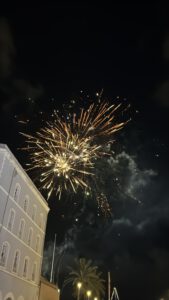
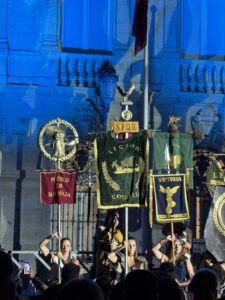
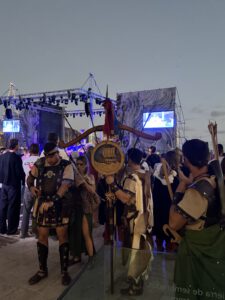
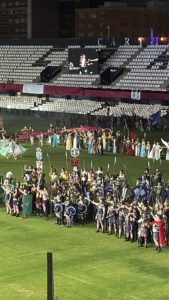
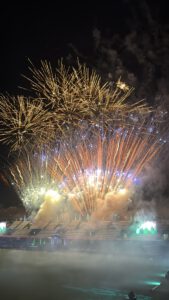
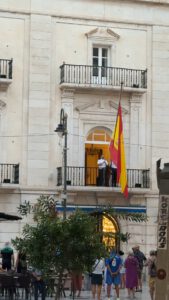
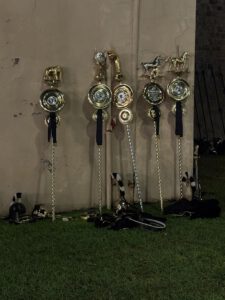
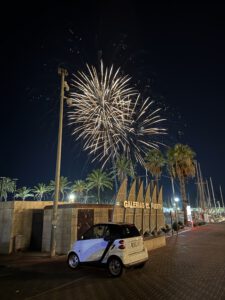
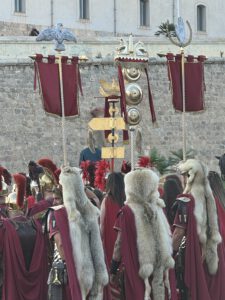
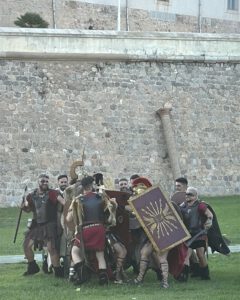
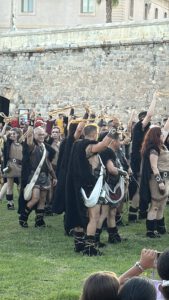
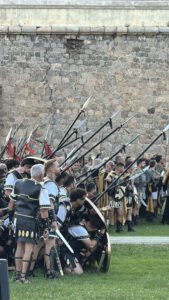
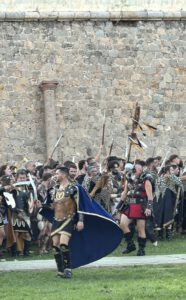
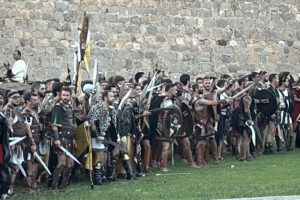
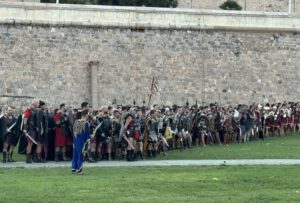
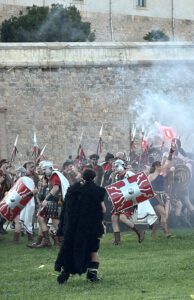
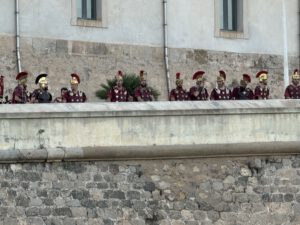
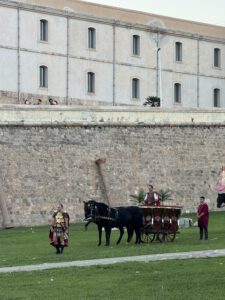
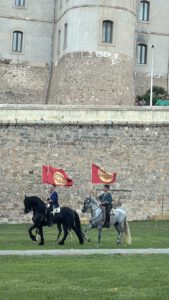
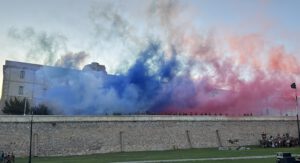
The program is varied and, according to the flyer, kicks off on Friday evening with the torch relay at the Roman Forum and the lighting of the sacred fire at the Plaza del Ayuntamiento. We only catch a glimpse of the torch relay, which had previously been carried through the Region of Murcia. Cannon salutes echo across Cartagena Bay, and the first fireworks go off. Together with Brigitte and Kay, we head to the Palacio Consistorial in downtown Cartagena right on time for the second event at 9 p.m. A crowd is already gathered there, waiting for the event to begin. Among them are plenty of Romans and Carthaginians in quite elaborate and very detailed costumes. The countdown begins, and the event kicks off with a rock-style performance by a band—also in costume. Next, the flame—which had previously been carried from the Roman Forum to the Plaza del Ayuntamiento—is ceremonially handed over, and, much like at the Olympics, a fire bowl is lit with the torch. It now blazes there until the end of the event. Another small fireworks display is set off right behind us. Afterward, the Roman and Carthaginian leaders are welcomed on the balconies of the Palacio. Carthage is represented by General Hannibal and his wife Himilce. Rome is represented by Cornelius Scipio and Emilia Paula—amateur actors, both adults and children. The program continues with a short performance, of which we unfortunately understand only fragments in Spanish. At the end, the standard-bearers of the Carthaginian troops and the Roman legions march in and are all introduced by name. There are 25 Carthaginian units, divided into Carthaginians, Iberian peoples, and inhabitants of Qart-Hadasht. The Roman legions—also numbering 25—are divided into civilian, military, and naval units. The troops and legions are organized by clubs, each of which owns a plot of land at the festival grounds and sets up camp there. At the end of the parade, there’s another fireworks display. While we walk back to the marina afterward, the festivities continue with speeches by government officials and a parade of the troops and legions through the city to the festival grounds, which are located a short distance outside the city near the stadium. We have one last drink with Brigitte and Kay at Noa and are able to admire the grand opening fireworks display from the cockpit. The Spanish just love fireworks!
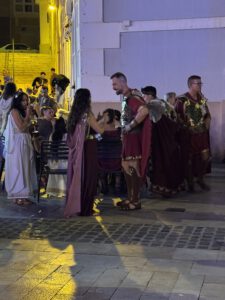
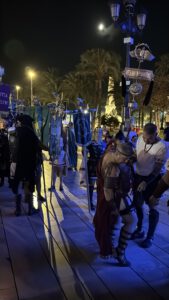
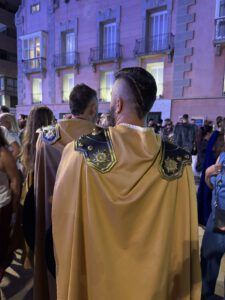
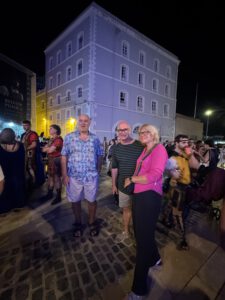
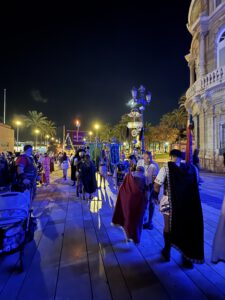
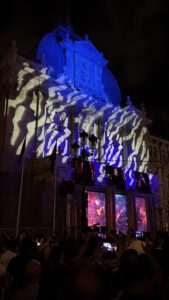
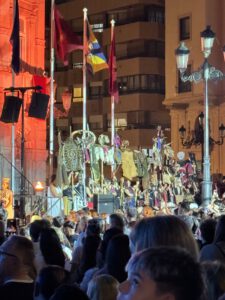
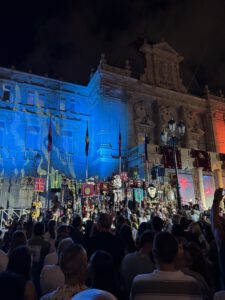
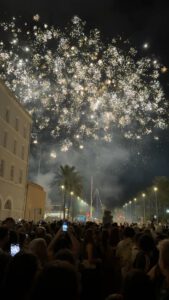
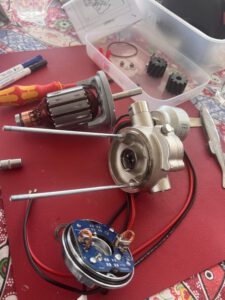
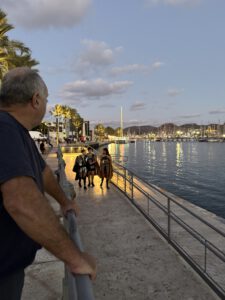
Thunderstorms break out during the night; rain patters down on the deck and continues all morning. Last night was long, and we have little motivation to get out of our bunks early. We don’t have breakfast until around 10 a.m., and even after that, we don’t immediately get caught up in any unnecessary activity. Annoyingly, the rain has not only washed a lot of dirt into the water but also brought some mosquitoes to life. Within a few minutes, I’m covered in bites, so I start by spraying myself with mosquito repellent. Then I head to the piano to practice. Of course, I’ve forgotten a lot over the last five years. But I don’t have to start all over from scratch either. I learned to read sheet music back when I was in preschool. That helps immensely, of course, because my brain has stored this knowledge deep down, where it can be accessed automatically. And I still have a little music theory from my high school graduation (I took music as a third subject) in the back of my mind. Yes, and the eye-hand coordination—between my left and right hands—still works pretty well, too. It’s just that my individual fingers don’t always find the right key right away. But, as the saying goes, practice makes perfect, so I’m getting better and more confident with every lesson. The learning app makes it easy, too—it challenges you without overwhelming you. I do feel a little bad for Axel every now and then, though, because I’m still missing a plug so I can practice silently. And the hundredth chord-changing exercise from A to E to C is maybe a bit annoying after all. Axel has been working on his project all day and is feeling desperate today. Everything was working just a moment ago, and now nothing works anymore. He ponders and ponders, but it’s only while preparing dinner (Caesar salad) that the solution occurs to him. A diode is missing. Small part, big impact. After dinner, we take a walk into town and watch part of the performance about the founding of Qart Hadasht along the harbor promenade. However, we don’t stick around to watch the subsequent raising of the Carthaginian flag at the Plaza del Ayuntamiento or the parade of Carthaginian troops through downtown to the festival grounds. And yes—there are fireworks again, of course.
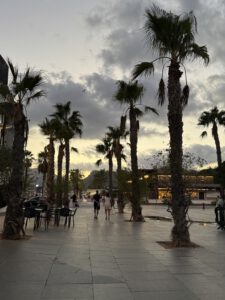
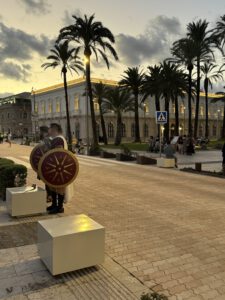
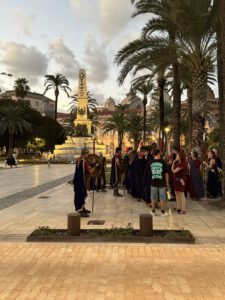
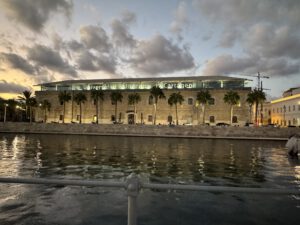
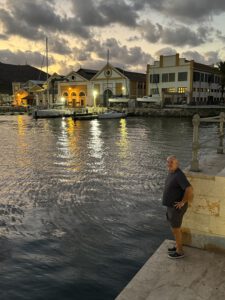
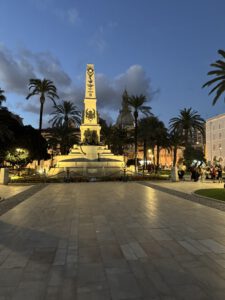
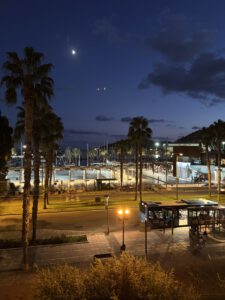
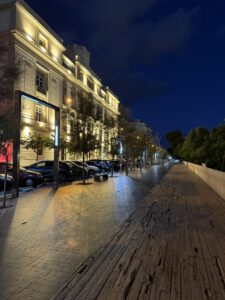
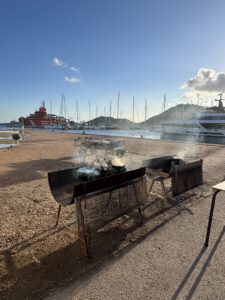
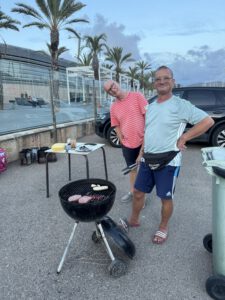
On Sundays, we take a break from the festival. On board, we work on projects and practice the piano. In the evening, we head out again for a barbecue with the other sailors. The group keeps growing, and by now we’re using two barbecue barrels. Even though we didn’t go to the festival, there are still fireworks to admire late in the evening. Lucky isn’t too thrilled about it, but he’s gotten so used to it by now that he no longer runs off to his cabin to take cover.
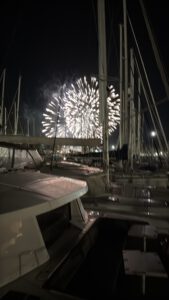
The start of the new week is quiet. We have muesli for breakfast and then ride our bikes to go shopping. We tidy up, do laundry, and then get to work on our projects. Axel solves his diode problem and immediately incorporates a few improvements. Hildebrand drops off some gears designed and 3D-printed by Axel. Not bad at all! I try my hand at “Ode to Joy” and eventually manage to play the piece with both hands and without any mistakes. OK, of course, only the beginner’s version, but still—after less than a week. In the evening at 9 p.m., the wedding of the young general Hannibal and the Iberian princess Himilce in 221/220 B.C. is reenacted. The marriage was originally political in nature, intended to secure an alliance between Carthage and the native Iberian peoples. According to ancient accounts, however, it allegedly developed into a deep, passionate love. And yes, of course there are fireworks again! Plenty of them, in fact. Afterward, the entire crowd makes its way back through the city center to the festival grounds—but, as always, without us. Instead, we sit in the cockpit for a little while longer and let the evening come to a leisurely close.
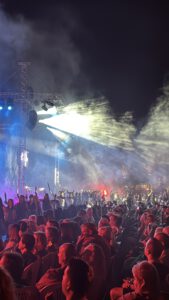
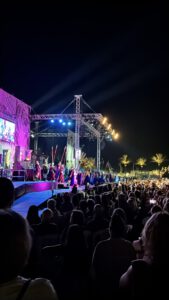
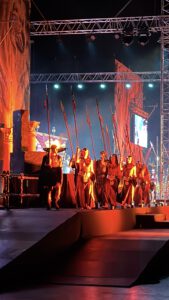
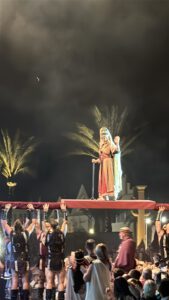
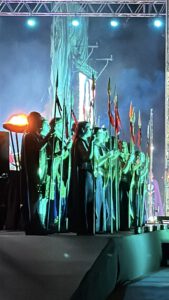
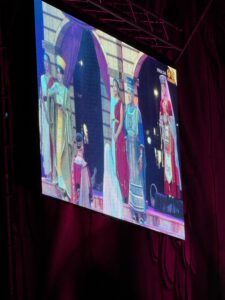
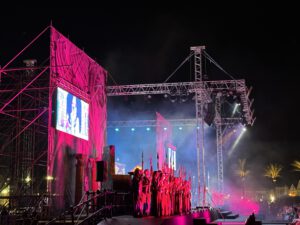
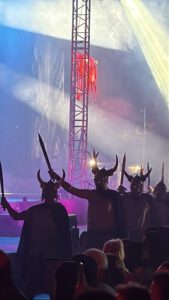

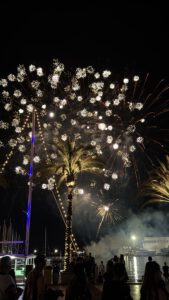
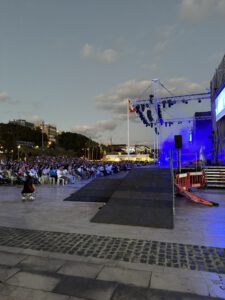
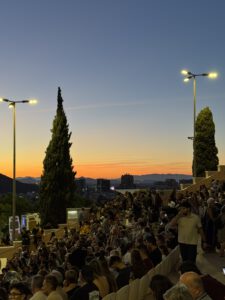
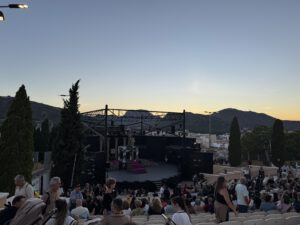
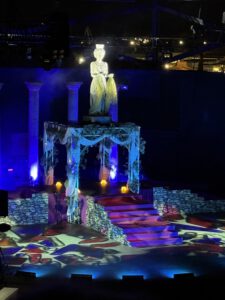
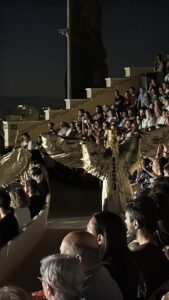
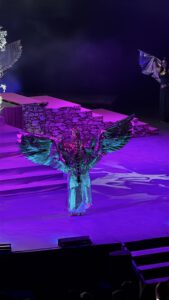
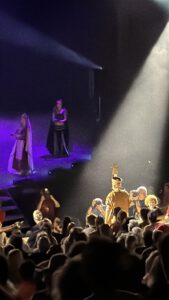
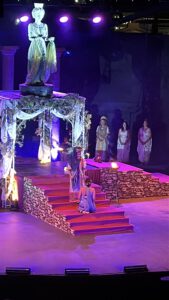
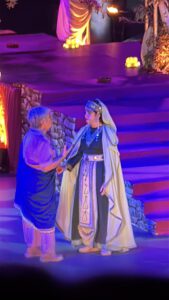
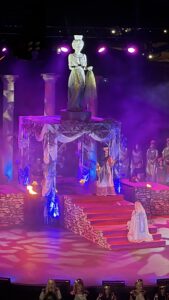
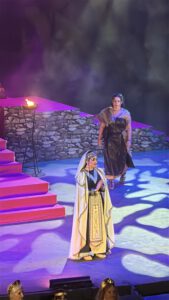
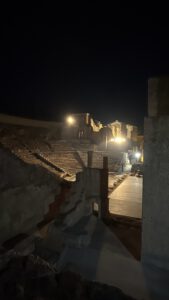
The next day, we finally ride our bikes to the market hall in Cartagena. Unfortunately, it’s quite small, and the selection during the week is limited. Maybe there’s more on Saturdays? The lines, however, are all the longer—which we’re certainly not thrilled about. So we move on without having accomplished anything and decide to shop at our usual discount store instead. In the meantime, the missing plug has arrived, and I could now practice the piano in silence—for everyone else’s sake—until I drop. No, of course I’m not quite that obsessed. And unfortunately, my app plays back the notes I play with a delay through my EarPods. That won’t do. So I need to connect wired headphones to the piano. We do have a pair, but unfortunately the plug doesn’t fit. So Axel quickly orders an adapter—partly for his own sake. And a few other things get taken care of as well. Maja from the Troll gives me a spare life jacket for kayaking. Now I can go on longer trips as well. Axel’s e-bike is also starting to act up and needs to be repaired—yet again. It seems Axel’s motor is slowly but surely breaking down too. What a piece of junk! Tonight, the historical theme continues. After the wedding of the Carthaginian Hannibal to the Iberian princess Himilce, the two seek divine counsel from the goddess Tanit. This time, the performance isn’t taking place on the harbor promenade, but at the Paco Martin Auditorium. So first I have to climb the hill and, panting heavily—I really need to work on my fitness!—make my way up countless steps. Once I arrive at the modern amphitheater, the rows fill up quickly. I get a nice seat and have a good view of the stage, as well as the numerous costumed performers and audience members. The event begins with a tribute to long-standing and particularly dedicated performers. Then things get magical. Accompanied by fitting music, angels appear, followed by the high priest, and finally the goddess Tanit herself. Tanit, by the way, was the highest female patron goddess of the ancient city of Carthage and a central deity in the Mediterranean region. She is first asked for advice by an old man, a young woman, and the general Hannibal. For Hannibal, she prophesies an uncertain future and that he must march toward Rome to fulfill his destiny. The old man and the young woman fare better. At least, if I understood it correctly with my limited Spanish. Amid a magnificent shower of fire, Princess Himilce finally appears and asks whether she, as an Iberian, may also consult the oracle for advice. She may—Tanit is there for everyone. However, Tanit also foretells a difficult future in this case, predicting the downfall of the city of Qart-Hadash and its conquest by the Romans. The whole spectacle is, of course, capped off with a spectacular fireworks display. Afterward, I walk past the ancient amphitheater and make my way back through the city to the marina. The city center is still bustling, and Romans and Carthaginians are casually lounging at the bar tables. Even after the events are over, the people here simply continue to live out history.
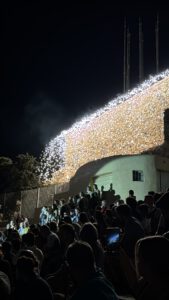
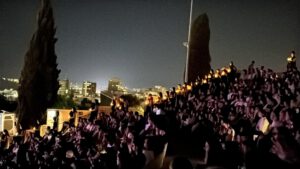
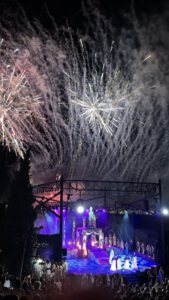

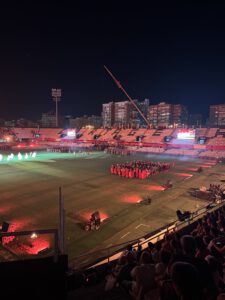
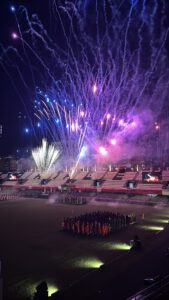
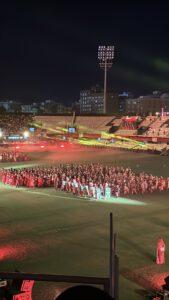
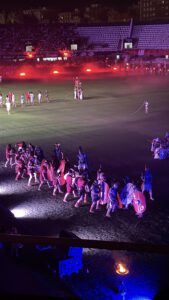
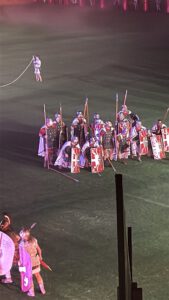
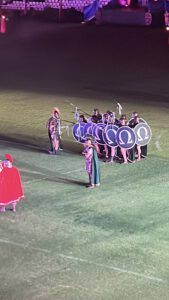
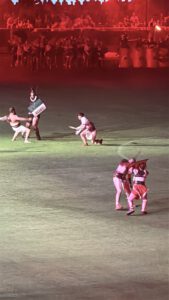
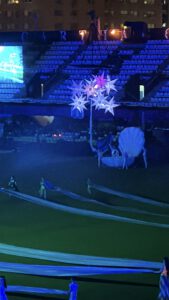
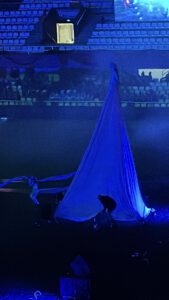
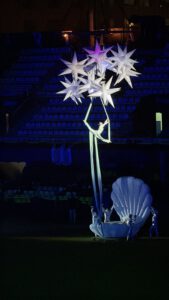
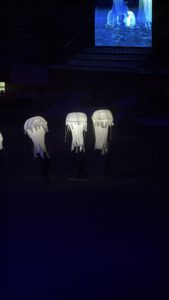
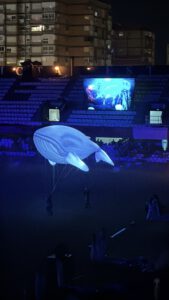
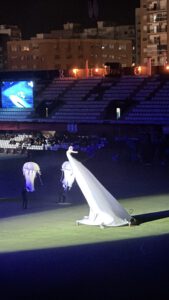
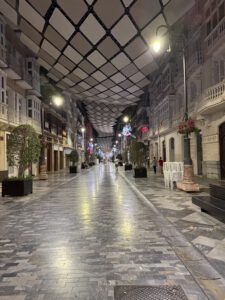
The start of fall! And the sun is waking us up under a bright blue sky. Right now, the weather is just the way we like it. It cools down at night, so we don’t need air conditioning to sleep peacefully without breaking a sweat. It warms up quickly in the morning and doesn’t get too hot during the day. Temperatures are still between 25 and 30°C, which we find very pleasant. It stays warm well into the evening, so you can sit outside in summer clothes until late at night. We’re taking advantage of the beautiful weather to wash our cockpit cushions. Even though we always try to put a towel underneath when we sit on them in swimsuits and bikinis, they’ve still gotten pretty soaked with sweat over the summer. But luckily, you can just rinse them off and scrub them down like the deck. Once thoroughly rinsed, all they need to do is dry in the sun. At 8 p.m., we set off for the soccer stadium. We walk straight through downtown to the city gates. At the stadium, the Circo Maximo is staging a grand spectacle from the days of Cartago-Nova—that is, the city’s Roman-occupied era. We grab a bite to eat beforehand at one of the many food stalls and then wait patiently until the lines at the entrance gates have cleared. Then we, too, enter the stadium and successfully find our seats in the upper tier. We managed to snag tickets for an incredible 7.56 euros per person. The spectacle begins with the march of the Roman legions and the obligatory fireworks. Then Luis Larrodera, a well-known Spanish TV host, takes the stage as the “Extranjero”—a character seeking to save himself from a death sentence by the Roman rulers through his performance—and guides the audience through the evening. The show begins with a football match, historically played without protective gear and featuring plenty of scuffles among the participants. Meanwhile, legionnaires practice sword fighting, defensive formations, and advancing as a unit in battle. This is followed by gladiator fights, staged realistically, and at the end, the audience gets to decide the gladiators’ fate. (In this case, the majority votes for the defeated gladiator’s death.) The Roman rulers are still not entirely satisfied with the program, so Luis promises to bring the sea god Neptune and the sea into the Circus Maximus. He succeeds in doing so. Waves ripple across the stadium turf. Glowing jellyfish, dolphins, and a whale swim about. Like seaweed dancing in the current, acrobats sway back and forth at dizzying heights. Another acrobat is hoisted up from a shell and performs an amazing rope act. And yes, Neptune himself also appears in the stands (easily recognizable by his trident!). After more dances, fire performers at the edge of the field, and what is presumably—if one had a better grasp of Spanish—a funny ship act featuring Luis, we are then allowed to vote on Luis’s fate. He’s lucky, and the audience liked it enough that he gets to stay alive. And true to the motto “bread and circuses,” we’re even handed a small cake at our seats in the stands. The spectacle ends, as it must in Spain, with a phenomenal fireworks display. To protect the natural grass in the stadium, by the way, no animals, horses, or chariots were used at this year’s event. We set off again on the half-hour walk through downtown on our way home. At 11:30 p.m., the city is indeed still bustling with life. People are sitting outside tapas bars, having one last drink, or simply strolling down Calle Mayor. Everything is brightly lit and spotlessly clean. This is how one would wish some city centers in Germany were, too. Just as we’ve gotten back on board, a cry for help suddenly echoes through the marina from the pontoon across the way. Someone is said to have fallen into the water and not resurfaced. We rush over, armed with a flashlight and a lifebuoy, and ask what happened. Fortunately, it quickly turns out to be a false alarm. The gangway had indeed fallen into the water, but fortunately, the person believed to be missing wasn’t on it and is calmly answering the phone when his wife calls him. Phew, we could have done without that “Much Ado About Nothing” drama at midnight. But better that than if something had actually happened!
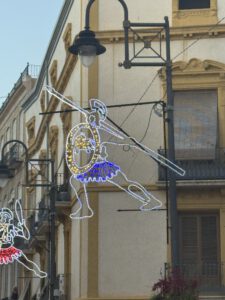
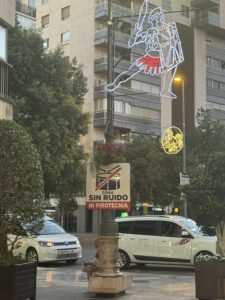
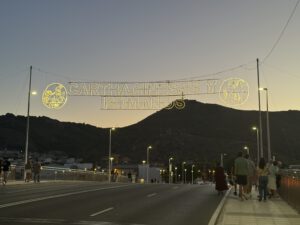

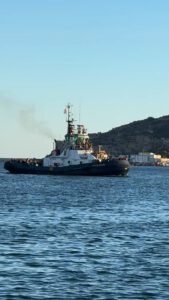
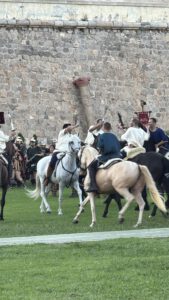
The next morning, we sleep in a little longer and aren’t woken up until we hear the loudspeaker announcements from today’s cruise ships. After a leisurely breakfast, Axel sets off on his bike to Decathlon. He’s booked an appointment there to have his bike repaired and hopes it can be done quickly. However, the bike first has to be sent to another location before they can provide a cost estimate for the repair. And only then will it be repaired. So once again, we’re looking at a few weeks without a bike. Since Axel no longer has a bike, Kay kindly picks him up by car and brings him back to the marina. Back on board, he takes his 3D printer apart and maintains it. So he’s ready to tackle his next printing projects. In the early evening, we head to the harbor promenade with Brigitte and Kay. Today, the Carthaginian fleet is arriving in the harbor. A large tugboat transports the troops to the Crusader Pier, and from there they march to the Plaza Mayor. While a reenactment of the recruitment of mercenaries for the battle against Rome is taking place there, we walk into town and enjoy some delicious tapas. As we do so, we watch the flag being lowered at City Hall and the Roman troops marching past. On the way back through downtown, we encounter mounted mercenaries and hordes of Carthaginians and Romans. At the Plaza Mayor, Hannibal is just setting out on his campaign toward Rome on the theater stage. There’s a small fireworks display, and while we’re still sipping a glass of cava in our cockpit, Hannibal leads his troops right through downtown to the festival grounds.
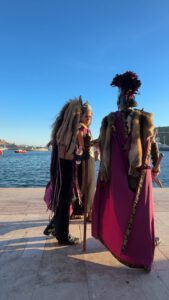
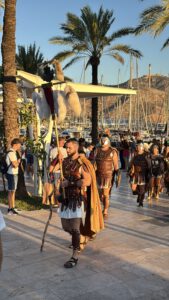
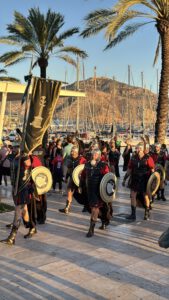
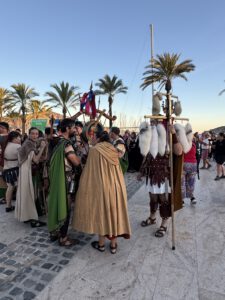
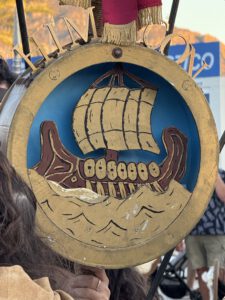
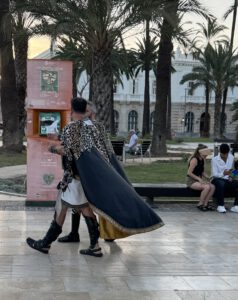
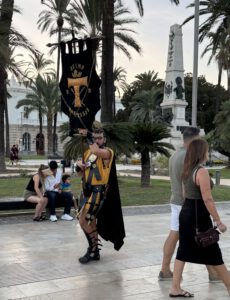
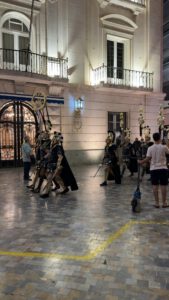
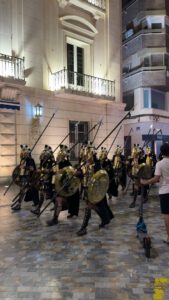
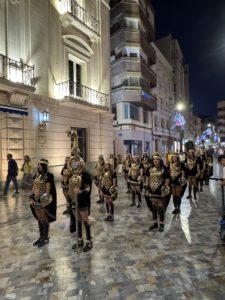
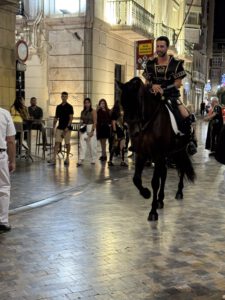
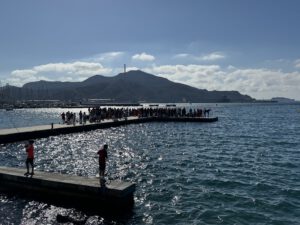
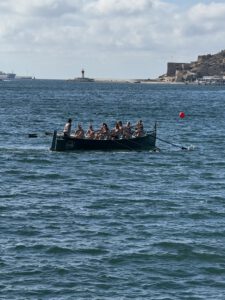
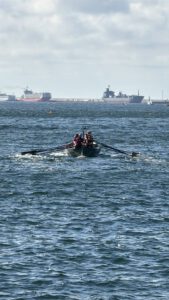
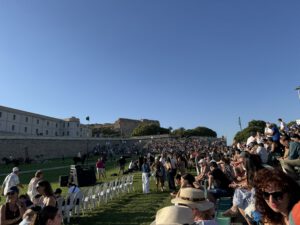
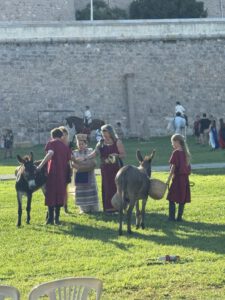
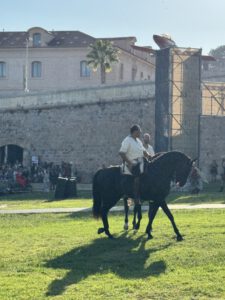
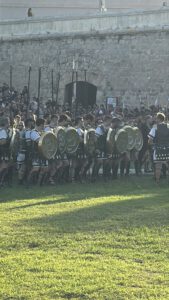
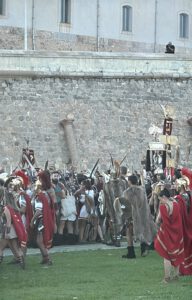
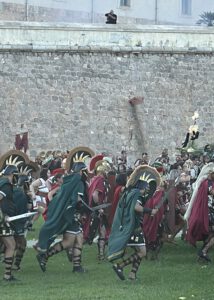
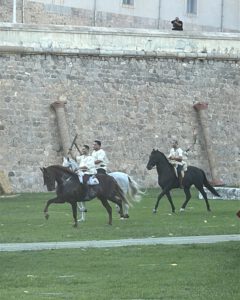
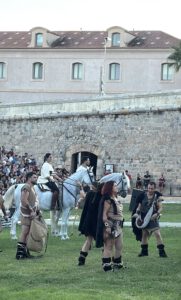
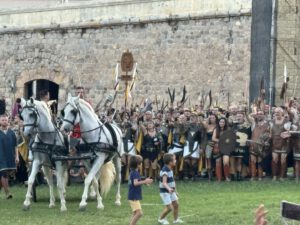
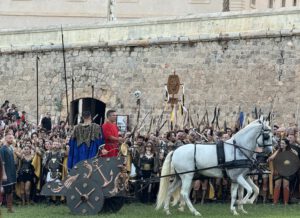
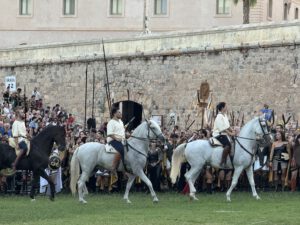
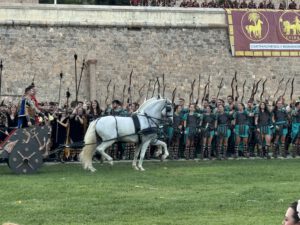
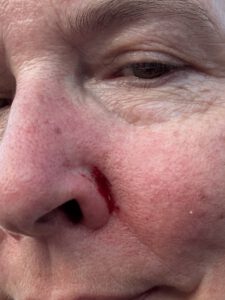
Things really heat up in the harbor on Friday. It’s the day of the great battle, and La Gran Batella is the absolute highlight of the festival. Thousands of performers in historically accurate armor and costumes reenact the historic battle for the city that took place in 209 B.C. Back then, the Roman general Scipio conquered the Carthaginian city of Qart Hadasht. Naval battles take place in the Bay of Cartagena as early as the morning. However, these battles aren’t reenacted authentically with a full fleet of galleys; instead, they take the form of a rowing regatta. Not quite as thrilling, but numerous spectators still gather at the harbor. Incidentally, today is an official local holiday in Cartagena in honor of the historical “Carthagineses y Romanos” festivities. Finally, in the afternoon, the Roman fleet docks at the Plaza Mayor on the harbor promenade to conquer the city of Qart-Hadasht. The battle takes place at the Cuesta del Batel. It’s a spectacle we certainly don’t want to miss—for 9.99 euros per person. And, this time, the walk isn’t too far. We quickly find our seats in row 3 and sweat in the sun until the spectacle begins. At least we don’t have to wear heavy armor, helmets, and fur coats. But before the battle really gets underway, we also get to observe city life in Qart Hadasht. Children lead donkeys around, and fruit and vegetables are being hawked. Horsemen ride by on their spirited steeds. Then, at some point, things really kick off. Hordes of Carthaginian troops and Roman legions storm the arena. They fight with swords, shoot arrows, and hurl stones. They charge back and forth at a run. Right in the middle of it all are chariots and horses. At first, it looks like a victory for the Carthaginians, but then Roman power gains the upper hand. In the heat of battle, arrows fly toward us in the stands, and one projectile comes hurtling toward me—and hits me! Pain shoots through my nose and blood runs down my face—and no, I’m not exaggerating here! I quickly check to see if my nose is broken, but luckily it isn’t. Did one of the shot-off cardboard arrows hit me, or was it something else? It felt more like a rock. But the mess actually makes me suspect it was one of the arrows. Anyway, I’m probably the only one who’s actually injured on or near the battlefield. Luckily, we’re well-equipped: tissues to stop the bleeding, a soda can to cool the wound, and a band-aid to finish things off. Our Spanish neighbors are asking with concern how I’m doing. I’ll survive! Somehow, despite the pain, I can’t help but smile. Who else has ever been wounded in the battle between Carthage and Rome? And that, after some 3,000 years have passed since the actual battle. Unique, right?! And in the end, I was lucky in my misfortune once again. If the shot had been just two centimeters higher, it would have hit my eye. And then a tissue and a band-aid definitely wouldn’t have been enough. And luckily, the toddler sitting behind me wasn’t hit either. After the Romans surprisingly—and thus historically accurately—secured victory on the battlefield, we head back home on board. The victorious Romans march on to City Hall Square, where Rome’s victory is proclaimed. Afterward, there’s a Roman victory parade through downtown to the festival grounds. Unfortunately, we miss this part of the spectacle because of my injured nose, and to our great surprise, for once there are no fireworks today. Surely they aren’t losing their touch?!
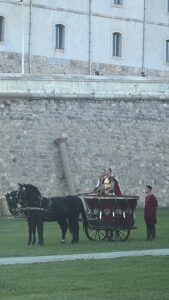
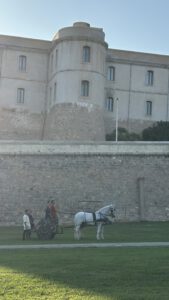
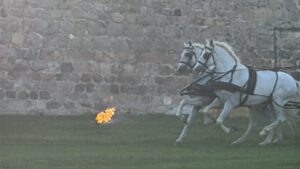
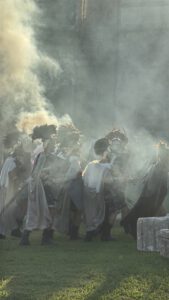

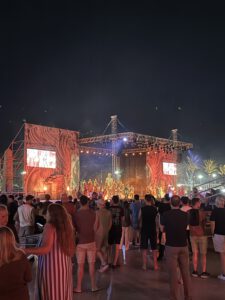
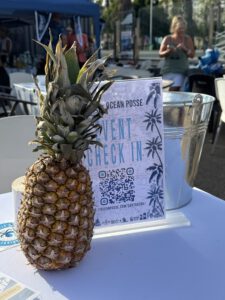
After a somewhat restless night—my nose and cheekbone were aching—I got out of bed at 7:30 a.m. Brigitte and Kay offered to take me shopping by car, and of course I didn’t want to miss that opportunity. First we raided the ALDI, then we headed over to Carrefour. In the end, we have a handcart full of groceries, which we pull from the car to the boat. It’ll last us a few days, so it doesn’t matter too much that we currently only have one bike available. With the ingredients we brought, Axel prepares a delicious coleslaw for the evening, since it’s time to grill again. This time, though, not just on Sunday, but also the day before. Our friend Dietmar, whom we met on our Hello World tour in Tahiti, is now the organizer of Ocean Posse and has invited us to a big kick-off event today. The event starts in the afternoon with a few seminars to prepare for the Atlantic crossing. We stop by briefly and are happy to see Dietmar again after such a long time. We skip the seminars, though, since we’re not planning an Atlantic crossing right now. We don’t join up with Captain Blaubär again until the evening and are excited to meet many new sailors. It’s just a shame that most of them are heading west and will be leaving Cartagena again soon. We get to sample local products like wine, goat cheese, olive oil, and Café Asiático. An artisan is also exhibiting her wares. Despite all the temptations, we remain steadfast and don’t buy any of it. Finally, the BBQ is ready, and we’re served spare ribs, baked potatoes, and salads we brought along. To top it off, there’s Dietmar’s special rum punch and more pleasant conversation. A lovely afternoon and evening—though unfortunately, it meant we missed the grand closing parade of the Romans and Carthaginians through downtown. And—once again, there are no fireworks in the evening. Hmm…
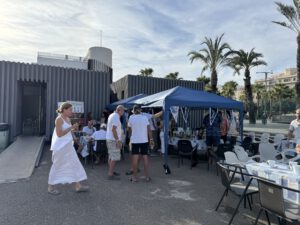
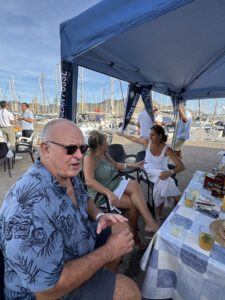
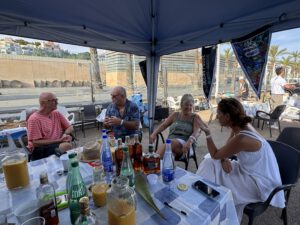
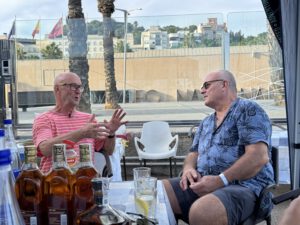
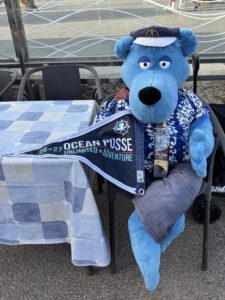
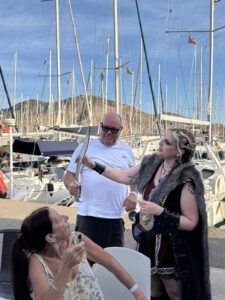
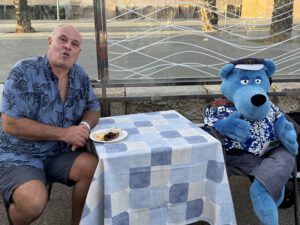

On Sunday, we sleep in and have breakfast in the cockpit—once again in glorious sunny weather. Dietmar stops by for a coffee, and Hildebrand brings over some new ideas for our joint 3D project. I continue practicing the piano. We’ve now got the right adapter, so I can finally practice without disturbing anyone around me. Otherwise, it’s a peaceful day, which we wrap up in the evening with the Sunday sailors’ barbecue and the grand closing fireworks display—which, unfortunately, we can only hear but not see—as part of the Cartaginesis y Romanos event.
The last ten days in Cartagena were truly memorable for us. It’s amazing how wonderfully and vividly history can be told and experienced! Most of the events were free, and even the ticket prices were quite reasonable. And the dedication of the people of Cartagena is truly exemplary. Even before the festivities began, we could see the preparations for the naval battle and the daily rowing practice continuing well into the evening. Days beforehand, the sound of marching drums was already echoing through the harbor. The time and financial effort that the participants here put in cannot be praised highly enough. The costumes were more elaborately crafted and true to the originals than we’ve ever seen at any other event. Hats off to Cartagena and this fantastic event! It’s a shame, really, that my history and Latin teachers back then weren’t able to instill this enthusiasm in me. De bello Gallico (“Gallia est omnis divisa in partes tres.”) was a real struggle for me to grasp back then. The reenactment of the Second Punic War was much more memorable. And the little scar on my nose will probably always remind me of it, too.
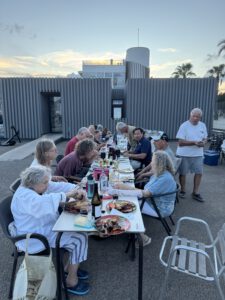
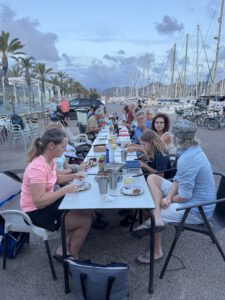
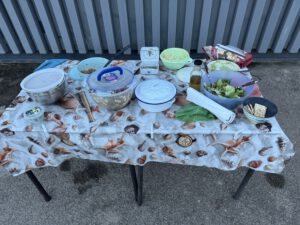
The new week starts with a trip to the dentist for Axel. A crown has come loose and needs to be reattached. For some reason, I’m not supposed to take out the onboard dental adhesive and do the job myself. Strange! But the dentist gets the job done quickly and easily, even without an appointment. Thankfully, my bruised nose has already healed and doesn’t hurt anymore. And Axel’s bike is ready to be picked up after just a short while. Apparently, it was just a software update. Unfortunately, though, it stops working again with the same error message on the way back to the marina. Just annoying! Now Axel wants to order and install the suspected replacement part himself. Let’s hope we can get back out on our bikes together soon. We’ve been in Cartagena for five weeks now. Once again, time is just flying by. Every day consists of small projects and everyday tasks. Plus 3D printing and practicing the piano. And, of course, the many conversations with our boat neighbors. No matter where you walk, you’re bound to run into someone for a quick chat—or even a longer one. We meet up in the evenings for dinner together on one boat or another. We help each other out with technical problems. We offer and receive advice whenever something on board isn’t working quite as it should. We’ve found a great community here in Cartagena.
After spending the last few weeks exploring Cartagena on foot and by bike, we’re planning to explore the surrounding area a bit by rental car this October. Let’s see if we can find a few nice spots!