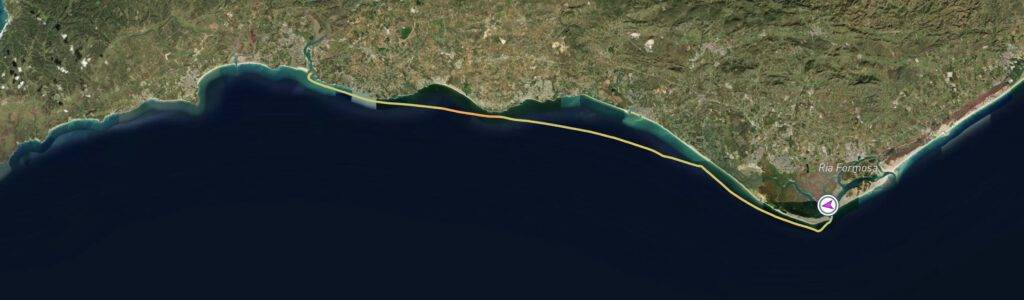
Ferragudo – Ria Formosa 33,0 nm
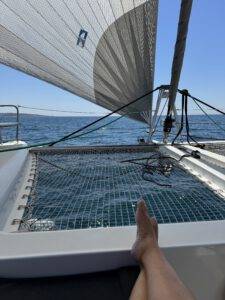
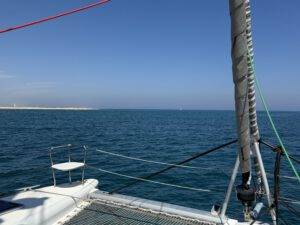
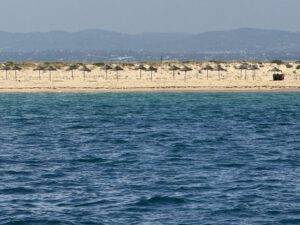
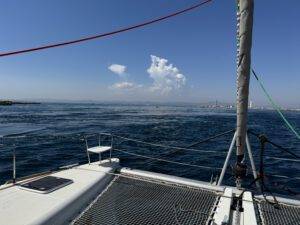
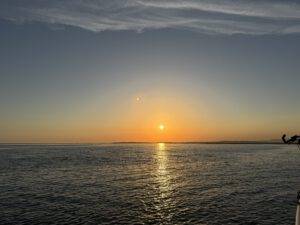
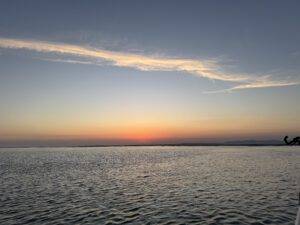
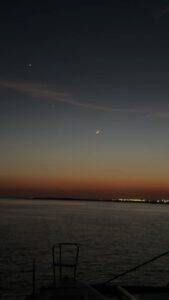
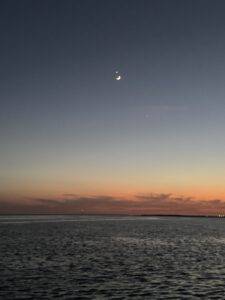
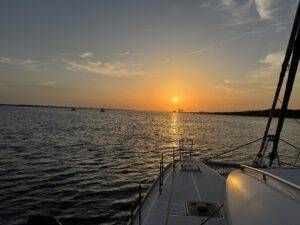
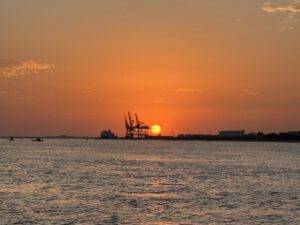
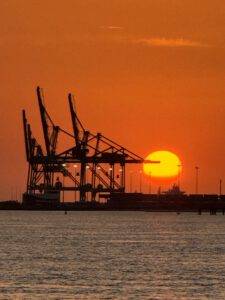
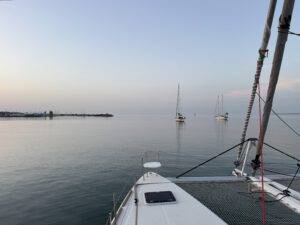
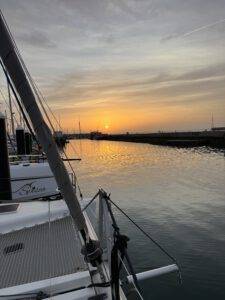
Well then! Here we go again! Without any rush, we weigh anchor at 10 a.m. After four weeks here, the maneuver turns out to be quite a challenge. The chain is so thickly coated with a layer of silt that even with a small cordless high-pressure washer, it takes us twenty minutes to haul it in and clean it. We can only break the anchor free using the engine. It probably would have kept La Ola right where she was even in a hurricane. But eventually we’re free, and La Ola turns her bow eastward. With a very light wind from the southwest, we initially make headway under engine power. Eventually, the wind picks up a bit and we hoist the Code Zero. This allows us to make 3 knots in a 6-knot wind. Unfortunately, the wind quickly dies down again and shifts to a headwind, so we switch to the genoa and motor-sailing. This way, we make good progress toward the Ria Formosa. Off Praia de Faro, there’s a brief moment of alarm when blowholes and dorsal fins appear on the horizon. But fortunately, they’re just bottlenose dolphins and not orcas. The wind continues to die down, so we take down the genoa. At 4:00 p.m., we reach the entrance to the Ria Formosa—just in time to catch the last incoming current, which carries us through the entrance at just under 10 knots. We anchor across from the entrance as the second boat at the anchorage. Our French neighbors have set up a beach chair seating area on their aft deck. It looks cozy, but it’s also a bit of an acquired taste, and sailing probably isn’t any easier with it. They probably won’t be able to stow that thing below deck—the things people come up with! By evening, the anchorage fills up a bit, but with just four yachts, it’s still far from overcrowded. We’re enjoying the peace and quiet compared to Ferragudo and can admire a beautiful sunset here as well. With the amazing colors we get to see almost every day at sunset, one thing is absolutely certain for me: If we ever settle on land again, there has to be an unobstructed view of the sunset! Preferably over water! Until then, we’ll just keep living very happily with the life on the water.
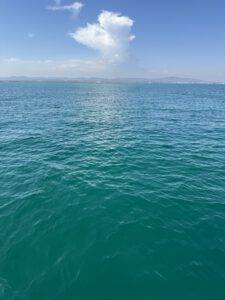
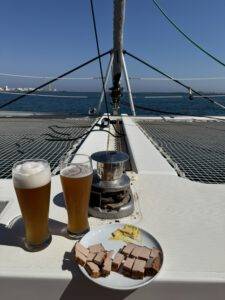
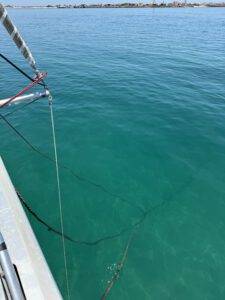
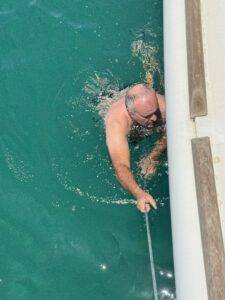
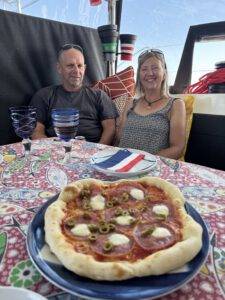
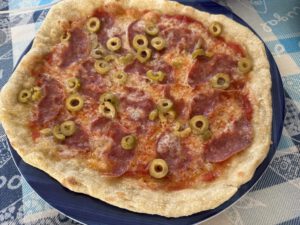
We’re still traveling in fairly small increments and taking plenty of breaks. That’s how we enjoy it the most. So we’re just going to stay anchored in the Ria Formosa for another day and enjoy the beautiful summer weather. The air is still, and the sun is blazing. So we’d rather stay in the shady cockpit. After breakfast, I prepare pizza dough for the evening, and then it’s time to break out the vacuum cleaner again. Oh yeah, the dishes still need to be done, too. Surprisingly, it’s already noon again. Axel takes advantage of the crystal-clear water and jumps in. However, the current is so strong that he can’t swim against it and can only hang onto the ladder. So we quickly bring out a long line with a thick balloon fender to make sure Axel doesn’t accidentally drift onto the nearest sandbar. Holding onto the line, Axel scrubs along the starboard hull once, cleaning the waterline—which really needs it after the murky water in the Rio Arade. He decides to save the port hull for a later time when there’s no current, though. No sooner had he gotten out of the water than we received some sad news from our old home. Our former neighbor, Jörn, passed away far too young after suffering a heart attack and a stroke. News like this, as sad as it always is, reminds us that we made absolutely the right decision to set sail. You never know how long you’ll be able to enjoy life, and no one can take away the amazing experiences we’ve already had over the past two years. Once the current has subsided, Axel heads back into the water to clean the port side of the hull. In the evening, Steffi and Jörg from BigFoot stop by to visit us again. We have pizza, which turns out absolutely fantastic once again today. A little trick helps ensure that the pizza turns out nice and crispy on both the top and bottom without burning. A lovely evening, even if it’s unfortunately our last together for the time being. Even though we’re heading roughly in the same direction, we’re moving a bit faster and want to get to Cádiz as soon as possible to explore the city in more detail.
Ria Formosa – Mazagon 56,9 nm
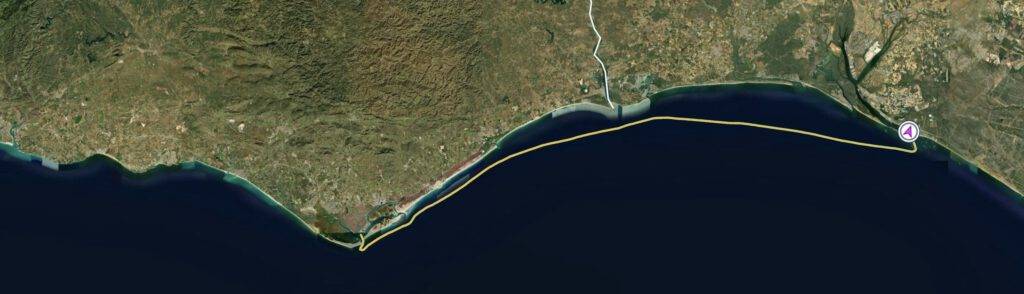
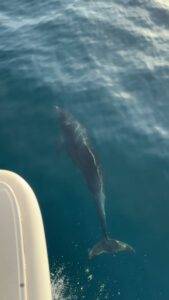
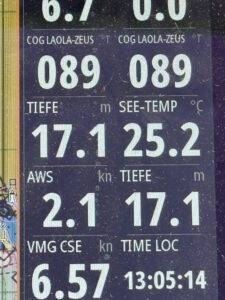
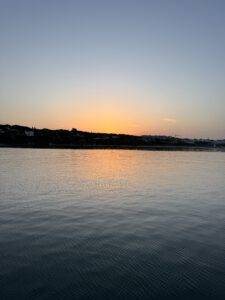
Early in the morning, we wake up bright and early without needing an alarm clock to rouse us. So, by 7 a.m., we’ve already weighed anchor and set off. There’s a standing wave at the mouth of the Ria Formosa, so we have to stay to starboard before turning to port a little later and heading east through somewhat calmer waters. A short while later, a bottlenose dolphin comes to bid us farewell as we leave Portugal, playing briefly around our bow. With no wind, we motor along the Portuguese coast to the Guadiana River, which marks the border. Then we sail past Isla Canela, El Rompido, and Punta Umbría until we finally reach Mazagón in the afternoon. Since we want to set off early the next day and have already gotten to know Mazagón quite well over the past year, we drop anchor off the marina. This not only saves money on mooring fees but also time spent checking in and out and fiddling with the lines and fenders. The water gets a little warmer with every nautical mile—from 22°C in the Ria Formosa to over 25°C just before Mazagon. In the evening, Axel prepares delicious fried rice with chicken breast, and we get to enjoy another beautiful sunset here as well.
Mazagon – Cádiz 46,5 nm
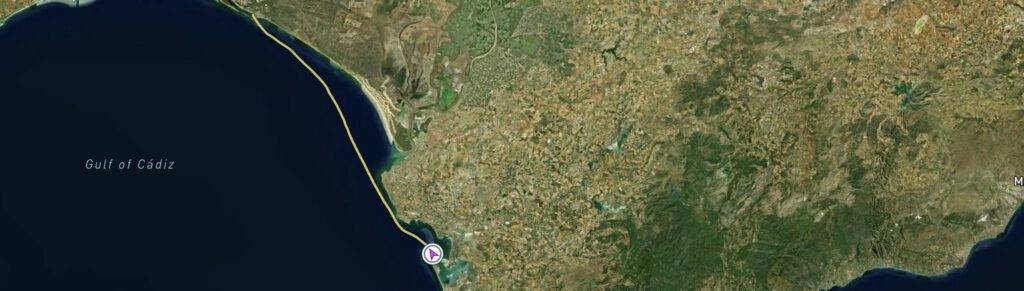
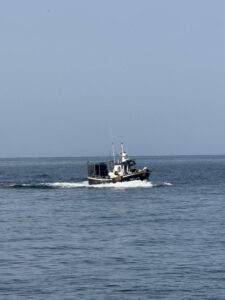
We’re off again early. And it feels super early, because as soon as we crossed the Spanish border, we suddenly lost an hour! It feels like 6 a.m. to us, but according to Spanish time, it’s 7 a.m. when we weigh anchor and head out of the Rio Odiel. Wind is scarce again today, so we’re chugging along on the engines once more. From our perspective, that’s actually a good thing, because we’re now in an absolute high-risk area for orcas. The orcas are currently active in the Strait of Gibraltar and have already attacked several yachts in the last few days. Over the next few days and weeks, they’re expected to head toward the Algarve. So they’re coming straight toward us. To avoid running into them, we’re following the current recommendations. We’re staying in water less than 20 m deep and traveling under engine power so we can get away quickly if they approach. It’s just too bad that someone has littered the route with fishing nets and their markers! The only thing to do is keep a very close watch—both for fishing flags and for orcas. First, though, we spot dolphins. Too fast for a photo, but still a welcome sight. After all, they say where there are dolphins, there are no orcas. However, the dolphins don’t protect us from the multitude of fishing flags or the rows of plastic bottles—barely visible in the glare—used as net markers. Eventually, we make it through the long, narrow bay between Mazagón and Chipiona and navigate past the nets unscathed. But in return, numerous biting flies come on board and annoy us. And then the Guadalquivir River stops us in our tracks with a countercurrent and choppy waves. We manage that too, and lo and behold, the wind picks up a little. It chases away the flies, so we hoist the genoa and motor-sail the rest of the way. Past Rota and on to Cádiz, where we’ve reserved a berth at Marina Puerto America. The marina is located in the city’s industrial harbor, and we plan to explore the surrounding area by bike from here over the next few days. Before we can enjoy exploring the city, however, we first have to maneuver into our berth. We radio the marina and are assigned Pier I, Berth 20/21. Once in the harbor, we quickly find Pier I, but there are no numbers to be seen anywhere. We radio them again, and a helpful marina attendant comes running over. We’re told to go to the first berth at the entrance, but we’re already in the middle of the marina. With the wind picking up, we maneuver in reverse and finally, with a crosswind, into our assigned berth. Not without a little scraping against the dock and fenders pushed up. Ouch, we’ve done better than that before! Luckily, nothing happens, and after docking, we review the maneuver on our own. After all, you have to learn from your mistakes and problems. In any case, we already have a few ideas and ways to improve for the next time we dock. Axel finally checks us in at the marina and fills out numerous forms. Then we have a celebratory drink in the forward cockpit and, finally, a delicious Hawaiian toast for dinner. We spend the rest of the evening in the forward cockpit with a light breeze, planning our itinerary for the next few days. Based on last year’s experience, we’re paying very close attention to when each cruise ship is expected—and how many people are on board. On Tuesday, for example, the Britannia and the Ventura are arriving, each with over 3,000 passengers. We definitely won’t be heading into town then. Fortunately, only a very small cruise ship with 350 passengers is scheduled for Saturday. That means we can enjoy a stroll through the market and around town!
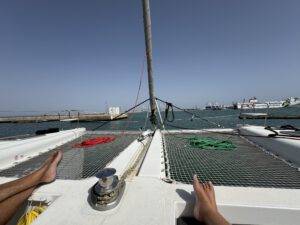
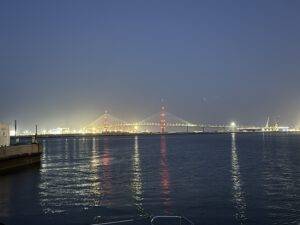
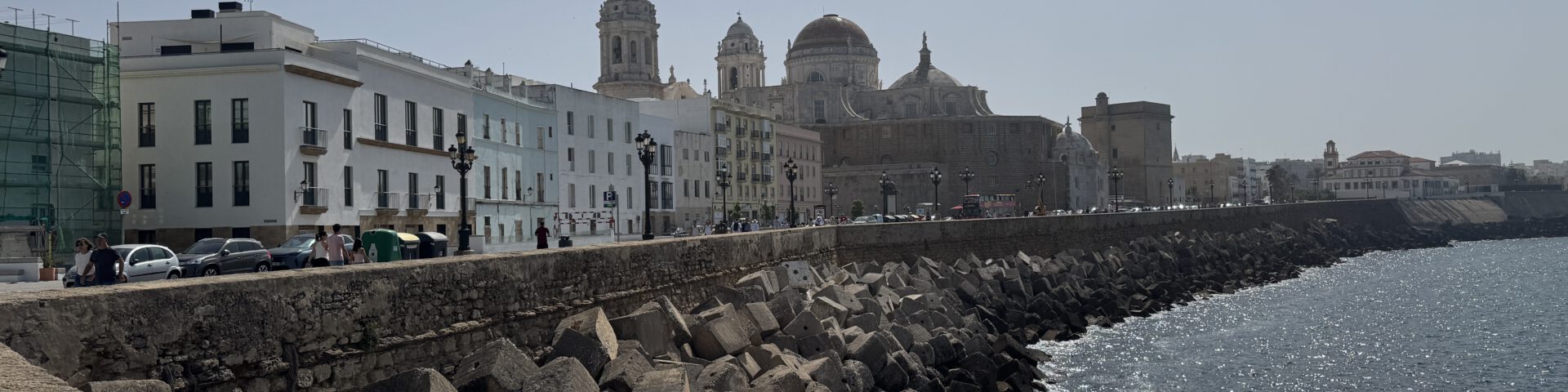
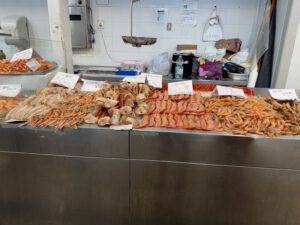
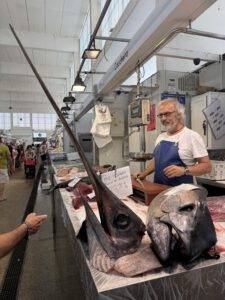
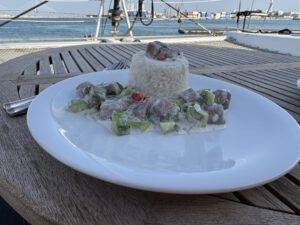
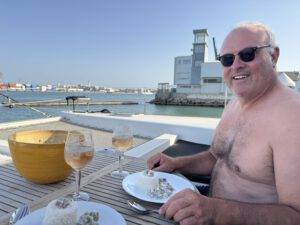
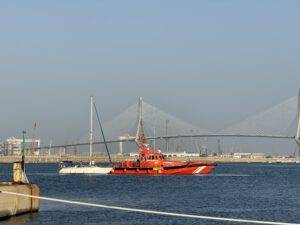
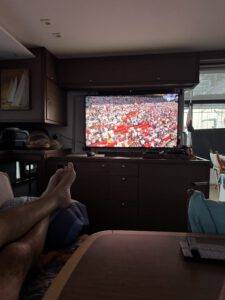
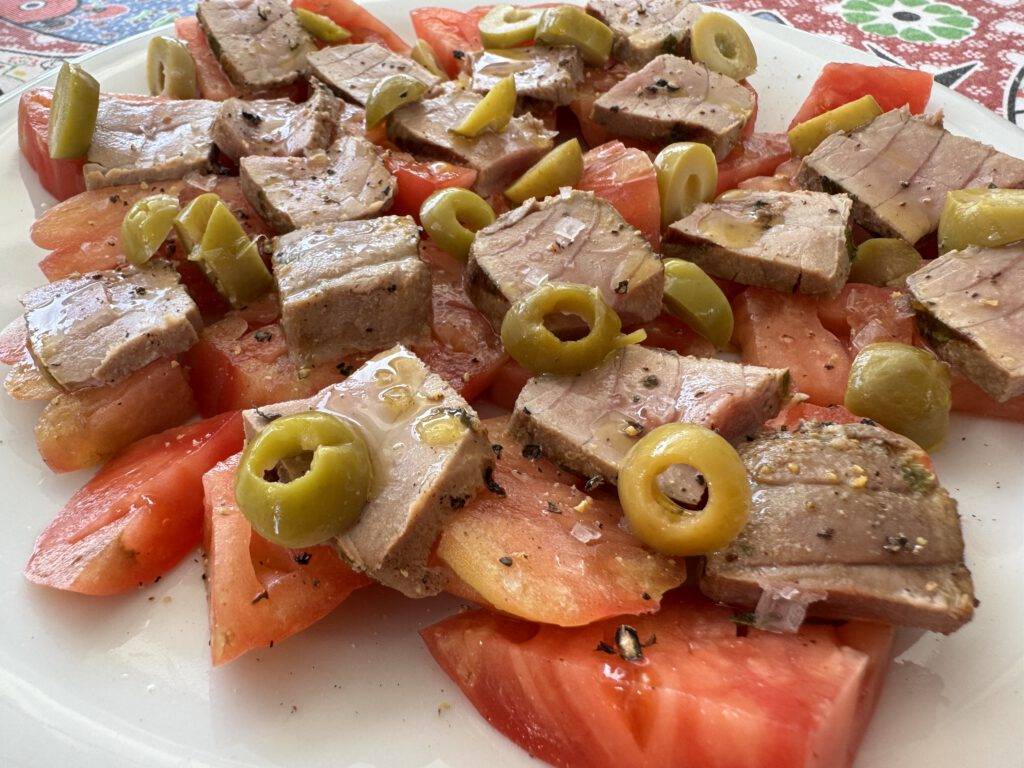
We’ve already visited Cádiz last year by ferry from Rota, but now we’re moored right in the city. It’s on the outskirts, in an industrial area, but we can reach the old town in no time by bike. After a meager breakfast—we’re running a bit low on bread rolls and cold cuts—we head to the marina office at 10 a.m. to figure out how long we want to and can stay in Cádiz. One to two weeks is no problem, so we can take our time enjoying the city and its surroundings. We then ride our bikes into the old town and to the Mercado Central de Abastos. A market that any foodie’s heart would love! There’s fruit and vegetables. Meat, cheese, ham. Bread and rolls. Olives, of course. And fish and seafood. The shrimp, langoustines, and mussels are displayed as if painted, and your mouth waters with every step. We’re in the right place! We buy fresh ingredients for juice, plump “Rosa” tomatoes, cherries, and gorgeous-looking figs. Plus some jamón ibérico. In the fish section, the tuna catches our eye—specifically bluefin tuna, known here as “atún rojo,” caught in the Almendraba nets. For just under 20 euros, we get about 500 grams of the highest sushi-grade quality. The rest of our shopping is also quite affordable in our opinion and definitely a shopping experience in itself. After we’ve scoured the market, we pop across the street to the Carrefour supermarket, where we add a little cheese to our haul. Then we bike right across town and, with a detour or two through the maze of alleys, back to the marina. We quickly stow away all our purchases and snack on a bit of whole-grain baguette and some pickled octopus-and-olive skewers. It’s already lunchtime again, after all. After a short siesta, it’s time to get to work. La Ola has gotten super dirty and dusty over the past few weeks. We practically have entire sand dunes on deck. It can’t stay like this! We grab the hose and scrub brush and get to work. For hours, we clean every square centimeter, and by the end, La Ola is shining like new again. And we’re completely exhausted! But the work is worth it, and in the evening we can enjoy the finest Poisson Crú in the sparkling-clean front cockpit. With a view of the Puente de la Constitución de 1812 and the harbor. It’s shady and there’s a light breeze, making the warm, humid summer weather quite bearable. We’re even treated to some harbor drama as the coast guard rushes out and later returns with a sailboat in tow. But it all seems to have been handled smoothly and wasn’t a big deal. At 10 p.m., we head to the lounge to watch the Germany vs. Ivory Coast soccer match. For our taste, it was far too close and too nerve-wracking, even though the final result was favorable and Germany won 2–1.
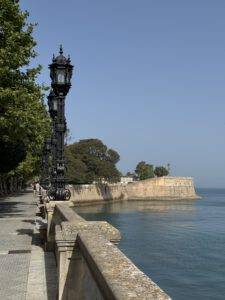
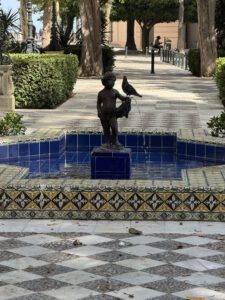
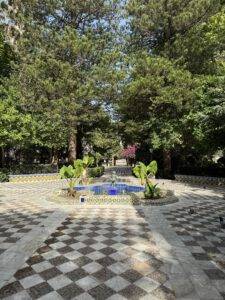
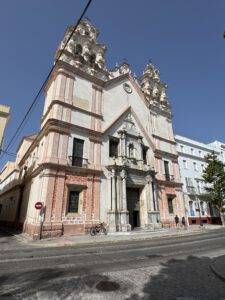
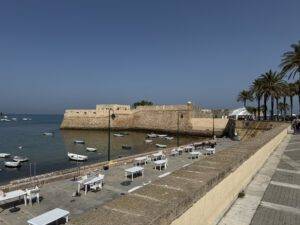
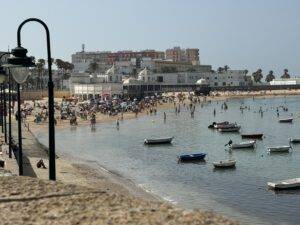
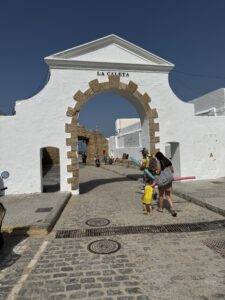
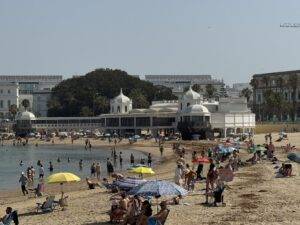
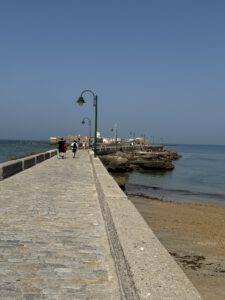
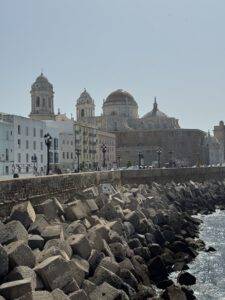
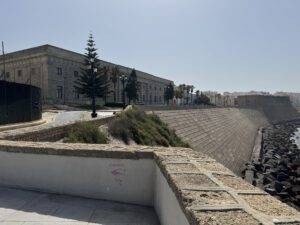
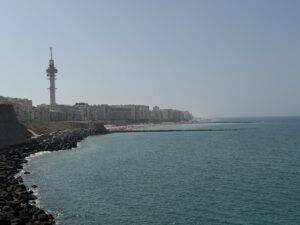
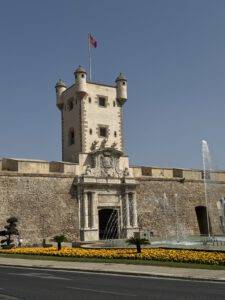
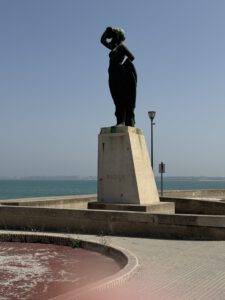
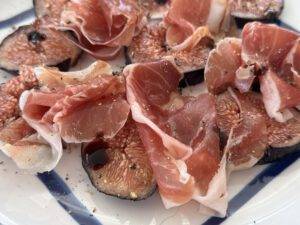
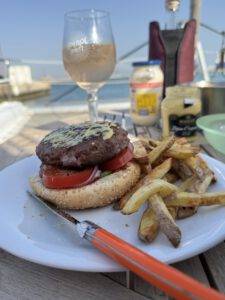
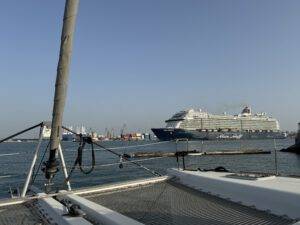
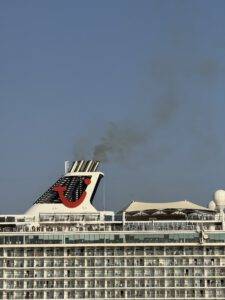
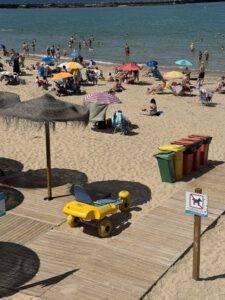
With a loud hum, the cruise ship Mein Schiff 6 glides into the port of Cádiz early in the morning. It can accommodate about 2,500 passengers. Joining it is the slightly smaller cruise ship Sirena. So the city’s going to be packed today. We decide to sleep in until 9 a.m. and enjoy a lovely Sunday breakfast in the cockpit. It’s already 25°C, and according to the weather forecast, we’re expecting another sunny day with temperatures reaching 30°C. Summer is finally here, officially. After breakfast, I grab my bike and explore the surroundings a bit. I give the old town a wide berth and stick to the outskirts. That’s nice, too! In Cádiz, you can experience and see history around almost every corner. The city of Cádiz is one of the oldest cities in Western Europe and is situated on a peninsula. So there are plenty of opportunities to catch a glimpse of the Atlantic Ocean. There are also numerous parks that invite you to relax in their shady, peaceful spots and linger a while. And there are bike paths. So I can leisurely cycle all the way around the entire Old Town on the bike path—of course, with plenty of photo stops along the way to soak up the lovely atmosphere. In the parks, people sit in the shade, parrots squawk in the treetops, and pigeons bathe in the fountains. The beaches are packed and dotted with colorful beach umbrellas. People gather with family and friends; children squeal with joy; dogs lie exhausted in the shade. In between, countless tourists are on the hunt for the perfect vacation photo. Oh right, I’m one of them too! After an hour, I’m back on board and get to relax in the shaded cockpit for a bit. Meanwhile, Axel has continued cleaning up and is in the process of shutting down the watermaker. We probably won’t need it for the next few weeks until we reach Gibraltar, since we can refill our water tanks at the marinas without any problems. For lunch, we have the figs we bought yesterday with jamón ibérico. When it comes to food, Spain really does have some delicious things to offer. After lunch, we first make some juice and do the dishes before settling in for a long Sunday siesta in the cockpit. Luckily, aside from chilling out, we don’t have to do anything else today. Well, except for preparing and eating dinner. We’ll do that together with hamburgers, homemade fries, and Axel’s new special burger sauce. Once again, we’ll enjoy them in the front cockpit thanks to the warm temperatures. Who would have thought that our teak folding table—which we bought on Sylt 20 years ago—would serve us so well on board? The cruise ships leave Cádiz amid a great deal of honking and even bigger clouds of exhaust fumes. A lovely sulfurous yellow—and surely great for the environment and our health. But cruises are just in fashion. So you have to make a few compromises when it comes to your environmental conscience. And of course, not everyone can afford the “Mein Schiff La Ola” with a two-person occupancy. But biking, hiking, and camping are fun, too! Enough grumbling and lecturing our consciences! We’re not perfect either, and we’re happy for everyone to enjoy the vacation they’ve chosen for themselves. In the evening, a fresh breeze picks up and provides a pleasant cool down. Let’s keep it that way—summery during the day, refreshing in the evening.
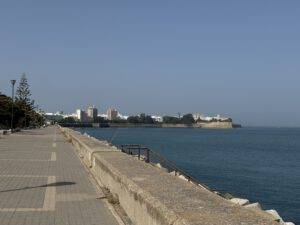
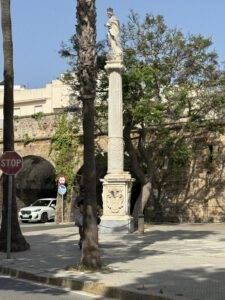
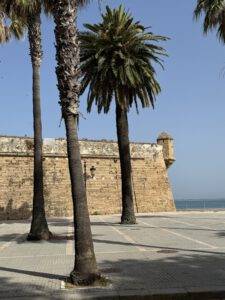
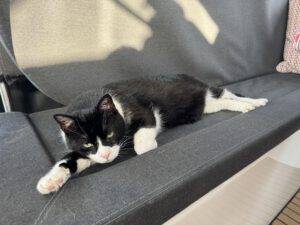
At night, the wind picks up and sends La Ola rocking pretty hard. Since we’re moored right at the harbor entrance, the waves can rush right up to us unchecked. It’s not really any worse than if we were at anchor, but the lines are tugging quite a bit. And it makes Lucky kind of restless. The little tomcat dashes around at night, wide awake and excited. He’d love for me to be awake too and play with him. But I don’t feel like it, so I just stay in bed. Eventually, he sits down in front of my pillow and tries to chase my nose. Ouch! Luckily, he doesn’t use his claws too much, but after that, he gets kicked out of our cabin for a while. A few hours later, the wind has died down again, but in the morning the weather is incredibly foggy. The peaks of the mountains across the way disappear into the clouds, and we measure 85% humidity at just under 25°C. Pretty sweaty stuff. After breakfast, Axel has an appointment with the onboard barber and gets a haircut. No magazine, no coffee. And no mirror to see his freshly shaved neck. But at least they fluff up the fine hairs at the back. Afterward, we head into town on our bikes for a shopping trip. A small Lidl supermarket is just a ten-minute ride away and offers plenty of variety. Back on board, I set about looking for a winter berth. Through the TO Mediterranean WhatsApp group, I get some tips and suggestions, and Dirk from the Saga also provides us with plenty of information. We reach out to Almerimar, Cartagena, Valencia, Sant Carles Marina de La Rápita, and Barcelona. In the evening, Claudia and Jonas from the Morning Sun stop by to see us. We’d already met the two of them briefly this winter in Vilamoura and are now happy to see them again here in Cádiz. Once again, we enjoy our delicious couscous and broccoli salad with grilled chicken. We chat about sailing until midnight, enjoying the pleasant temperatures in the cockpit. Our future routes are heading in the same direction, so this probably won’t be our last evening together.
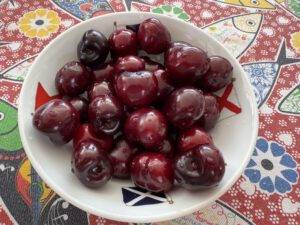
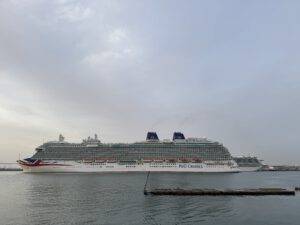
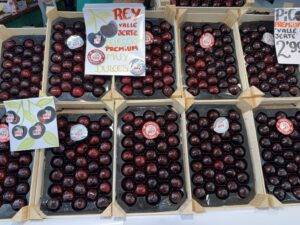
The next morning, the roar of engines wakes me up once again. Just in time for sunrise, I can see the cruise ship Britannia pulling into port. It’s accompanied by a sister ship, so about 7,000 to 8,000 people are flooding ashore today. After our morning workout and breakfast, we head to the market on our bikes. We buy bluefin tuna again and other ingredients for dinner. Once again, we can’t resist the amazing sweet cherries. They’re so delicious that we eat them right away as soon as we’re back on board. Mmmhhhh!!! Unfortunately, the weather is hazy and muggy again today. So we spend the rest of the afternoon on board. In any case, there’s no need to head into downtown today because of all the cruise tourists. The short trip to the market and the tedious weaving through the crowds in the narrow alleys were enough for us. But we’re still here for a few more days, so we’ll just look for a day when it’s not so busy to take a stroll through the old town. Thursday, maybe? Apparently, there’s only a small cruise ship with fewer than 800 passengers in port that day. I’m using the time on board to book a day trip to Morocco for the weekend. We don’t want to go there in our own boat for various reasons, especially because our yacht insurance doesn’t cover a visit there. The ferry from Tarifa takes just one hour to Tangier. We’re excited and looking forward to visiting North Africa next Sunday. In the evening, our neighbors Julia and Paul from the catamaran Spisea stop by. We prepare delicious Cuban tuna tacos and spend a nice evening with the two Canadians. They’re also heading to the Mediterranean, so our paths are sure to cross again a time or two.
The morning starts a little later than usual, and I don’t get up until 8 a.m. The sun is already shining, and numerous yachts are leaving the marina headed for Gibraltar. Right now, the weather looks really good for the crossing, but we want to stay in Cádiz for a few more days. So, after breakfast, we take it easy for the rest of the day. In the meantime, we’ve received replies from the marinas we contacted about winter berths. In the end, however, only two marinas have space and are interested in hosting us. We ultimately decide on the more expensive option, which also offers a livelier setting. Especially in winter, we don’t want to be stuck off in some remote marina that’s only bustling with tourists in the summer. Plus, the surrounding area should offer plenty of opportunities for shore excursions. And, of course, it should also be safe—both in terms of security and weather. So we finally book a berth in Cartagena from early October through late March. We’re planning to be in Cartagena as early as late September, though, so we’ll have the chance to meet up with our friend Dietmar from Carinthia again. As the organizer of the Ocean Posse, he’s hosting a barbecue, and of course we don’t want to miss that event. By the way, for those who want to visit us in the winter, Alicante Airport is a good option—Ryanair, for example, offers direct flights from Bremen. Unfortunately, though, you’ll still have to drive about an hour from there. Murcia Airport is closer, but unfortunately, there aren’t as many flights there from Germany. Below deck, we’re running the washing machine again today and then hanging the laundry out to dry in the cockpit. While Axel takes care of securing the cables to our solar panels (the old mounts had simply fallen off due to the heat), I bike along the harbor to the Corte Inglés department store. During one of our last anchoring maneuvers, my sunglasses unfortunately slipped off my nose and sank to the bottom. So I need a replacement. I find what I’m looking for quickly and pick up a nice pair of polarized Oakleys at Nun. The super-friendly saleswoman even gives me a spare nose pad. They tend to just melt away thanks to sunscreen and the heat. Now that the important shopping part is done, I can turn my attention to the fun part. No, my destination isn’t the shoe, handbag, or clothing section. I’m much more drawn to the grocery section. After just a few meters, it becomes clear—I’ve landed in paradise. And I practically have paradise all to myself; it feels like there are only about five other customers wandering around the huge store. And they really have everything! Everything a foodie’s heart desires. Everything that’s been out of stock for ages. Everything that’s delicious. Everything that’s expensive. I stroll down one aisle after another, taking in all the products. I pass by Meika Böcklunder—the jar for just under 14 euros. Likewise, the relatively affordable white asparagus at 6.50 euros a pound. Instead, ingredients for the next pizza night find their way into my shopping basket. Plus a few olives and some cheese for dinner. And four bottles—the entire available supply—of non-alcoholic Franzikaner Hefeweizen. At just under 2 euros a bottle here, it’s more of a luxury drink. Never mind! If you’ve already landed in paradise, you’ve got to seize the opportunity! Although, I could just stop by again tomorrow, right? Now that my basket is well-stocked, I pass on the champagne, caviar, and hot tub and head to the only open checkout lane. Good thing there are only five of us in the store and no one else is in line to pay right now. So it’s my turn very quickly, and I’m out of paradise in no time. I pack my purchases into my bike panniers and zoom back home. Thanks to the dedicated bike path and my e-bike, it’s a quick ride. Back home, Axel greets me eagerly and is delighted with the treats I’ve brought. We quickly enjoy them for dinner and otherwise spend a quiet evening winding down.
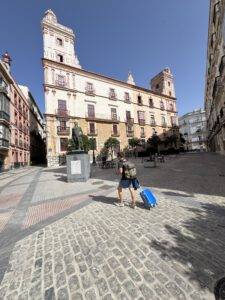
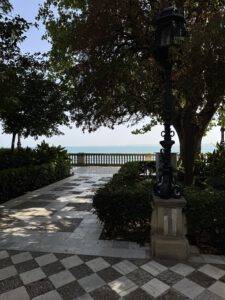
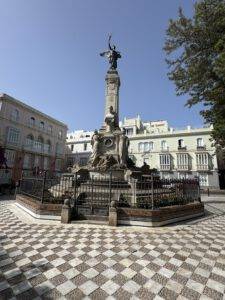
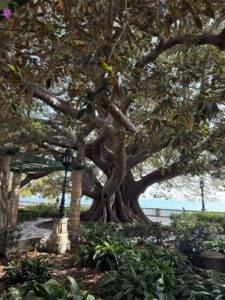
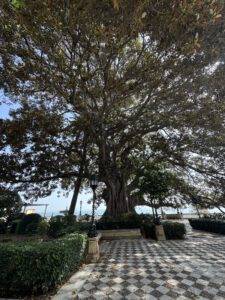
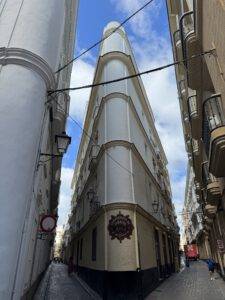
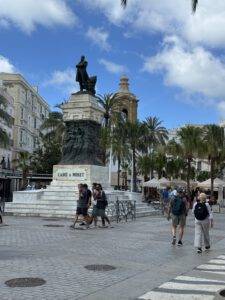
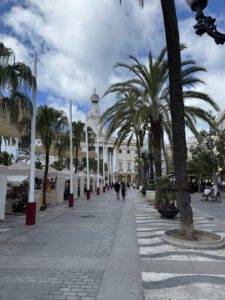
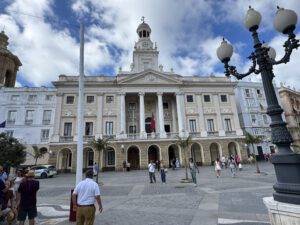
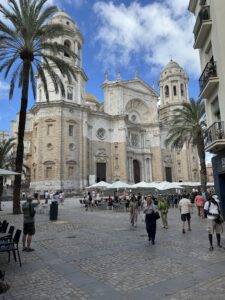
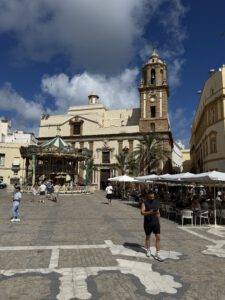
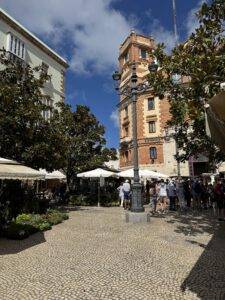
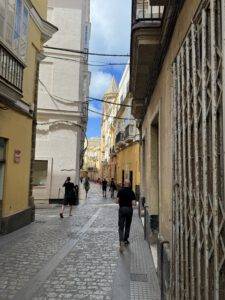
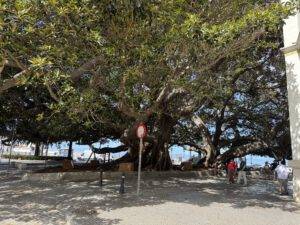
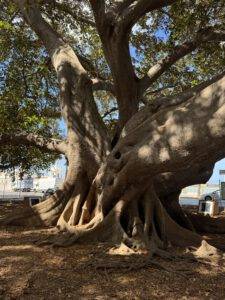
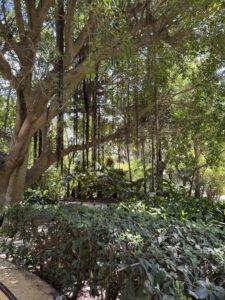
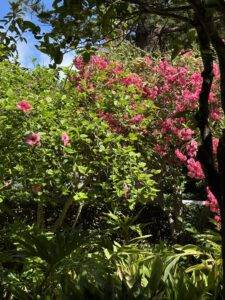
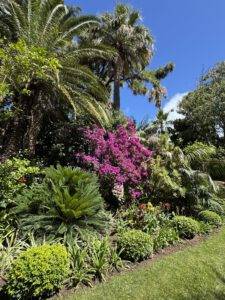
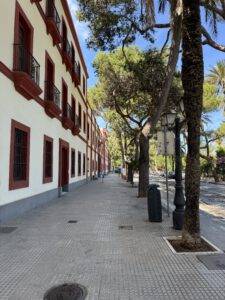
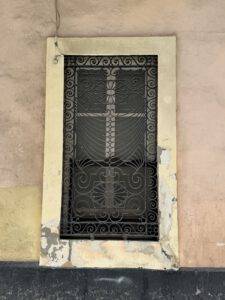
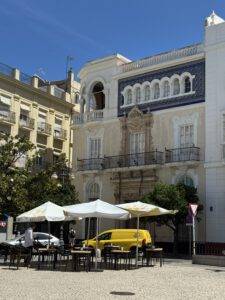
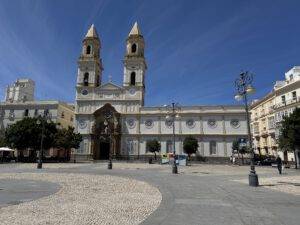
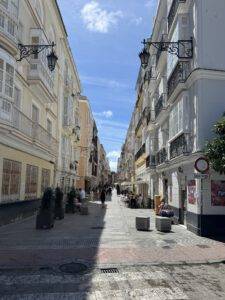
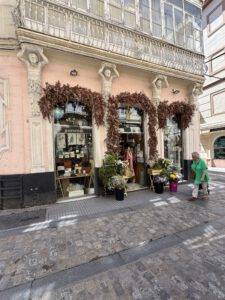
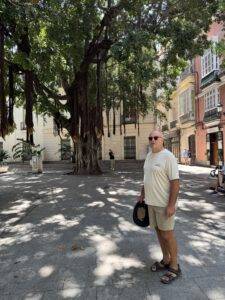
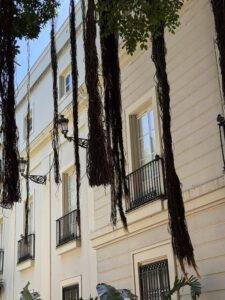
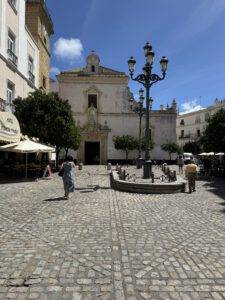
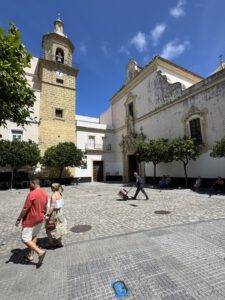
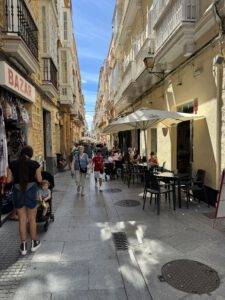
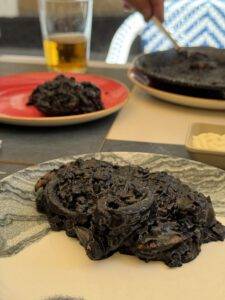
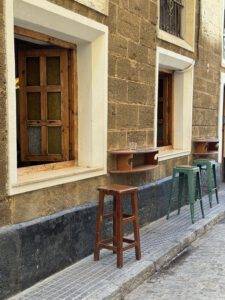
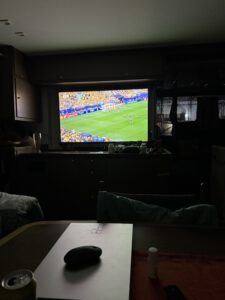
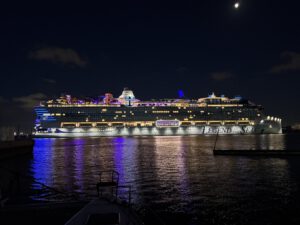
Since our online research indicates that no cruise ships are scheduled to be in Cádiz today, we get ready after breakfast for our shore excursion to the old town. Too bad, though, that on our way there we first catch a glimpse of the massive Legend of the Seas. It can accommodate about 7,500 passengers. Barely visible behind this giant is the Crystal Serenity, with “only” 740 passengers on board. Darn! I guess we must have looked in the wrong direction. But we’re early, so the city is still relatively empty. We walk across the Plaza de San Juan de Dios, past City Hall. We wind our way toward the cathedral with a ham baguette in hand and finally end up at the market. We continue left and right through endless rows of houses and narrow alleys. To walk down every alley in Cádiz, you’d probably have to live to be 100 years old. Most of the houses are well-maintained and charm with many lovely details like cast-iron window grilles, narrow balconies, and sunrooms. We finally arrive at two impressively large strangler fig trees. The fig trees are about 500 years old and are partially supported by massive steel beams. We continue walking toward Parque Genovés, with a view of Playa de Caleta. In the shade of the trees and with a view of the numerous flowers and blooms, the walk feels much more refreshing. Entire flocks of parrots screech overhead, but thanks to their green color, they blend perfectly into the palm trees, hiding from the camera lens. After this brief respite for the senses, we head back toward the maze of alleys and arrive at Plaza de San Antonio with its pretty buildings and the Parroquia de San Antonio de Padua. We meander through the alleys again, sometimes turning left, sometimes right, and end up at Plaza de Mina. The large ficus trees here have “beards” that reach almost to the ground. It’s beautiful and, once again, a shady spot to rest. Eventually, hunger drives us into a small restaurant on Calle de San Francisco, where we refuel with a cold cerveza and jet-black rice with seafood. Since the number of tourists has increased significantly by now, we head back home afterward and skillfully spend the rest of the afternoon napping. So we’re well-rested for the evening and watch the German national soccer team’s third group-stage match against Ecuador. We’re actually able to watch quite relaxed, since Germany, as the group leader, has already qualified for the next round. And after just two minutes, it’s already 1–0 for Germany. Unfortunately, that doesn’t last long, and the game just gets worse and worse. Completely disjointed, reactive, lacking the necessary guts and drive. So it’s no surprise that the final score is 1–2 and the Ecuadorians win deservedly. Meanwhile, outside, the Legend of the Seas is sailing out, lit up like a Christmas tree. The navigation lights are hard to make out amid all the lights, but the ship is certainly impossible to miss.
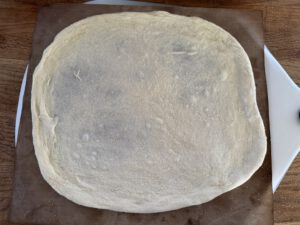
Since we didn’t get to bed until after midnight, we’re getting a bit of a late start on Friday. The sun is shining, and we’re looking forward to another wonderful day. Unlike in Germany, where record temperatures of up to 40° C are expected, we’re enjoying very pleasant temperatures in Cádiz, ranging from 25° to 27° during the day. At night, it cools down nicely, making for a good night’s sleep. It’s a bit of a twist, since Andalusia usually gets quite hot at this time of year—often reaching 35° to 40° C—as we know from last year. While we’re waiting in Cádiz for the passage to Gibraltar to become safer once the tuna nets are removed as expected, most of the orcas have moved on to the Algarve. On their way there, they attacked numerous yachts and broke off their rudders. We’re glad that this has already significantly reduced the danger for us. Although it’s not certain that all the orcas are in the Algarve. So we’d still rather wait for the nets to be removed. The first net near Conil de la Frontera has reportedly already been taken down. The second net near Barbarte can safely be navigated around in shallow water. The third net near Zahara de los Atunes, however, still appears to be in place and can only be navigated around in deep water. Most of the interactions with the orcas have occurred at this net so far. We’re considering whether we’d rather spend the rest of the waiting time in Cádiz or head on to Barbarte for now. The weather forecast for next week calls for a strong easterly wind blowing out of the Strait of Gibraltar. The so-called Levante would make for a somewhat rougher mooring in Cádiz. In Barbarte, we’d likely have a calmer anchorage, but we’d also be exposed to more wind and sand. In Cádiz, on the other hand, we’d have more to explore and better supply options than in the much smaller Barbarte. Or should we just push straight through to Gibraltar? Without taking into account the tuna nets and the current, albeit lower but still present, risk of encountering orcas? Questions upon questions that keep us occupied over breakfast. In the end, we decide to stay in Cádiz a little longer. There’s still so much to see and discover here, and we’re in no hurry. After breakfast and our discussions about the rest of our itinerary, it’s time to clean the boat again. Vacuuming, mopping, washing the bedding, and cleaning the cockpit cover. That’s how we quickly get through the morning. After I enthusiastically told Axel about my trip to El Corte Inglés, he naturally wants to check out the spectacle for himself. So in the afternoon, we head into town on our bikes to the shopping mecca. We buy a few snacks for the planned trip to Tangier the next day. For Sunday, we pick up ingredients for a delicious poke bowl. Back on board, we relax after our sunny outing and snack on a few cherries. Before we know it, it’s evening again. Friday means another delicious homemade pizza. We still had some dough in the freezer, and of course, we found our favorite pizza cheese at El Corte Inglés. As always, it’s very tasty, though fresh dough does make for an even crispier result.
We’re heading to Africa tomorrow. We’ll share all the details in our next blog post!