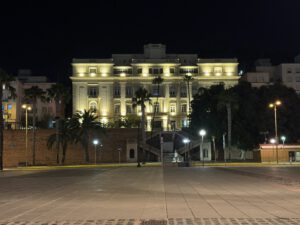
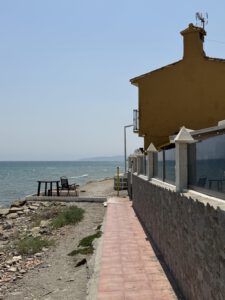
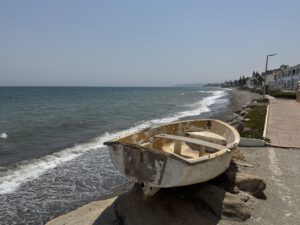
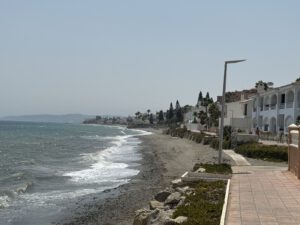
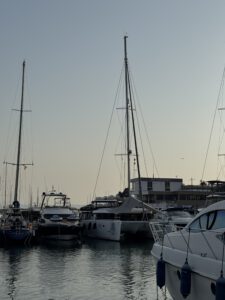
We’re moving at a snail’s pace again! Since we arrived in the Mediterranean, we’ve been traveling at 0.26 km per hour. That’s 260 meters we’ve covered in an hour. I bet even an ambitious turtle could pass us. And the next two days will only make our average even worse. After checking the weather forecast, we’ve decided once again to wait it out. Two more days in Estepona aren’t a burden. But sailing about 80 sm against the wind and waves certainly is, in our view. So we’re starting the new week on a relaxed note and exploring the area a bit more. The temperatures are bearable again, and we can finally get the bikes out for a ride. First, we head up the hill to Lidl, where we stock up on groceries for the next few days. Surprisingly, they’re out of organic eggs! While Axel cycles back on board quickly with the groceries, I make a quick stop on the way back at SuperCor, the El Corte Inglés supermarket. As we know from Cádiz, they actually have everything there. And luckily, organic eggs too. After all, “no rush” just doesn’t fly with us on board. So I’m back on board a few minutes after Axel and can stow away my haul. While we’re leisurely enjoying a midday snack in the cockpit, there’s suddenly a loud crash from two boats next to us. A Lagoon 46 catamaran first swings forward and then, with momentum, slams backward into the quay wall. Oops!!! Although there’s no one on board the Lagoon. A passing motor tour boat got too close to it and cut its bow mooring line. The catamaran is hanging at an angle in its berth and, due to the wind, threatens to slam into the quay wall again. The person responsible for the accident, however, doesn’t think it’s necessary to check on the damage after docking. We’re just about to notify the marina office when Holger and Gabi from the Panacea come by. We’re explaining the situation when two marina staff members finally show up. They’d also been watching the situation from another dock and are now making sure no further damage occurs. Meanwhile, the person responsible for the accident feels no need to offer an explanation or assistance. In the end, we’re left with a small but very annoying gelcoat scratch on the stern. After the commotion, we grab our bikes again and ride southwest along the beach promenade. Most of the buildings are a bit dated, but they aren’t too tall and some are quite nice to look at. A few older houses extend almost all the way to the beach, and we almost ride right through their front yards. Eventually, the promenade ends, and we turn back. Back on board, we take a little siesta and go out for Indian food again this evening. We don’t have to walk far, since the Mumbai Masala restaurant is right across from our dock. We’re served quickly, and our biryanis taste excellent. After dinner, we take a short walk through the harbor to get some ideas for our gangway. We’re not entirely satisfied with the setup yet, so we’re checking out other yachts for inspiration.
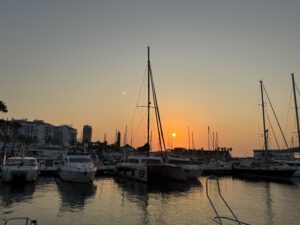
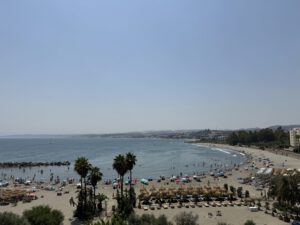
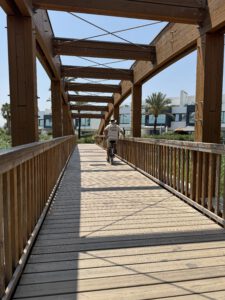
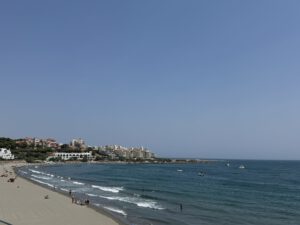
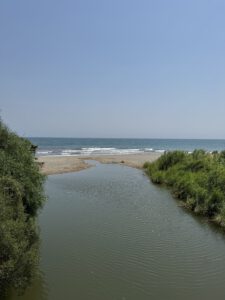
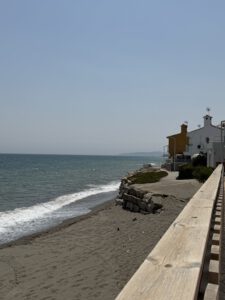
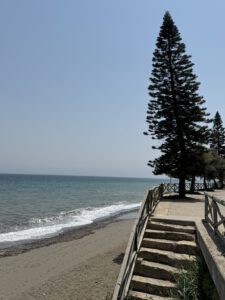
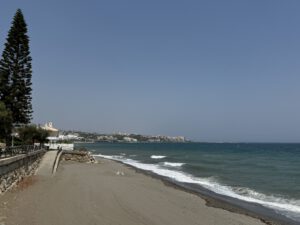
Lucky is acting up again at night! I’ve been waking up every hour starting at 3 a.m. and have to get up to calm him down. It can’t be because he’s hungry, since his bowl is full. Even closing our cabin door doesn’t help much, because Lucky knows he can meow through the open hatch from the cockpit into our cabin, right into our ears. Exhausted as a result, I don’t get up until 8:30 a.m. today and find the cat now sleeping soundly. That little rascal! But of course, I still love him. After breakfast, we check the weather and decide to wait until Thursday to continue our journey. Although we wouldn’t have any headwinds as early as tomorrow—Wednesday—there’s still an unpleasant head-on swell. That should be gone by Thursday, so we should be able to motor the 80 sm just fine. Unfortunately, there’s no sailing wind in sight anywhere. So we can still laze around in Estepona for two more days. Since the weather has become hot and humid again, our activities are limited, though. We do a little housework—washing dishes and vacuuming. We make plans to go out to dinner with Gabi and Holger on Wednesday. We work on planning the rest of our trip. We’d love to be in Valencia or Mallorca by August 12, but there isn’t much time left until then. So we’re considering whether to sail through the night from Cartagena. That way, we could make it to one of our dream destinations by August 12—if the weather cooperates, that is. Why do we absolutely want to be there on August 12? Because of the total solar eclipse! It should be particularly well visible from Mallorca. And, unfortunately, a celestial event like that doesn’t happen very often. Unfortunately, I wasn’t able to see the 1999 solar eclipse in Germany because the sky was heavily overcast, and I’ve never been nearby during other solar eclipses. So this would be a great opportunity. In the afternoon, with temperatures over 30° C, we muster the energy for another short bike ride. This time we head in the opposite direction, along the beach promenade in Estepona. There’s a well-maintained bike path next to the pedestrian promenade, and we make good progress. The view of the calm sea makes us doubt the weather forecast a bit, since there’s not much sign of 1-meter waves. Never mind—we’ve already extended our stay at the marina. This time we go further than on our walking trip and bike along the coast to Playa del Padrón. Then we turn around and, after an hour, arrive back at La Ola, thoroughly sweaty. After a little rest, Axel prepares a delicious Asian-style chicken dinner for us. This time, we head to the cooler front cockpit for dinner with a glass of rosé. Unfortunately, the good mood is significantly dampened in the evening. The lifeguards head out to sea twice and return. Upon their return, they aren’t wearing their bright red uniforms but white disposable coveralls, along with respirator masks. Both times, they’re met by uniformed personnel with a stretcher. Both times, the stretcher is converted into a bier, and a person is carried away in a black plastic bag. Just the day before, two bodies had been found on the beach in Estepona. A third person was found lifeless on the beach today following a swimming accident. Plus the two people from the rescue boat this evening. The sea around Estepona has clearly claimed far too many victims in the last few days. We don’t know the reasons or the circumstances, but behind every death lies a personal story of suffering that saddens us even without knowing the details. After we’ve moved back to the aft cockpit, we notice a rumbling sound. After investigating a bit, we realize that one of our neighbors on a motorboat is being tossed by the swell and is slamming its stern against the concrete pier. We can’t even get onto the boat without a gangway, so we radio the marineros, who resolve the problem shortly afterward. Another good deed done, and bonus points earned for our karma account. Now we can head to our berths with peace of mind.
A newspaper report the next morning shed light on the recovered bodies. A total of three people were pulled lifeless from the water yesterday by sea rescue teams. They are believed to be migrants who attempted to swim from Morocco to the Spanish enclave of Ceuta. It is a dangerous undertaking, as the distance is great and headwinds and currents quickly lead to exhaustion. The current then carried them toward the Estepona region. In Ceuta yesterday, another 39 migrants were rescued alive from the water; they, too, had been attempting to reach Ceuta by swimming. Within 24 hours, tens of thousands have attempted to reach Ceuta. The situation there is escalating further, and Spain has sent in the military to provide support. Unfortunately, these will likely not be the last bodies recovered from the water off the Spanish coast. Apparently, all this chaos arose because human traffickers spread the rumor that if you enter Ceuta by sea, you can no longer be deported.
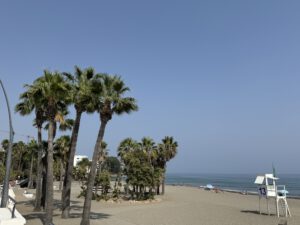
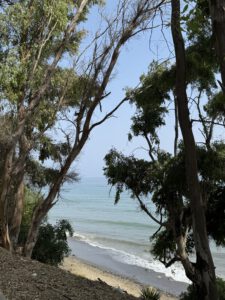
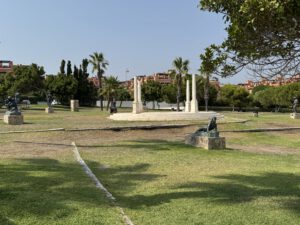
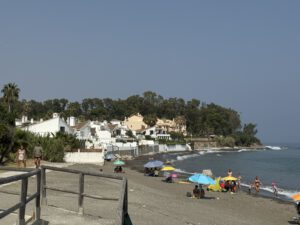
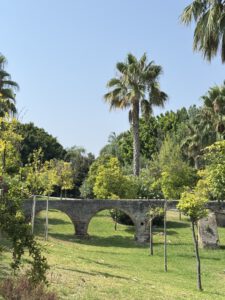
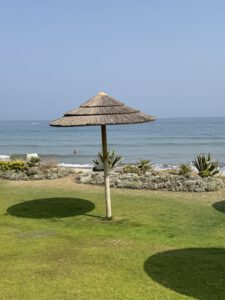
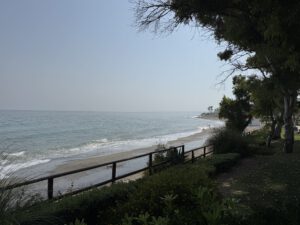
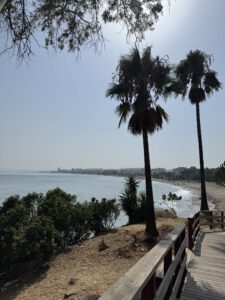
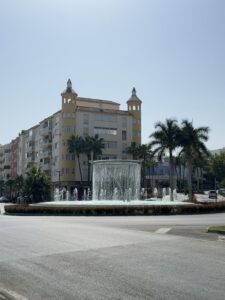
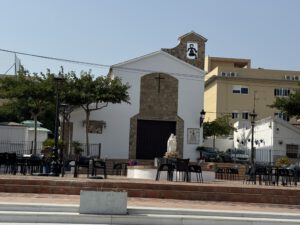
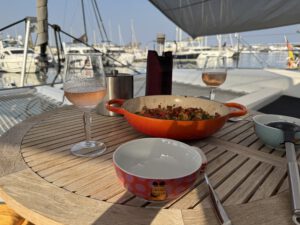
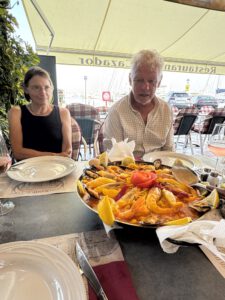
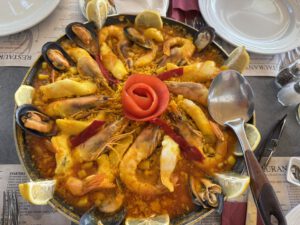
After a somewhat restless night—during which a ground swell rolling into the marina had La Ola rocking back and forth and tugging at the lines—the morning starts off sunny and warm as usual. After breakfast, we set about giving La Ola a thorough cleaning once again. The Saharan dust has once again settled into every little crevice, and we meticulously remove it once more. Given the size of our boat, the whole undertaking takes quite a while, and it’s only after three hours of scrubbing that La Ola shines like new again. We take down the large sun awning for the foredeck right away, since we want to set off early the next morning. The sun awnings on the sides of the cockpit stay up and are tightened properly once more. For the rest of the day, we just sit there sweating. Temperatures over 30°C and 70% humidity result in a warm, humid, sticky, and never-ending stream of sweat. Phew! In the evening, Gabi and Holger pick us up, and we walk the few steps together to the Casador restaurant at the marina. We’ve made a reservation and pre-ordered seafood paella for four. When we arrive at the restaurant shortly after 7 p.m., however, no one is there yet. The doors are locked. At least the tables are set, so we just go ahead and sit down. A few minutes later, someone finally shows up and opens the restaurant. Of course, we’ve sat at the wrong table, but after a bit of discussion, we’re allowed to stay where we are. We’re a little surprised when asked what we’d like to eat, but in the end we manage to explain that we’d pre-ordered the seafood paella. It arrives relatively quickly and, at first glance, looks very good and hearty. However, the rice is still quite al dente, and the paella is burnt in spots on the bottom. We don’t let that spoil our evening; we just chew a bit more thoroughly and avoid the burnt parts. Just like before, it turns out to be a fun evening with the two of them. We’ll probably see them again sometime in Cartagena. Until then, our paths are parting ways once more.
Estepona – Motril 83,3 nm
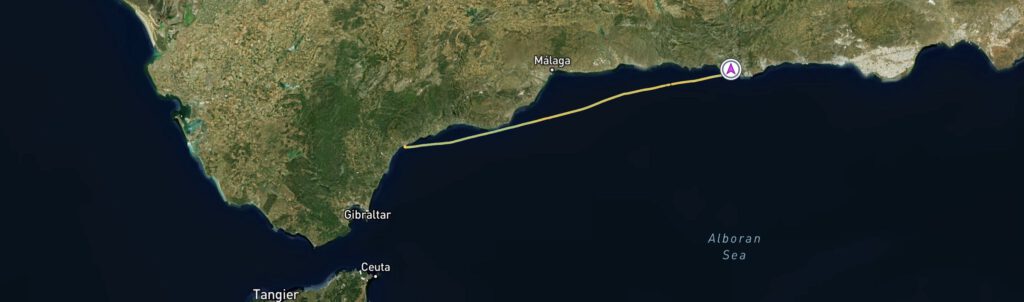
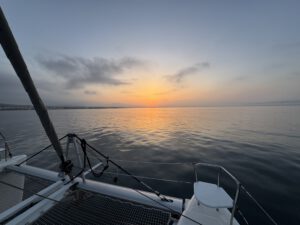
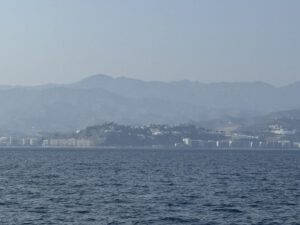
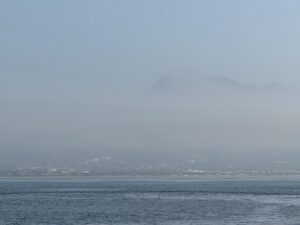
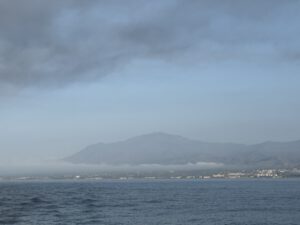
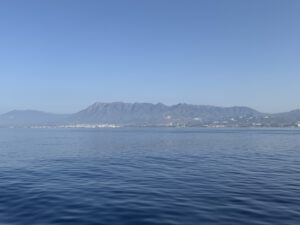
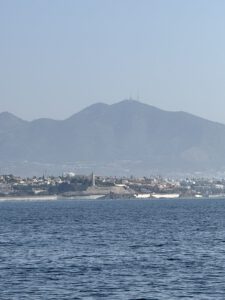
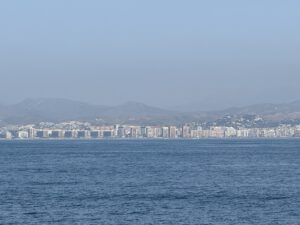
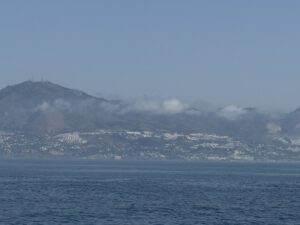
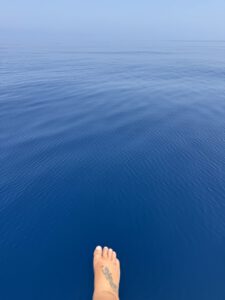
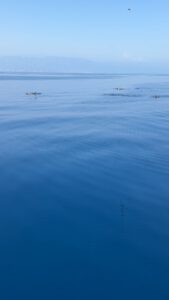
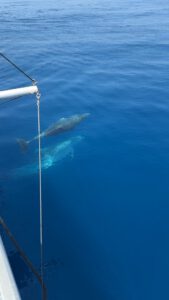
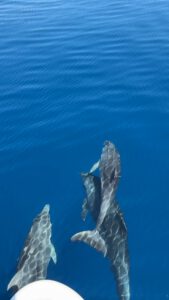
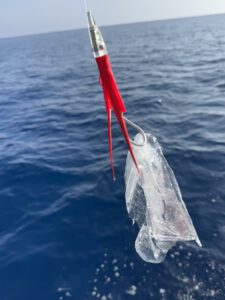
Early in the morning at 6:30 a.m., the alarm goes off. It’s still dark out. But there’s no helping it—we have to get out of bed. As dawn slowly breaks, we drink some coffee and get everything ready to set sail. At 7:20 a.m., we’re off and leave Estepona behind. The sun rises beautifully from behind the coastal mountains and lights our path with a red glow. The sea is as smooth as glass, and there’s just a light breeze blowing from the east—just as forecast. A long day under engine power awaits us, since we want to make good progress eastward today. We would have liked to make a stop along the way, but all the marinas either turned us down or didn’t even respond to our inquiry. So today we’re heading over 80 sm to Motril. The weather is hazy, and in some places the beautiful coastline is barely visible. Perhaps that’s just as well, because once the haze clears, you see numerous high-rises, row upon row, like oversized dominoes stacked on top of one another. It’s not until past Málaga that the development feels a bit more open, and you can see the famous white villages clinging to the mountainsides. But perhaps that impression was misleading, since we’re sailing far out at sea in the deep-blue water. Finally, we no longer have to worry about the Iberian orcas and can sail carefree at a depth of 300 meters. All around us, marine life is teeming. Almost constantly, we see pods of dolphins hunting and leaping somewhere nearby. Fish seem to be plentiful. We see large fish chasing after small ones at the surface and cast out our line. Some fish leap out of the water while fleeing other predators, and I see a rather large swordfish leap out of the water right in front of our bow. In the crystal-clear water, it dives away from La Ola’s bow, and I’m captivated by the fish’s shimmering blue color. Unfortunately, I don’t manage to photograph it. The spectacle is over too quickly, and the swordfish has vanished. I have the same experience with a flying fish that leaps a meter into the air to safety right in front of La Ola. For the most part, the dolphins also stay at a greater distance from us. It’s not until late afternoon—probably after the fishing crew has called it a day—that a few animals join us and play around our bow. Meanwhile, the sun beats down on us relentlessly. It’s hot and getting even hotter. The high humidity makes you soak to the skin even without moving a muscle. As we reel in our line, I have a brief moment of panic. Behind us, four large dorsal fins appear—and the spout definitely points to whales. Judging by their size, they could be orcas! But upon a second glance, we can see their heads, and they don’t have a white spot behind their eyes. So, no orcas. Unfortunately, there’s no fish on our line either—just a piece of plastic. So, while we didn’t catch anything for dinner, at least we’ve made the ocean a little cleaner by removing a piece of plastic. At 7:45 p.m., we finally reach the Motril marina. We’re greeted warmly and given a nice alongside berth at the floating dock. For the first time in our sailing lives, they also set up a small ladder next to the boat to help us disembark more easily. Apparently, everyone with an alongside berth gets one here. We’re welcome to check in the next morning. A little later, we’re sitting in the airy, shaded front cockpit with some sandwiches, recovering from the exhausting sail. Actually, we didn’t do much—we didn’t handle any sails or steer by hand. But spending the whole day in the blazing sun is still pretty exhausting. Even though we drank plenty of fluids all day, our heads are pounding and we feel dehydrated. So we head to our berths quite early to rest, which we’ve once again kept nice and cool with the air conditioning.
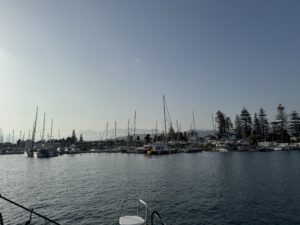
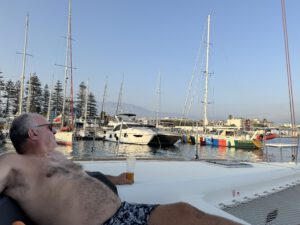
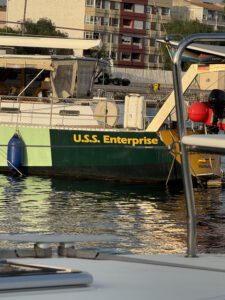
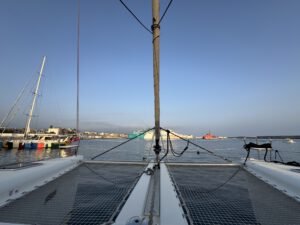
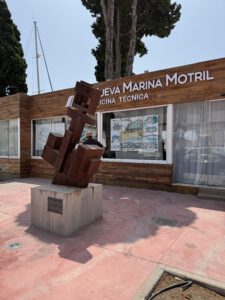
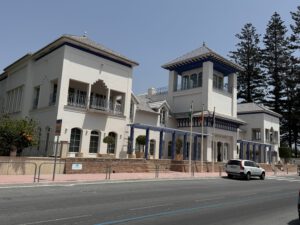
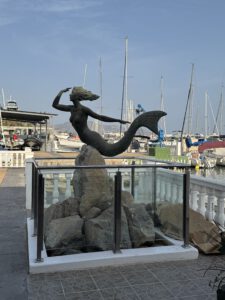
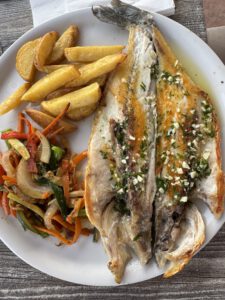
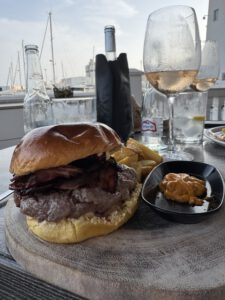
Squeaking fenders and lines that sound like an entire, completely out-of-tune string orchestra. Add to that a head that’s still pounding and sweltering heat, and eventually, in the middle of the night, I find myself heading out to the cockpit. It’s much cooler out there, and the squeaking isn’t as loud. Lucky is a little surprised at first that I’m keeping him company tonight, but he quickly settles back down on the cockpit bench to sleep. Unfortunately, I’m plagued by a mosquito outside and eventually head back inside. I’m understandably exhausted the next morning and just stay in bed until 11 a.m. For once, Axel gets up earlier than I do and checks us in at the marina. Eventually, I drag myself out of bed too, and we take a short walk to the nearest supermarket. The route there, however, turns out to be much longer than it looked on the map, and we first have to walk through the harbor grounds for half an hour before we find an exit. Marina Motril is actually located in Port de Motril, which is accessible only via gated and controlled access points. We eventually manage to find a gate, and a friendly harbor employee shows us how to operate the electronic access system. Without him, we certainly would never have figured out that you have to frantically tap a button for about thirty seconds until the gate unlocks. Finally, we reach the ice-cold, air-conditioned mini-market and head back out with three baguettes under our arms. Since our door can’t be opened from the outside, we take a different route back to the boat and complete our tour of the harbor grounds, feeling thoroughly exhausted. We then enjoy one of the baguettes right away for lunch, topped with delicious Iberico ham. In the afternoon, we once again devote our time to a proper siesta and further travel planning. Starting Sunday, a nice sailing wind from the west is finally supposed to pick up, which will hopefully carry us along quickly and comfortably. Since we’d love to drop anchor again at last, we pick out a nice anchorage for our next stop and hope the weather forecast will cooperate. There are surprisingly few good, sheltered anchorages along the Andalusian coast. In the evening, we make our way just around the corner to the restaurant La Taramela, which is affiliated with the Real Club Náutico. We’re seated right by the water under the sun deck. It’s actually nice, but the water smells pretty strongly of diesel. Apparently, people around here like to refuel using jerry cans from the gas station, and no one seems to care if something goes wrong. It’s really sad when you see how clear and teeming with fish the water in the marina is otherwise. We order fish and burgers, and our food arrives pretty quickly. While Axel’s fish is very good, my burger is notable for its very dark brown bacon. Barely edible, but not exactly a treat. After dinner, we quickly head back on board, where it smells a little less like diesel. We wind down the evening in the cockpit and think about what we want to do in Motril the next day.
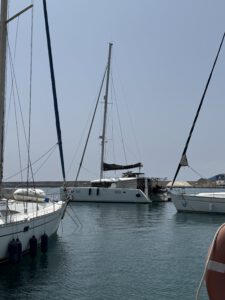
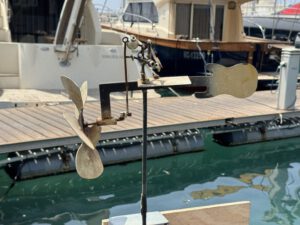
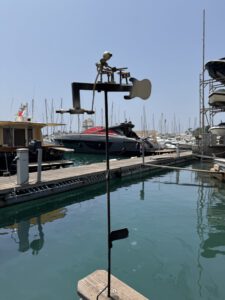
After a much quieter night, we get the weekend off to a leisurely start. Breakfast in the cockpit—where else? Then we take the bikes ashore and set off. We ride along the beach promenade to Charca Suarez Nature Park. Unfortunately, we find the gates closed. We’ve missed the only day it’s open this week—Thursday. We continue on to the main town of Motril. There, we head to the massive Al Campo supermarket and stock up on fresh groceries. Just like in Germany, it’s absolutely packed here on Saturdays. No problem for us, though, because after our little bike ride, we enjoy the cool relief of the air-conditioned store. Finally, we bike back to the marina through the midday heat. Maybe someday we’ll learn that it’s better to do these kinds of trips early in the morning rather than at midday. In any case, we’re soaked through with sweat once again. 80% humidity combined with a temperature of 30° C is simply not pleasant. Back on board, we refuel with melon and ham—as always, refreshing and delicious. Then we use most of the newly purchased groceries to make juice again. In the afternoon, the dock—which we’d had all to ourselves since yesterday morning—starts to fill up a bit again. We chat briefly with our Spanish neighbors about tuna fishing attempts, with our English neighbor about the weather and sailing plans, and are delighted to learn that our Swedish neighbors are from Gävle, where we’d been once before in 2006. That was almost exactly 20 years ago to the day. In the evening, we make ourselves a delicious Greek bowl and, after dinner, head to the much shadier front cockpit. From there, we watch as one boat after another heads back into the marina. The harbor must have been empty before. An open motorboat is towed in by the coast guard and handed over to the navy personnel. Very exciting. Finally, we head to our berths, which we’ve once again air-conditioned and cooled down. At Axel’s request, the air conditioner stays on at night, which I don’t find all that great. It’s too cold, and the airflow is blowing on me uncomfortably. I have to crawl under the blanket, which in turn is too warm. Then there’s a sudden crash outside, and of course I have to go check it out. The transition from the air-conditioned cabin to the outside feels like stepping into a sauna. The humidity is so high that it’s practically like standing in the rain—only without the rain. The noise turns out to be another rescue operation. The tugboat created such a strong swell that Axel’s bike fell over on the wobbly dock. Our Spanish neighbors were kind enough to have already rescued it and set it back up. But I decide to secure it to an electrical box just in case, so it can’t fall over again. Drenched in sweat, I head back to the “refrigerator cabin,” where I can’t decide whether I’d rather dry off with the ice-cold air blowing on me or lying warm under the blanket. In the end, I choose to get under the blanket so I don’t have to freeze. The annoying hum of the air conditioner, however, remains and keeps me awake.
The next morning dawns sunny and clear. I enjoy the refreshing morning with a cup of coffee in the cockpit, while Axel stays in his berth a little longer. It is Sunday, after all—a day to sleep in. Eventually, we have a delicious breakfast with eggs and plan our day. Today we don’t waste any time—we hop on our bikes right after breakfast. This time, we ride along the beach promenade from Motril all the way to Salobreña. The beach is already bustling with people, and one small beach umbrella is lined up next to the next. We finally turn away from the beach and head inland, riding along a stretch of expressway before continuing on a paved dirt road. Small fruit orchards grow in a colorful jumble alongside sugarcane and potato fields. Irrigation canals gurgle along beside the path. After about 10 km, we reach the little town of Salobreña, which winds its way decoratively along a mountain ridge. We decide to skip a visit to the historic old town, though. It’s sweltering hot again, and unfortunately, no stores are open on Sundays in this part of the country. So we head back to Motril. We also dismiss the idea of going to the beach given the crowds there and, upon returning to the boat, prefer to sit in the shaded cockpit. After resting a bit from the 1 1/2-hour bike ride, we quickly rinse down the deck of La Ola. Someone actually left muddy footprints on it. Tsk! Shoe prints size 45 and footprints size 37. Must have been Lucky! Then we fill the water tanks, since we’ll be at anchor for the next few days and want to turn on our watermaker as late as possible. And we also quickly run the washing machine with marina water. Finally, we bring the bikes back on board, prepare our Code Zero for the next day, and hoist it on the forestay. Everything’s ready for a quick departure the next morning. For dinner, we have grilled chicken breasts with coleslaw and baguette.
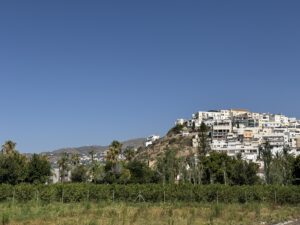
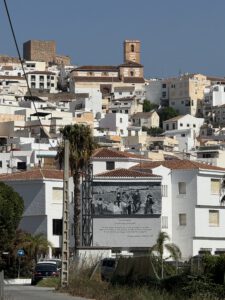
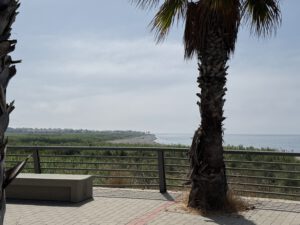
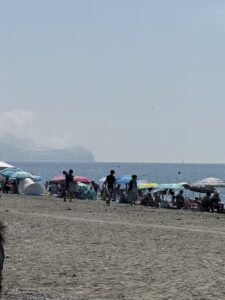
Motril – Roquetes de Mar 49,9 nm
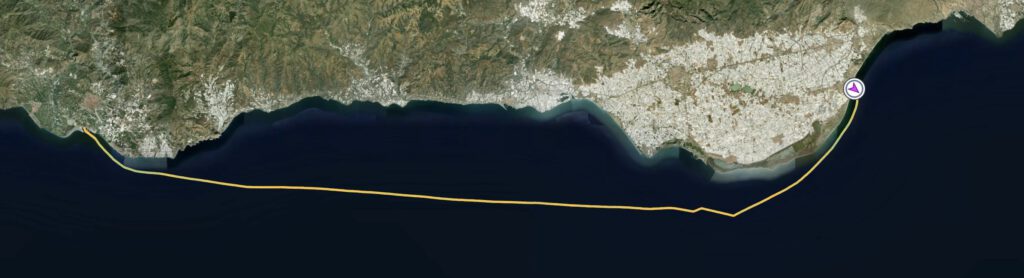
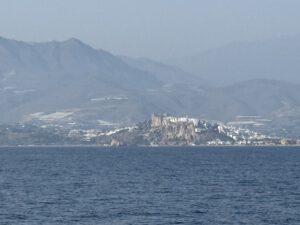
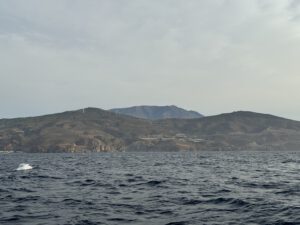
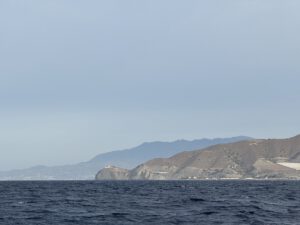
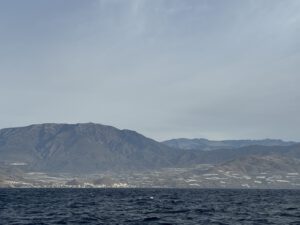
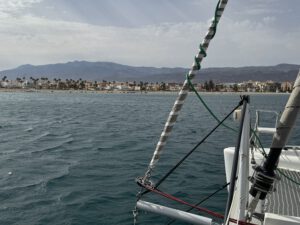
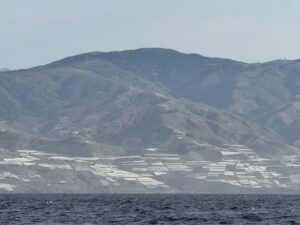
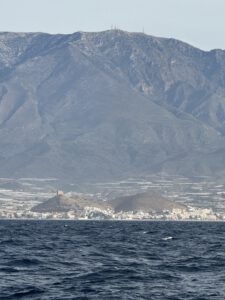
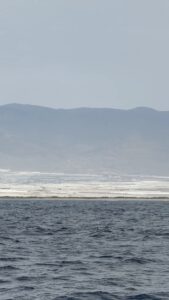
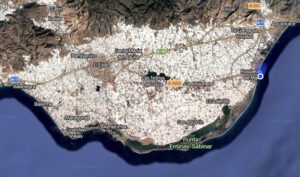
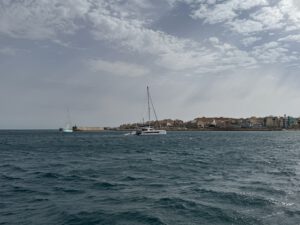
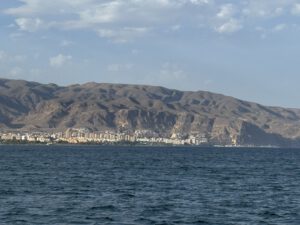
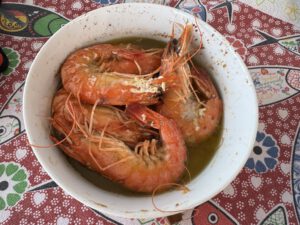
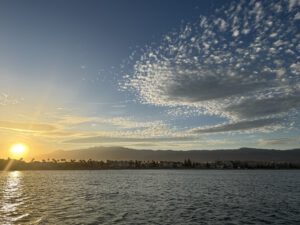
Monday morning. That means it’s time for us to get up early again. The alarm goes off at 6:30 a.m., and we set sail as soon as it’s light out. We have another long stretch ahead of us and are finally hoping for some good sailing wind. And we finally get it. A nice force 4 breeze from astern. After a few nautical miles, we hoist the Code Zero and sail along. First fast, then slow, then faster again. The sea is a bit choppy and is really tossing us about. No big deal, since we’re on a catamaran. But the sail flaps in the troughs of the waves, making the ride a bit bumpy. We cruise along the coast in pleasant temperatures. We imagine that the white spots on the mountaintops are snow. There surely aren’t any greenhouses that high up, are there?! The lower slopes are also becoming increasingly white. Near Almerimar, the entire coastline is even white! White from the countless greenhouses—plastic sheeting under which vegetables and fruit are grown. As we turn northeast past Almerimar, we catch the faint scent of guano. Fertilizer for Europe’s pantry. We roll up the Code Zero and switch to the genoa. Our speed remains nearly the same. Since the weather forecast predicts too much wind for our actual destination at Cabo de Gata, we decide to drop anchor one bay earlier. So we head for Roquetas de Mar, and sure enough, the wind picks up considerably in the afternoon. With winds reaching up to 28 knots, La Ola is now racing toward the anchorage under a double-reefed genoa. Unfortunately, two other yachts are already at anchor, so we have to head to the windy and choppy end of the anchorage. Well then, the wind is supposed to die down, and with it, the waves. Until then, we’ll be dancing around quite a bit. While we enjoy a simple evening meal—dry bread and a few jumbo shrimp in garlic oil—the wind dies down and the waves subside. Just enough to lull us perfectly into the evening atmosphere for a beautiful sunset. Axel takes a quick dip in the large pool, and we’re glad once again that we chose the hard life on board. When it’s already pitch black, we receive an unexpected visit. Spanish customs arrives in the bay for an inspection, with a large mother ship and a completely unlit auxiliary vessel. They shine a light on us and ask to come aboard. We have to let them—there’s no alternative anyway. We’re asked to present our papers. Passports, boat registration, and insurance. Just to be safe, we also show Lucky’s pet passport, but the customs officers aren’t interested in it at all. After twenty minutes, various forms are filled out, and they leave us again. As they take their leave, they give us two copies of the completed paperwork and say that we’re now all set for August and can simply present the papers during the next inspection. As we head to our berths shortly after the customs officers leave, we wonder what would have actually happened if we’d already been asleep. Would they have woken us up? Or let us sleep peacefully? Regardless, we’re registered and cleared for now.
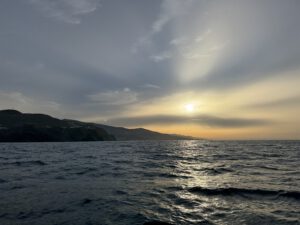
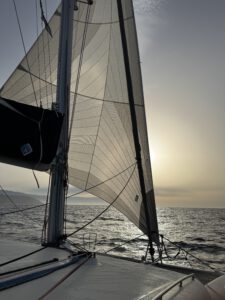
Roquetes de Mar – Playa de los Genoveses 25,7 nm
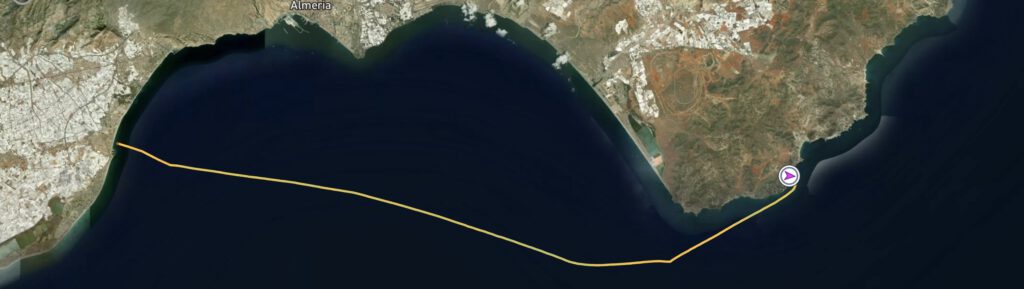
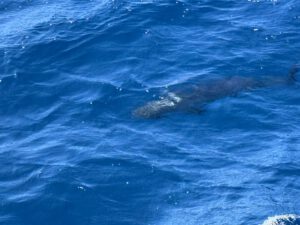
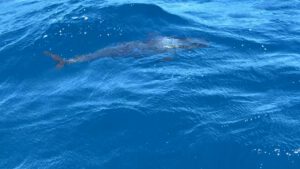
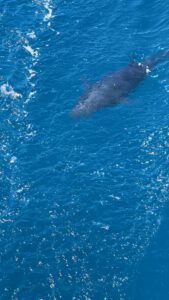
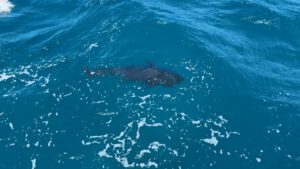
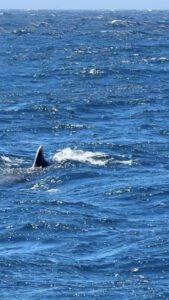
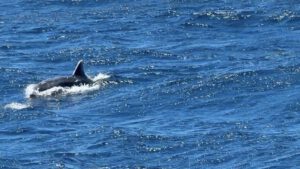
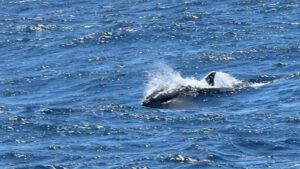
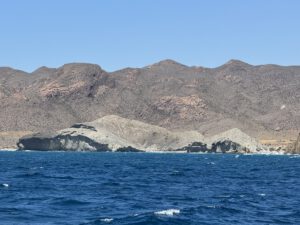
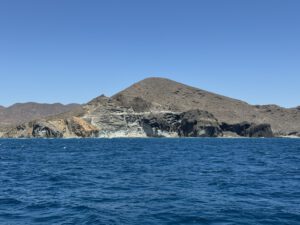
The night remains choppy, and we’re rolling back and forth with the swell. Yes, even a catamaran moves. Just not as wildly or violently as a monohull. At some point, a faint smell of smoke wafts through the cabin. It’s hard to tell whether campfires have been lit on the beach or if there’s a fire somewhere on land. To make matters worse, around 4 a.m., a cicada joins the fray—it somehow managed to make its way from land out to us on the water. It chirps shrilly nonstop, presumably trying to lure its buddies over. At 6:30 a.m., I get up and try to shoo the pesky bug away. But of course, I don’t succeed. So I quickly feed Lucky and head back to my berth. An hour or so later, the sun comes up and the cicada falls silent. But now I’m awake anyway, so I settle in with my coffee in the cockpit. The air is clear again, and it looks like it’s going to be another beautiful, sunny day. After Axel emerges from his berth as well, we enjoy a delicious breakfast. At 9:20 a.m., we weigh anchor and set off again. We cross the Gulf of Almería and set course for Cabo de Gata, the “Cat’s Cape.” It has a certain reputation, so we approach it with due caution. We hoist the Code Zero first, but take it down again after just a short while. Too much swell and too little wind cause us to slam hard in every trough. So we continue under engine power for a while. At 10:45 a.m., the wind has picked up enough, and we hoist the genoa. Now we’re making good progress under sail. The waves are significantly higher than forecast, and we’re surfing nicely in the right direction. When I check our fishing line, I realize we’re being followed. At first I’m delighted by the dolphin visit, but then I realize we’re not being followed by dolphins, but by some pretty big fish. At first glance, the fast-moving gray bodies look like sharks! But sharks rarely swim in groups, do they? Upon closer inspection, you can see a blue stripe on the fish, and we guess they’re bluefin tuna. They’re the size of dolphins! So a pretty impressive 1.5 to 2 meters long. Unbelievable! Even though the temptation of fresh sushi is strong, I’d rather quickly reel in our line. Our bait wouldn’t be suitable for tuna this size, and what would the two of us do with such a huge fish anyway? Besides, bluefin tuna fishing is strictly regulated and, when in doubt, prohibited. So let’s just enjoy the experience! The school of tuna accompanies us for several hours, swimming at lightning speed behind and alongside us. Why are they doing that?! No idea! We’re approaching Cabo de Gata, and the waves are subsiding in the lee of the impressive coastline. Now, in addition to the tuna, bottlenose dolphins are appearing. They leap high out of the water and accompany us for a while. The tuna and dolphins don’t seem to bother each other and leave one another in peace. Eventually, the dolphins swim off again, leaving us alone with our tuna. Only when we lower our sail and start the engines just before reaching the anchorage do they leave us and swim away. Cabo de Gata is characterized by an extinct volcanic complex, 15 to 6 million years old, that formed underwater. As we sail by, we see striking lava formations, cliffs, and fossilized coral reefs. Today, the area is a geopark and attracts many visitors as a result. We finally reach the bay of Playa de los Genoveses and drop anchor. The wind is blowing strongly over the hills, causing La Ola and the other boats to rock back and forth quite a bit. It’s a good thing we have such a sturdy anchor! Since the wind is supposed to die down significantly in the evening, we decide to stay on board for now and take a little siesta. The wind does ease up, but there are still some strong gusts blowing through in the afternoon and evening. So we decide to postpone our trip ashore for now. We can’t bring ourselves to go swimming either—at least not yet. But we’re ready to cook! Axel prepares a delicious ratatouille in the air fryer. We were actually planning to serve it with baked feta, but the package came out of the fridge all puffed up and didn’t smell too good anymore. OK, so it’s veggie day. Maybe we should have caught a tuna after all?! No, no—then we wouldn’t have been able to use and enjoy nearly as much of those wonderful fish. After all, we somehow lack the refrigeration capacity for a whopping 80 kg of tuna meat. In the evening, the beach around our anchorage empties out, and the local motorboats return to their home ports. The evening sun paints the surrounding volcanic hills in front of us orange-brown, and behind us, the sky over the sea turns a night-pink hue. Oh, maybe we should stay here one more day? Let’s see what the weather report says. After customs inspected us yesterday, the Guardia Civil is paying us a visit at the anchorage today. Apparently, though, they just want to spend a quiet night at anchor too. In any case, we aren’t bothered with any more forms before going to bed.
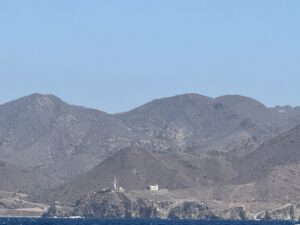
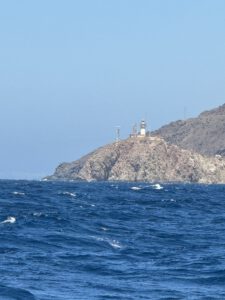
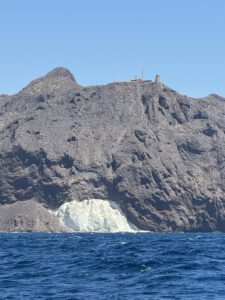
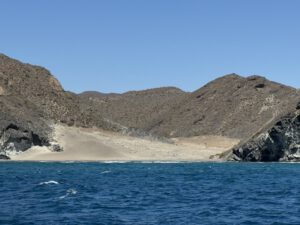
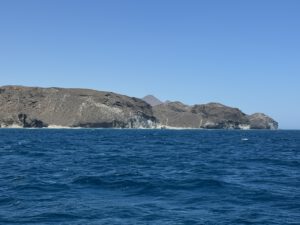
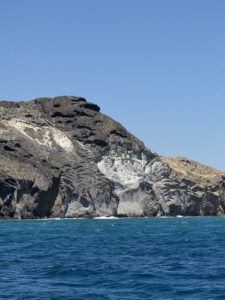
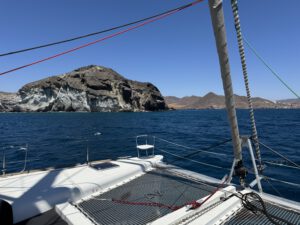
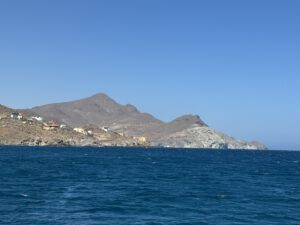
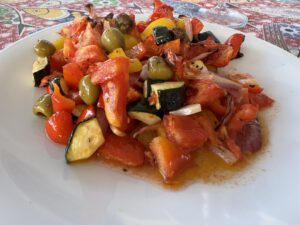
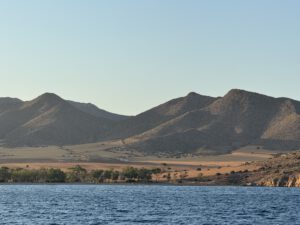
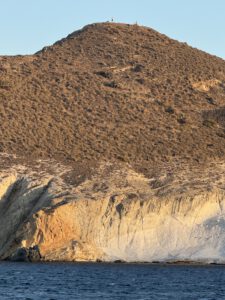
Playa de los Genoveses – Playazo de Rodalquilar 10,7 nm
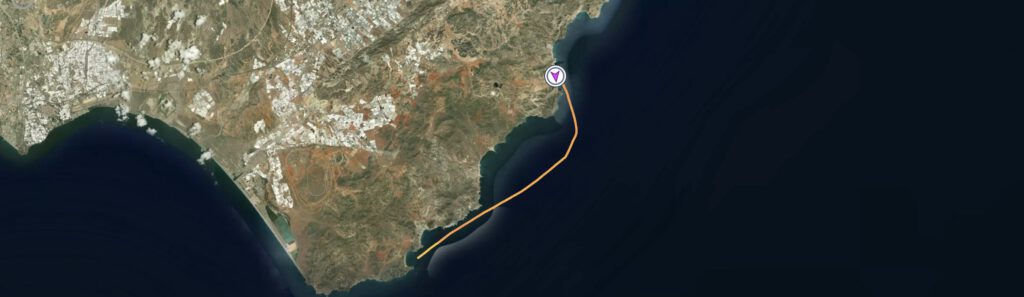
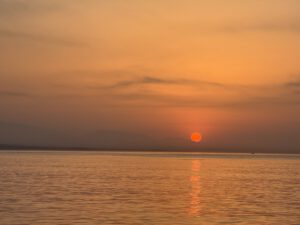
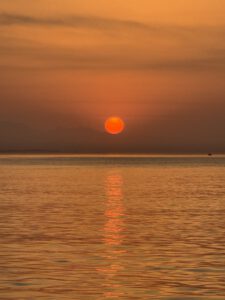
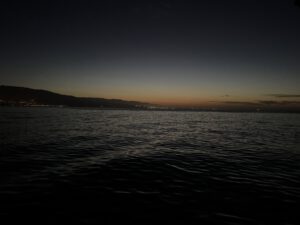
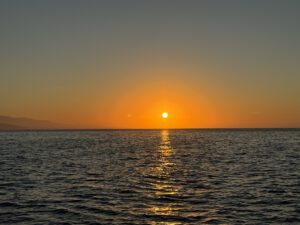
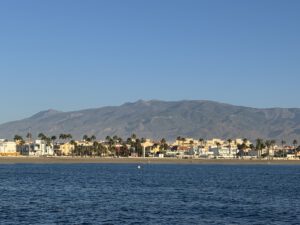
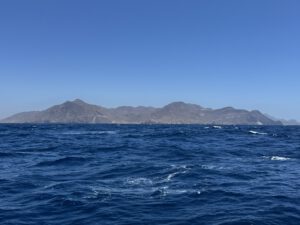
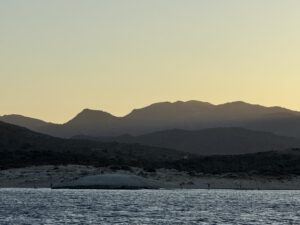
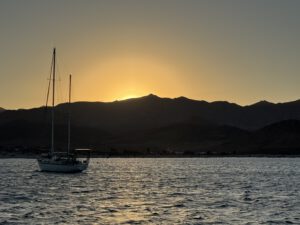
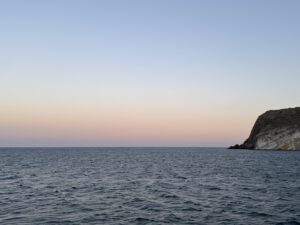
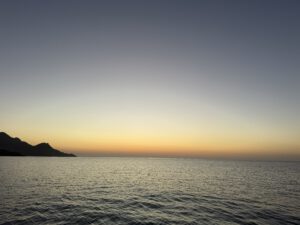
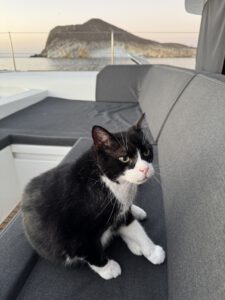
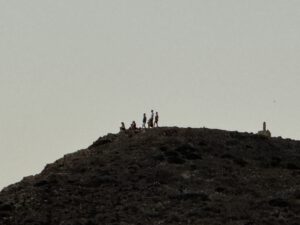
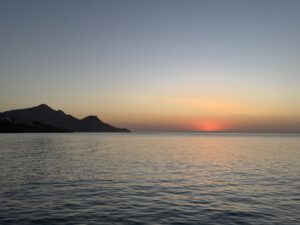
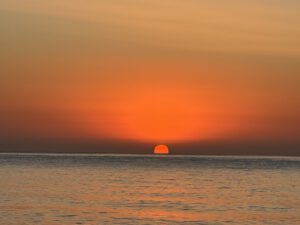
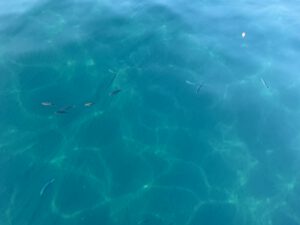
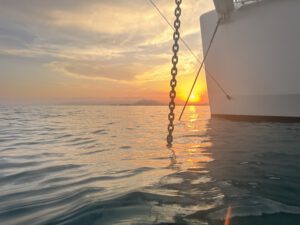
In the early morning hours, the boat begins to roll, gently rocking us back and forth in our berths. I get up and notice that La Ola has turned, and a light swell is now rolling from the open sea into the bay. From the beach, you can already hear laughter and chatter, and flashlight beams are dancing up the mountainside. Everyone is heading to pole position for the morning’s highlight. Great idea! I don’t have to climb a mountain to do this—I just head out to the front cockpit. Lucky is already lying there, happy to have my company. It seems he’s found his new favorite sleeping spot up here. The horizon slowly changes color, and finally, the sun rises thick and round over the horizon in a vibrant orange. Beautiful! My fellow spectators on the mountain have also made it to the top on time and are enjoying this special experience. As I sit in the cockpit sipping my first cup of coffee, I watch them make their way back down the mountain and across the beach. Back on land, the cicadas have begun their song, and a polyphonic chirping and buzzing fills the bay. Every morning should start this beautifully! After my coffee, I glance into the water. Crystal-clear and illuminated by the sun into a bright blue, making La Ola seem to float. Fish swim beneath us; a shell lies on the seabed. And behind us, the anchor chain coils, with the anchor buried deep in the seabed. You just have to jump in! Into the “bathtub” with a water temperature of 26° C and a salinity that barely lets you sink. I rinse off with fresh water and head out into the sun to dry off. Wonderful! Meanwhile, on land, the parking lot is filling up and countless beach umbrellas are being set up on the beach. At 9:30 a.m., Axel finally manages to get out of his berth, and today we’re having pancakes with maple syrup for breakfast. A tasty treat again. Then, of course, Axel has to get in the water, too. He takes his goggles, fins, and a cleaning rag and scrubs La Ola’s hull and waterline to remove a few pesky yellow stains we’ve been carrying around with us since Mazagon. It’s not until 12:20 p.m. that we weigh anchor and leave this gorgeous anchorage. But we only want to go a little further and drop anchor right in the next great cove. There’s hardly any wind, but we’re in no hurry. So we cruise along the coast toward the north under the genoa at 2 to 3.5 knots. The coastline remains spectacular to behold, and we enjoy the view from the sea. After 3 1/2 hours, we stow our genoa again and drop anchor off Playazo de Rodalquilar. The beach is crowded, and numerous tour boats are anchored there. Towering over the bay is the imposing Castillo de San Ramón, an 18th-century fortress. There are also petrified dunes to see. We stay a bit further out and once again enjoy the crystal-clear water. We just have to go for a second swim! Even though the water here is as clear as it was in the previous bay, there isn’t a single fish to be seen. What a shame! For dinner today, we’re making Hawaiian toast. Since we don’t have any toast, though, we’re using burger buns instead. It works out just fine and tastes good, too. Eventually, the sun disappears behind the mountain and the bay empties out. The swimmers drive off in their cars. The water sports enthusiasts head to the nearest marina. In the end, we’re sharing the bay with just two other yachts. The stars appear in the sky, and we gaze upward with anticipation. The Perseids are on their way again, and with a bit of luck, we’ll be able to see shooting stars over the next few days. And right now, we’re in a region with very little light pollution—hardly any buildings, very little industry. It’s usually only this dark way out on the open ocean.
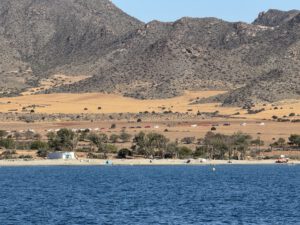
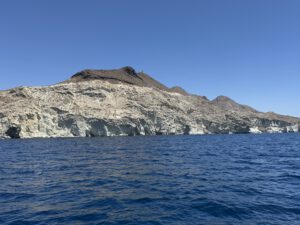
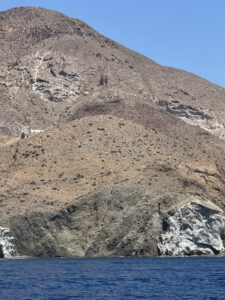
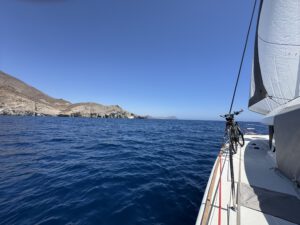
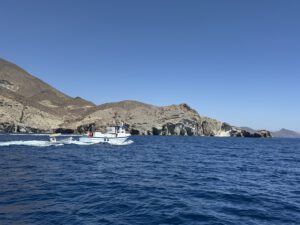
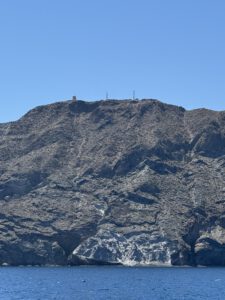
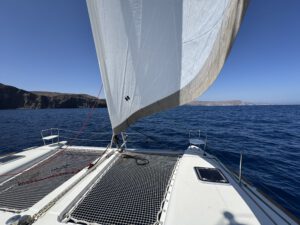
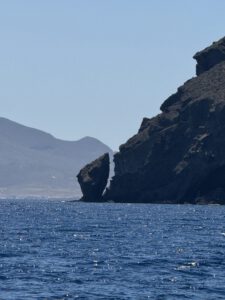
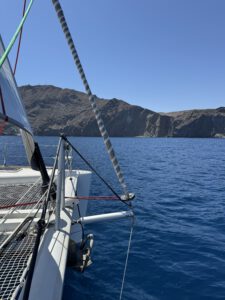
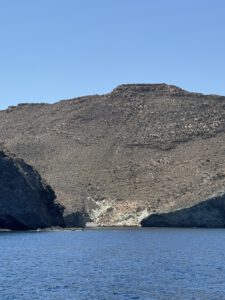
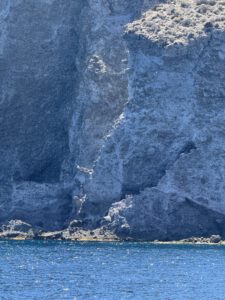
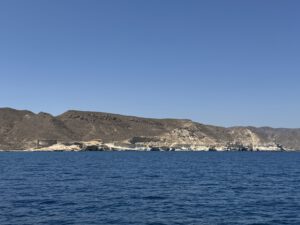
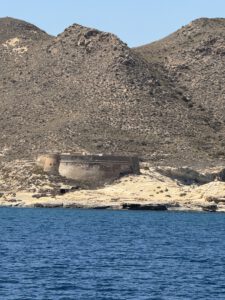
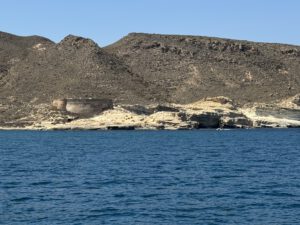
Playazo de Rodalquilar – La Azohia 62,4 nm

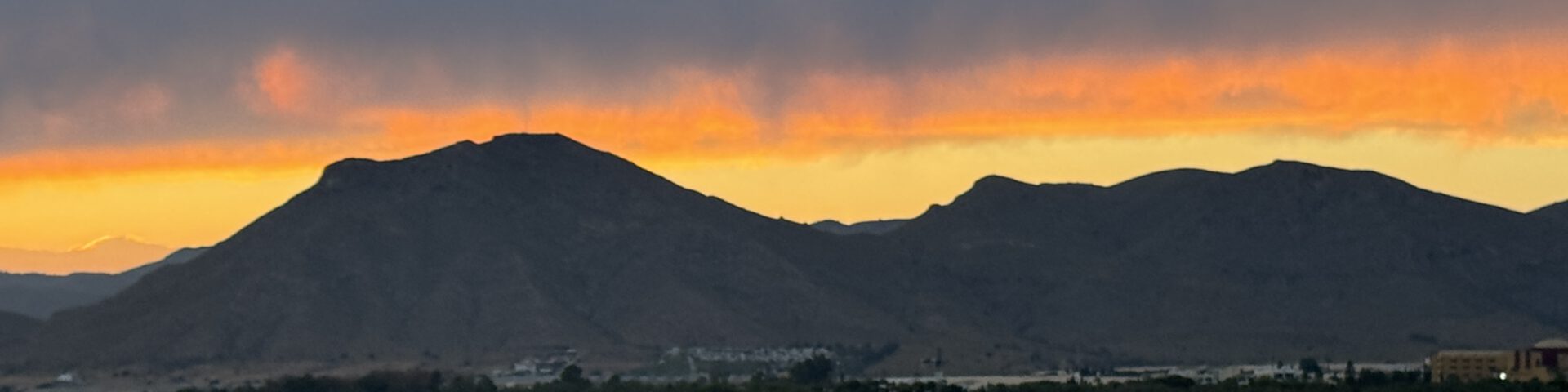
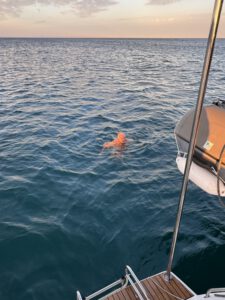
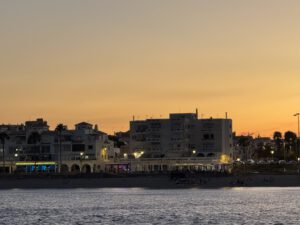
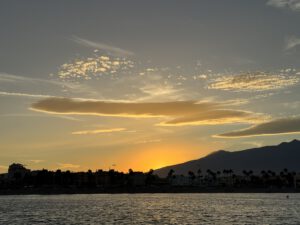
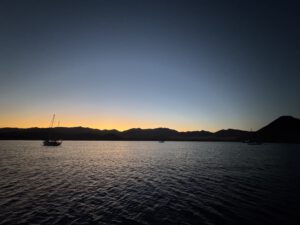
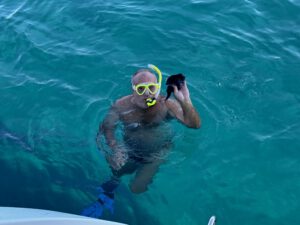
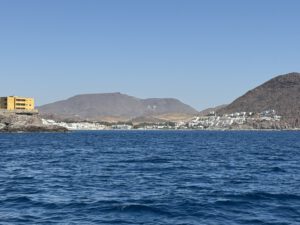
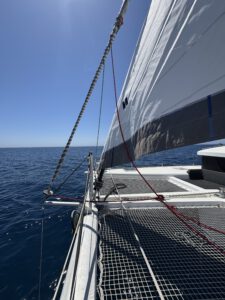
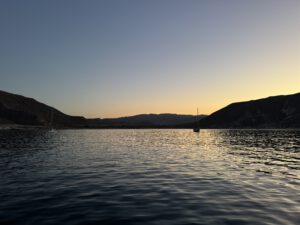
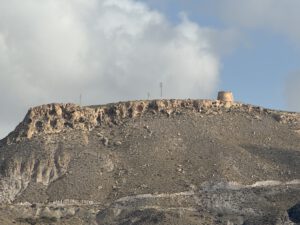
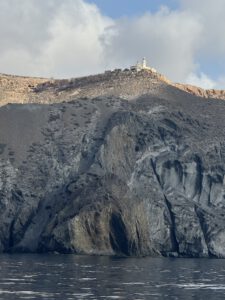
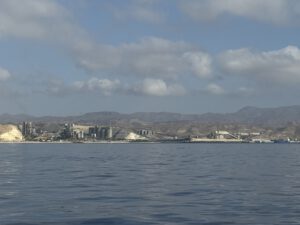
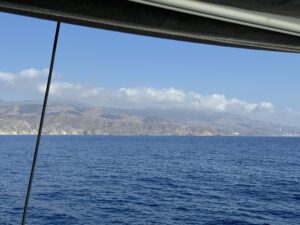
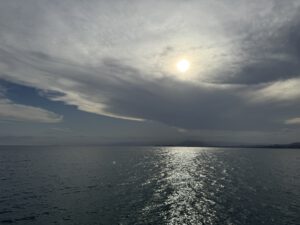
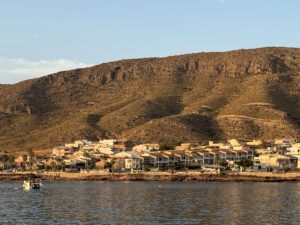
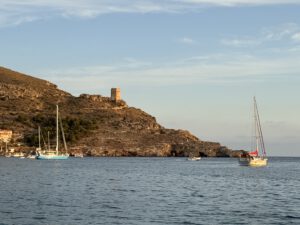
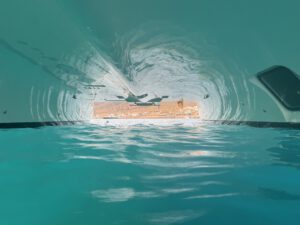
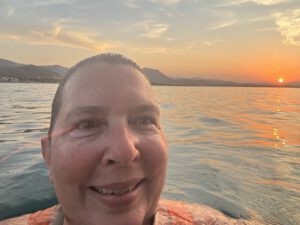
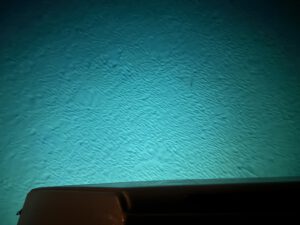
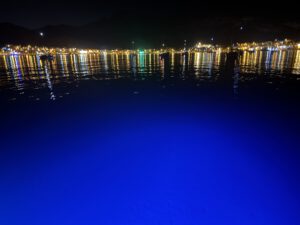
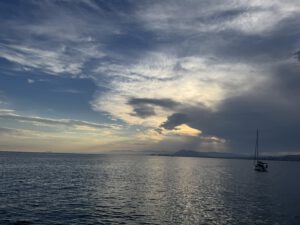
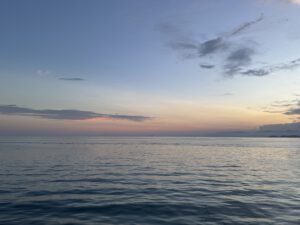
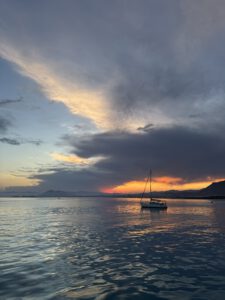
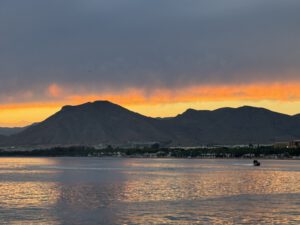
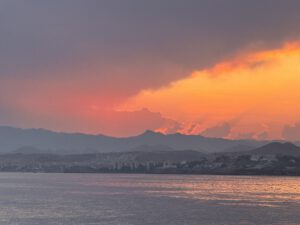
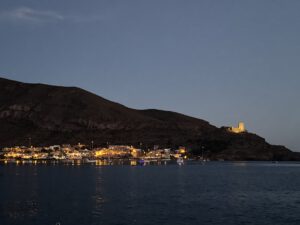
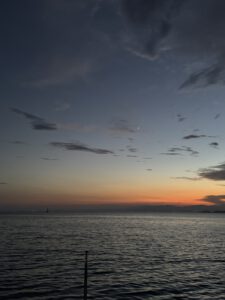
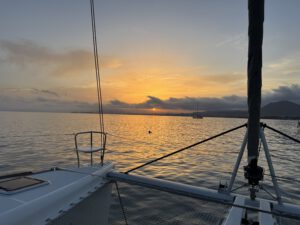
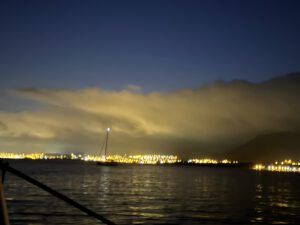
Onward, ever onward, we go. After taking it easy yesterday, we now have a longer stretch ahead of us. We’ve picked out a few anchorages and hope we’ll like one of them. At 8:30 a.m., we leave the beautiful anchorage. After a stunning sunrise, the sky looks menacingly dark as we set off. There’s a latent risk of thunderstorms, so we watch the towering dark clouds with great skepticism. But after just an hour, the storm has passed and the sun has broken through again. We sail past the imposing Mesa de Roldán. Incidentally, the historic coastal tower, Torre de Mesa Roldán, served as a filming location in Season 6 of “Game of Thrones.” Neither Axel nor I have ever seen a single episode of the series, but it certainly looks impressive. It’s also interesting to note that the flat topography is crowned by a 6-million-year-old fossilized coral reef. Just around the next corner, we do come across some industry. Carboneras is home to a large cement plant and an industrial port. Let’s move on quickly! The sea and wind are very calm today, so unfortunately we have to run the motor again. It looks like it’ll stay this windless for the next few days as well. We head straight for our first destination, Águilas, moving away from the coast as we go. There isn’t much going on. Every now and then a fisherman, two oncoming sailors, and a few freighters at anchor in the roadstead some distance away. Finally, at 2:30 p.m., we reach the Bahia de Levante anchorage off Águilas. We don’t really like it, though, because you’re anchored in front of high-rises right in the middle of the harbor entrance, and numerous motorboats roar past the anchored boats. So we’d rather move on. Just around the corner is the rocky islet of El Fraile with Roman ruins. The scenery here is much more charming! However, it’s so crowded there that we can’t find a spot for ourselves. So, on to the next bay. We head for the bay of the small village of Calabardina. It’s flanked by the tall Cabo Cope and looks very nice as we approach. Dieter-Thomas Heck, the host of the ZDF Hitparade, is said to have lived here. It’s a beautiful spot, but unfortunately we can’t find a suitable anchorage for us in the narrow bay. The seabed is covered with Posidonia seagrass everywhere. These seagrass beds are strictly protected, and there are heavy fines for anchoring in them. So we have to keep going. It’s now 3:30 p.m., and unfortunately, the next anchorage isn’t just around the corner. Now we have to motor on for three hours to reach the next suitable cove. To be honest, we’re tired of the constant hum of the engine—but there’s no helping it. And sometimes a decision like this turns out to be a stroke of luck. Even as we approach the bay of La Azohia, we’re pleased to see that the development here doesn’t consist of numerous high-rises, as is otherwise quite common along the coast. People often refer to them as “hotel castles.” Fortunately, that trend hasn’t taken hold in La Azohia yet. The development seems to have stopped in the 1960s. Low, box-like houses and just a few taller buildings dominate the townscape, and it’s refreshingly green. While the coastline we’d sailed past so far looked either very dry and brown or white and green from rows of greenhouses, here we finally see green trees. The whole place gives off a very laid-back vibe. Tranquillo—just the way we like it. So, after 10 hours of motoring, we’ve finally reached our desired anchorage. Although there are already numerous other yachts at anchor, the bay is large enough, and we quickly find a suitable spot for ourselves—free of seaweed, on the finest sand. You can easily see the seabed through the crystal-clear water. Wonderful! First, we enjoy a beer in the front cockpit while once again looking anxiously at the towering clouds over the land. What if a thunderstorm is sneaking up on us after all? But no, this time, too, the cloud mountains simply vanish, making way for a beautiful sunset. We jump into the 30° C water and splash around La Ola. This time, I take my iPhone with me in a waterproof case and snap a few nice photos from the water. Afterward, we lie down in the forward cockpit to dry off and enjoy the rest of the sunset. The sky is pulling out all the stops with its colors again today, and we can hardly get enough of nature’s beauty. Eventually, the lights on shore come on, casting reflections on the mirror-smooth sea. Venus appears above the forestay, and far in the distance, the lights of the town of Mazarrón glow. Once it’s dark, we turn on our underwater lights and now have what’s probably the biggest saltwater pool for miles around. The sandy bottom reflects the light back, and we could stare into the water forever. It’s somehow mesmerizing. So it gets quite late before we finally head to our bunks.
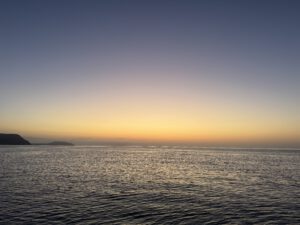
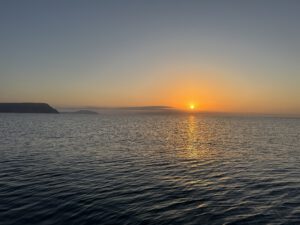
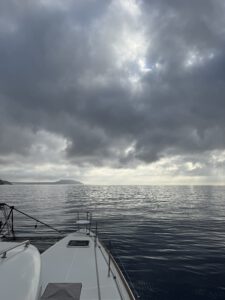
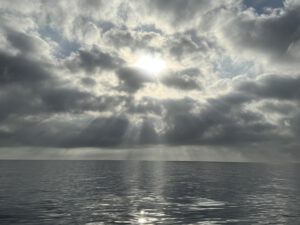
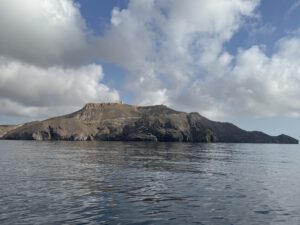
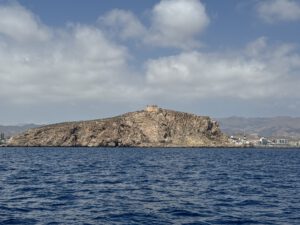
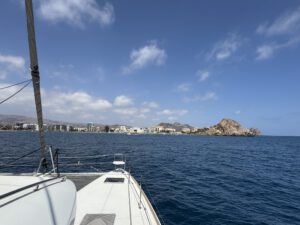
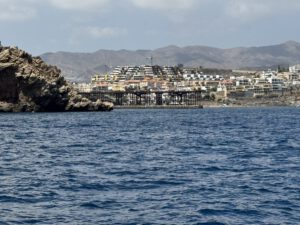
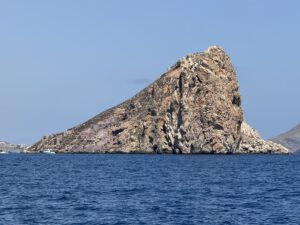
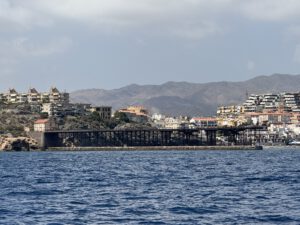
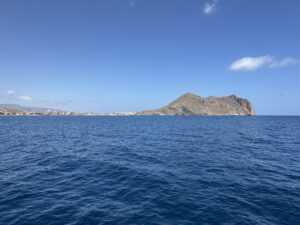
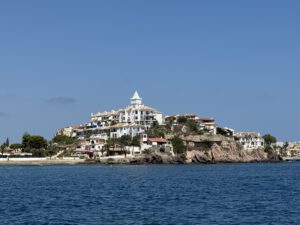
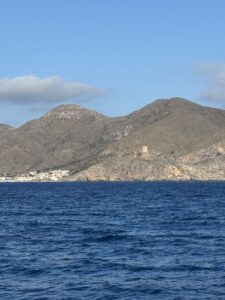
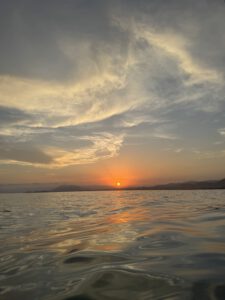
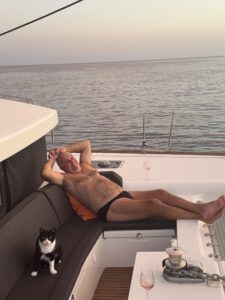
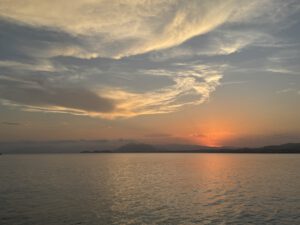
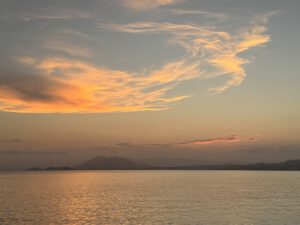
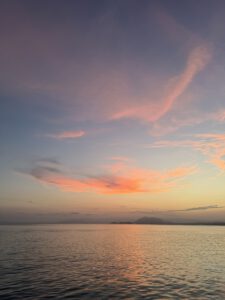
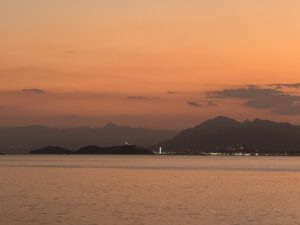
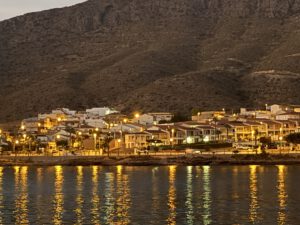
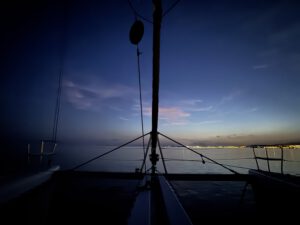
After yesterday’s long trip, we’re taking a day off today. It’s just too beautiful here, after all. We jump into the crystal-clear water to join the fish and enjoy the natural swimming spot. Then we laze around for the rest of the morning and a good part of the afternoon in the shaded cockpit. By mid-morning, the air temperature in the shade is already 32° C, so we decide to postpone our planned trip ashore for a bit. Instead, we prefer to jump into the water every now and then to cool off. Although you can’t really call it “cooling off,” since the water is only slightly cooler. Even I—who usually takes half an hour to work up the courage to get in—can just hop right in. Little fish swim around us, curiously watching what we’re up to. After a swim, we take a nice freshwater shower on the swim platform and then let the air dry us off. Somehow the day flies by, and before we know it, it’s time to fire up the pizza oven. Unfortunately, my pizza dough just isn’t cooperating today. <It lacks elasticity and stretch. It simply refuses to take shape and keeps tearing. Maybe it’s too hot for it? Who knows what can go wrong with pizza dough at these temperatures. In the end, I give up and make a kind of focaccia with cheese and salami baked in instead of pizza. It tastes good and is filling, but it just doesn’t satisfy me. After dinner, we move to the front cockpit and are treated to another amazing celestial spectacle. The sky to the west is ablaze, and the clouds look pretty menacing. Thunderstorms, heavy rain, and hail have been forecast for the inland areas. Here, however, it’s supposed to stay calm and dry—even if you’d hardly believe it looking at the sky. In the end, though, the weather stays nice and dry. Live music drifts over to us from the shore today. Unfortunately, it’s coming from three different bands in three different directions. Fortunately, things quiet down again after 10 p.m., and we can wind down the evening without any noise disturbance. Unfortunately, we somehow didn’t manage to get our planned shopping done today. We’ll probably have to try again first thing tomorrow morning. Otherwise, we’ll soon have nothing left to eat on board!
I’m used to getting up early, so I start getting the dinghy ready for our trip ashore. We have to take our collection of fenders out of the dinghy, along with the water hose and the landing nets. In their place, we load trash bags and backpacks into the boat. At 8:45 a.m., we set off for the small pier in the southeastern corner of the bay. At the concrete pier—unlike at our anchorage—the water is very choppy, and our dinghy scrapes against sharp edges. Not good! So we decide to split up. While Axel heads back to La Ola in the dinghy, I go to the small Spar supermarket to do some shopping. The trip there is still quite manageable. The trip back, on the other hand, is borderline. By now it’s 10 a.m. and the sun is beating down mercilessly. Not a hint of shade or wind along the way. To make matters worse, I’m carrying 15 kg on my back: drinks, salad, cheese, and a baguette. Fresh eggs are a must, too. I drag myself the 1.5 km back to the pier, and Axel picks me up, drenched in sweat. Back on board, I start by replenishing my fluids with a liter of water. You can get dehydrated pretty quickly out here. Then I head to the big saltwater pool to cool off some more. After that, I feel better again. There isn’t much else on the agenda for the rest of the day. Except for jumping into the water every now and then, cooling off, getting hot again, and repeating the whole thing. Kind of like a vacation, in a way. The anchorage is bustling today, and the beaches are packed. The locals have the weekend off and are heading to the beach. There aren’t many tourists here. In the evening, we make a delicious Caesar salad and then spend the rest of the night in the cooler front cockpit. Today, music is drifting over from the beach again. Since it’s Saturday, though, it goes well past midnight.
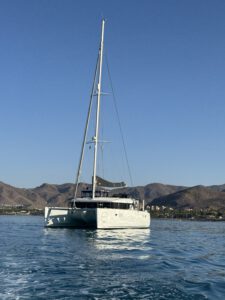
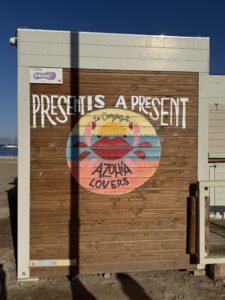
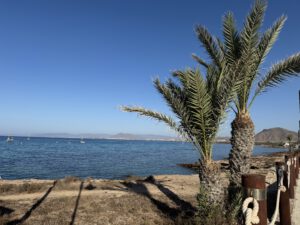
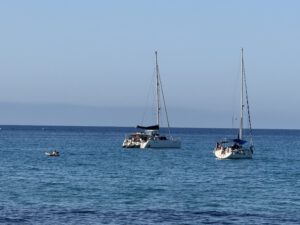
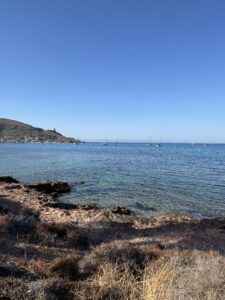
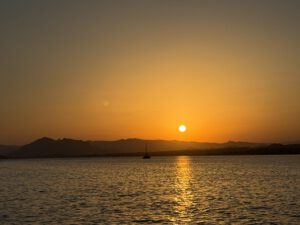
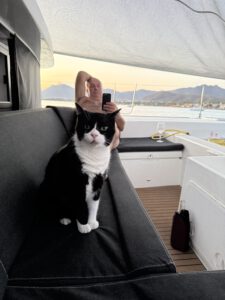
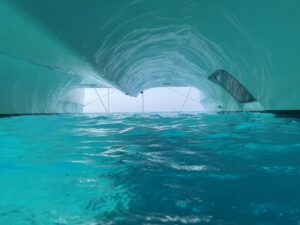
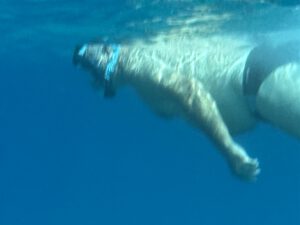
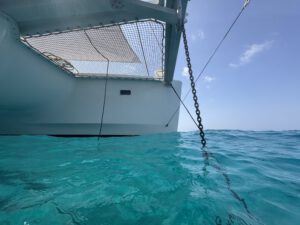
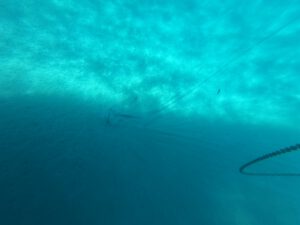
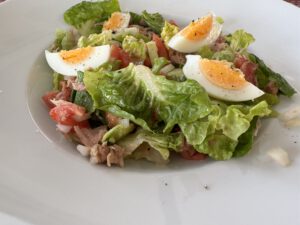
Sunday starts off quietly and, as usual, with a delicious breakfast featuring eggs. Afterward, the La Ola hair salon opens, and Axel gets a new haircut. Not me, though—I was just at the salon in July. Well, July 2025! But it’s still okay. Somehow, we’ve gotten stuck here again. But the anchorage is just too nice. Plus, there’s currently no suitable wind for us to continue our journey. We can either keep motoring through the calm or stay comfortably at anchor. That makes the decision easy for us. It’s just a shame that this means we won’t be in the Balearic Islands for the solar eclipse. We’re hoping we’ll be able to see at least a little of it from the mainland. If we’re unlucky, though, it’s supposed to be cloudy on August 12 as well. Then it’ll be really hard to see anything. And even though we’d actually planned to just sail past Cartagena, we’ve now booked two days at the marina after all. We urgently need to restock our supplies, and the small discount supermarket here isn’t really up to the task. But we’ll spend Sunday once again at anchor in La Azohia and repeat yesterday’s vacation routine. So, off into the water! There aren’t just small striped bass and sea bream swimming around—there’s also a pretty big bearfish! By the way, swimming and snorkeling are best right under the catamaran. A cooling breeze blows between the hulls, and you’re protected from the sun. We’re not at all interested in getting sunburned. So we just swim back and forth between the stern and the bow. Today we also spot our anchor on the seabed. It’s right underneath us! The anchor chain traces a nice arc forward and back toward us. With the light wind, our heavy 12-mm-thick chain is enough to keep us in place. But you never know when the wind might pick up. A thunderstorm gust or a downburst from the hills would be enough—then the anchor would be far ahead of us again and would hold us securely. In stark contrast, a small motorboat is anchored rather loosely. They’ve probably let out too little anchor line and are drifting right across the anchorage. Without worrying too much about it. The family with two small children—at least equipped with life jackets—goes for a swim, completely at ease. They’re drifting alongside the boat through the anchorage, so to speak. In the current weather, there’s no danger, but something like that can sometimes go wrong. In the afternoon, a few jellyfish unfortunately sneak into our pool. Not so nice. But at least they don’t seem to be stinging, poisonous jellyfish, but rather harmless sun-eye jellyfish (Cotylorhiza tuberculata). So we just swim around them. In the evening, we have another delicious salad. This time with tuna and egg—a budget-friendly version of a Nicoise salad made with canned tuna. Unfortunately, we didn’t catch any fresh tuna. Afterward, we take a quick dip in the pool and then head to the front cockpit to dry off as the sun sets. Life is really tough right now!
La Azohia – Cartagena 13,6 nm
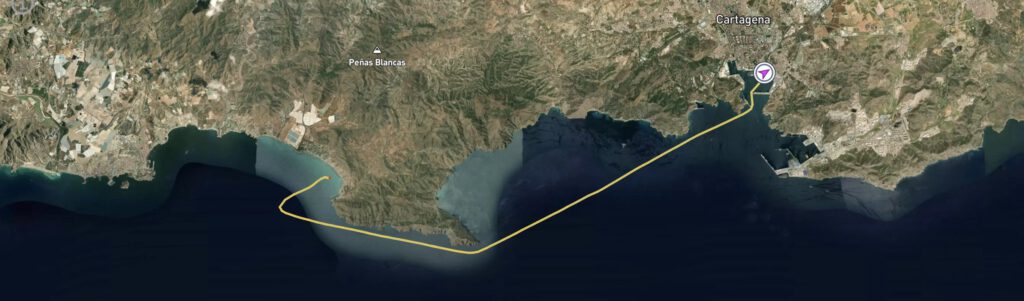
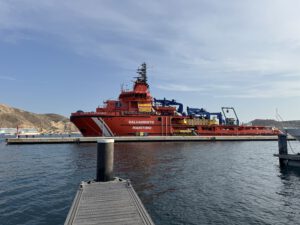
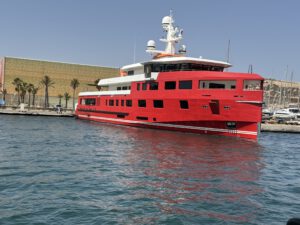
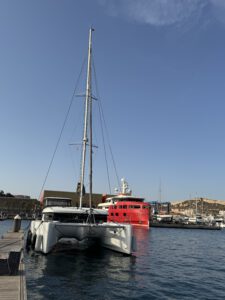
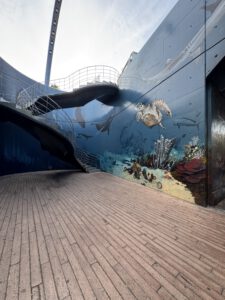
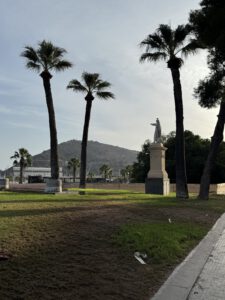
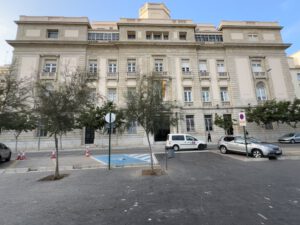
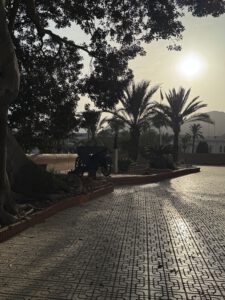
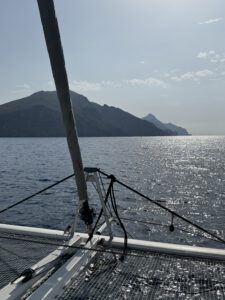
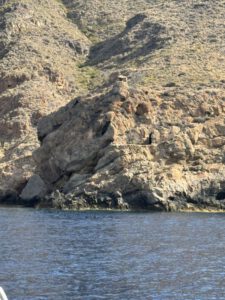
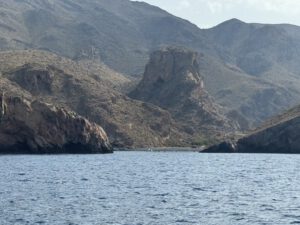
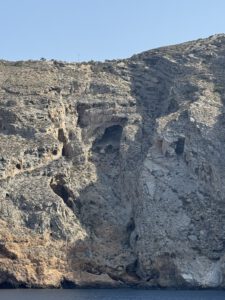
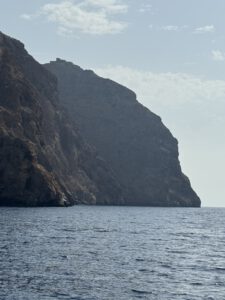
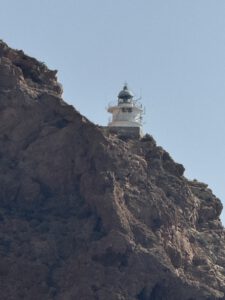
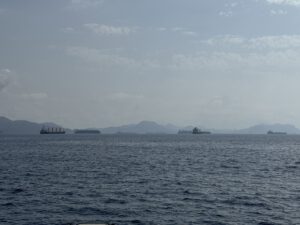
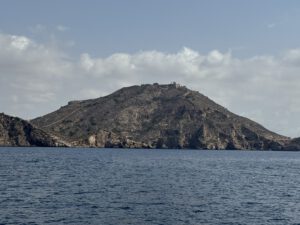
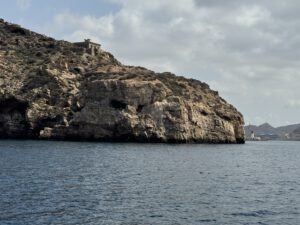
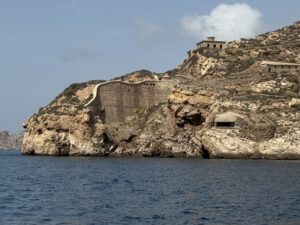
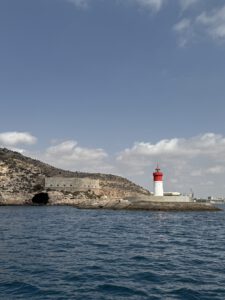
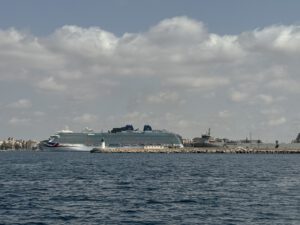
Since we’re only going just around the corner, we’re in no hurry today. First we have a delicious bowl of muesli for breakfast, then we get everything ready to dock. Huh?! Don’t we have to set off first? Yes, of course. But we can take care of the hard work right here at the anchorage. We take the fenders and lines out of the storage locker. We tie the fenders to the railing and lay them out on deck. Lay out the lines. By then, we’re soaked in sweat again and glad we can just take a quick dip in the pool to cool off. Wonderful! At 10 a.m., we weigh anchor and motor toward Cartagena in calm conditions. We sail close to the stunning rocky coastline, where it feels like there’s an old fortress at every turn. We round Cabo Tiñoso and pass through the large roadstead of Cartagena. Dozens of freighters are anchored here, and we have to navigate our way through them somehow. Then the entrance to Cartagena comes into view. Here, too, fortresses guard the passage on both sides, and we already have numerous excursion destinations on our list for the winter. Finally, we pass the Faro de Navidad and arrive in the harbor. We quickly pass a cruise ship and a military vessel and reach the marina. We’re already expected and are assigned a alongside berth on the outer edge of the marina. It’s not very quiet, but it should be fine for two nights. Fortunately, though, we’ll be getting a different spot further inside for the winter. After we’ve moored and cleared customs, Axel quickly checks in at the marina office while I, once again, fire up the washing machine. Then we have a little baguette for lunch and a well-deserved siesta. The weather is still very hot and humid—34°C and 80% humidity. You start sweating just thinking about moving around! Still, we pull ourselves together in the afternoon and ride our bikes to go shopping. That’s why we’re here, after all. We urgently need to restock our onboard supplies, and Cartagena really has everything. As soon as we set off, it starts to rumble, so we decide to close all the hatches—we don’t want it to start raining! We ride a short distance and arrive at the Lidl behind the train station after 5 minutes. On the way there, you can already see what a beautiful and historic city Cartagena is. We’re already looking forward to exploring it thoroughly this winter. At Lidl, we quickly pick up some groceries for dinner and treats for the next few days. And while we’re in the store, it actually starts raining outside. This is our very first rain since May! The humidity—which feels like 100%—hits us like a ton of bricks as we leave the store. Phew! We quickly bike back to the marina and stow away our groceries. At the marina, we also spot our friends Julia and Paul from Spisea arriving; they’ve followed us here from Gibraltar. Unfortunately, they’re assigned a berth at the very other end of the marina, so we’ll have to wait a bit before we can see them again. In the evening, Axel makes us some delicious guacamole, which we enjoy along with some freshly bought shrimp. Here, shrimp cost 2.50 euros for 250 grams. Paradise! It’s definitely worth biking through a steam sauna for that.
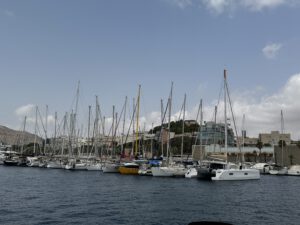
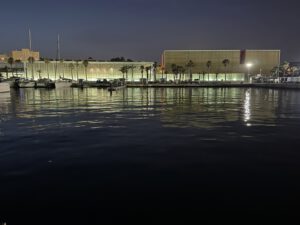
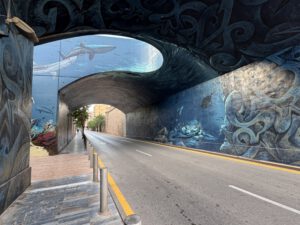
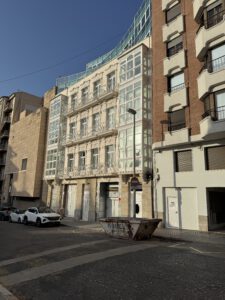
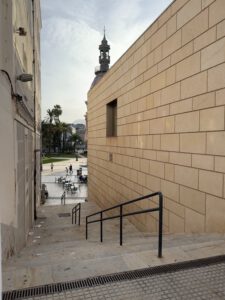
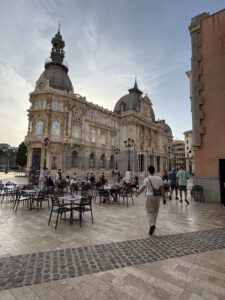
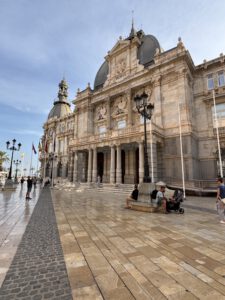
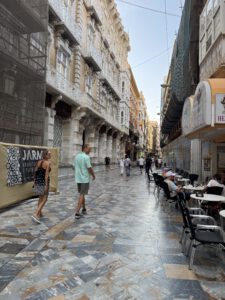
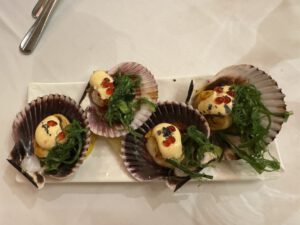
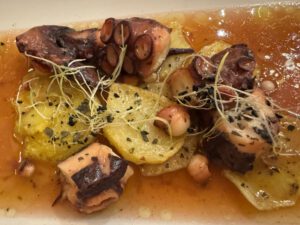
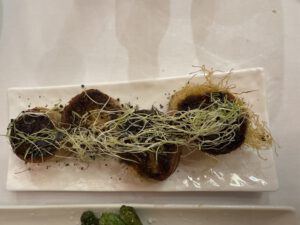
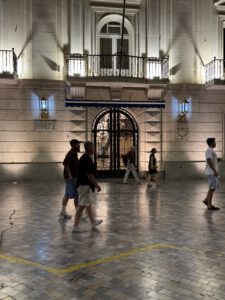
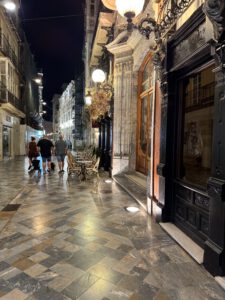
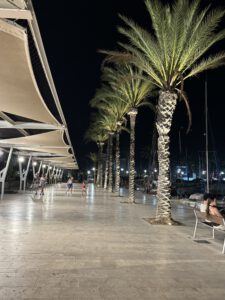
Our second day in Cartagena gets off to a leisurely start, but not too late. We want to go on a second shopping trip before the heat gets too intense. But first, breakfast! Afterward, we bike a little farther today. We’re heading to the Carrefour Hypermarket. We find almost everything on our shopping list. However, finding a can of pineapple turns out to be quite a challenge. I finally find it in the cleaning supplies aisle! And the vegetable scale is out of paper. So, unfortunately, we have to skip the mango we wanted. Heavily loaded with our groceries, we head back to La Ola. After the trip and putting everything away, we first need a breather in front of the fan. The sweat is pouring down, and it’s hard to stop. Eventually, we head out again on our bikes to Lidl. We get our mango and a few other things. Unfortunately, we can’t find any protective glasses for the upcoming solar eclipse. They’re all sold out! Well, luckily we have a sextant on board. It has a solar filter, so we shouldn’t have any trouble with the glare. In the afternoon, we give La Ola another thorough scrub and rinse the usual mountain of sand off the deck. In the evening, we head into downtown with Julia and Paul from Spisea. We get a very positive first impression of Cartagena and are looking forward to having more time starting in October to explore the city and the surrounding area. We stop at the bar Las Termas del Pincho and enjoy delicious tapas in a comfortably air-conditioned atmosphere. The tapas also make us even more excited about our winter berth. We make our way back through the still pleasantly bustling downtown and along the harbor promenade back to the marina. Unfortunately, we have to say goodbye to Julia and Paul again, as they want to get to the Balearic Islands as quickly as possible and then on to Sardinia. We’ll probably just keep strolling along the coast. We didn’t make it to the Balearic Islands or Valencia in time for the solar eclipse, but we hope we’ll still be able to catch a glimpse of the event from our next anchorage.