Playa de El Rinconcillo – Gibraltar 3,6 nm
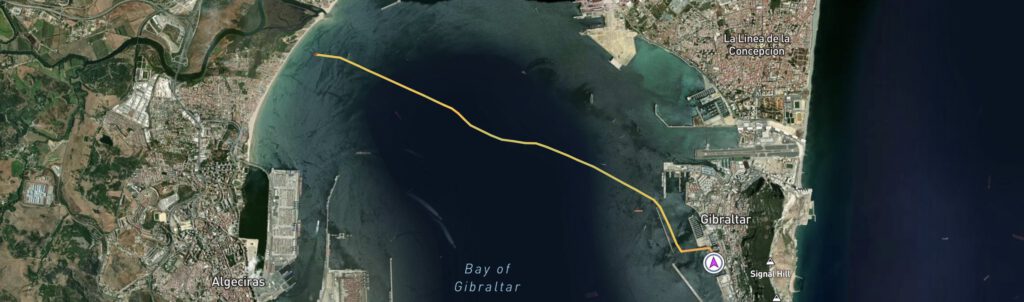
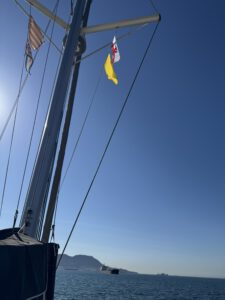
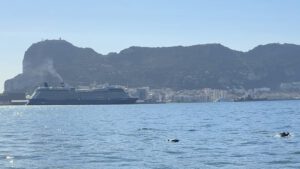
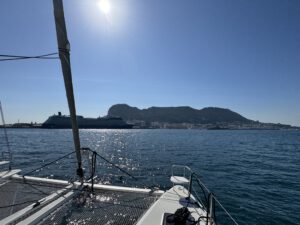
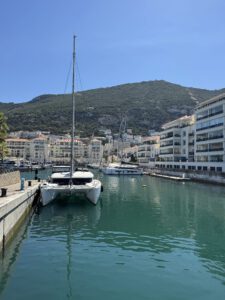
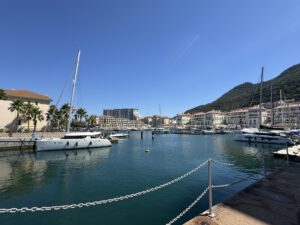
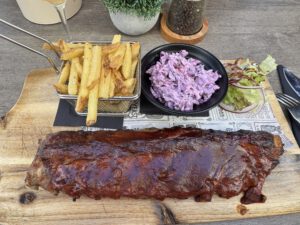
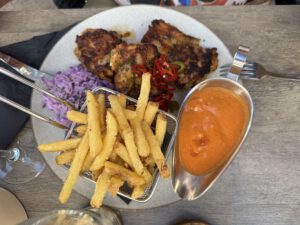
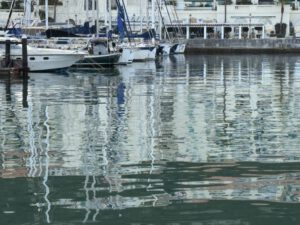
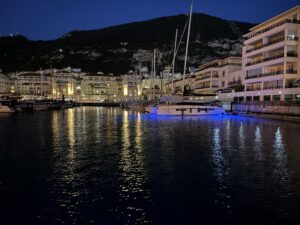
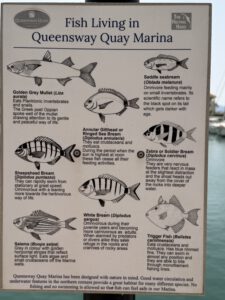
On Mondays, we weigh anchor after breakfast and cruise the short distance over to Gibraltar. By the way, we no longer follow the rule of staying in shallow water. Even though orcas were spotted again just today and yesterday, and a yacht was attacked—just a few hundred meters from the route we took the day before yesterday. In deeper water on the outer side of the tuna net off Zahara de los Atunes. We must have been lucky and sensible this time! However, there haven’t been any attacks here in the Bay of Gibraltar over the past three years, and we trust the rule that where there are dolphins, there are no orcas. And dolphins are playing again today—at anchor and all around us in the water the entire way. Along the way, we swap the Spanish flag for the Q-flag and Gibraltar’s guest flag. This way, we indicate where we’re headed and that we still need to clear customs in Gibraltar. At Queensway Quay Marina, they’re already expecting us and assign us a nice spot in the farthest corner of the marina. It’s a bit off the beaten path, but nice and quiet. And we already know from many other marinas that they like to park us away from the other yachts. Maybe we should take down the “plague flag”?! Our friends from Spisea are moored on the opposite side and are within calling distance. After we’ve securely tied up La Ola, we ride our bikes all the way around the marina to the office. We check in, and a little later, back on board, we can take down the Q-flag again. Then we head out on our bikes to do some shopping. We quickly find a small Eroski supermarket, though it doesn’t really impress us. Limited selection and high prices. Back on board, we recover a bit from the rough seas and take a siesta. In the evening, we head out for dinner again. Right by the marina, we find a nice spot at the Rendezvous Chargrill and enjoy piri-piri chicken and BBQ spare ribs. Large portions, but also quite pricey. On the way back, we stop by the catamaran Nalu from Hamburg and our friends from Spisea for a glass of rosé before arriving back at La Ola much later than we’d expected.
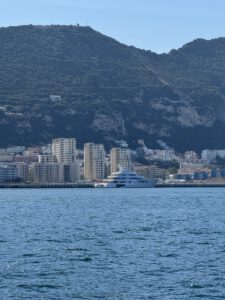
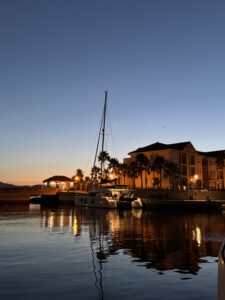
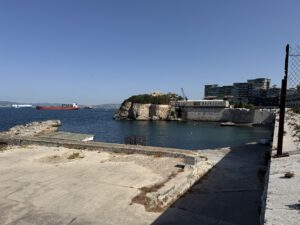
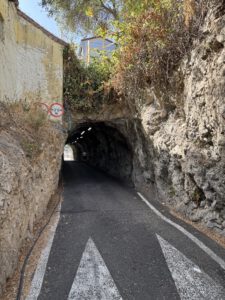
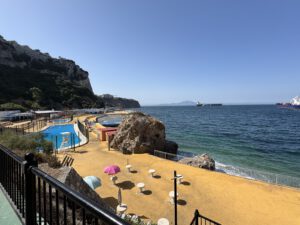
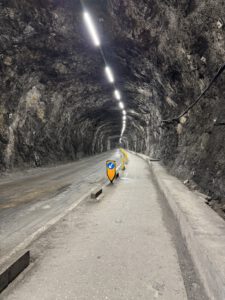
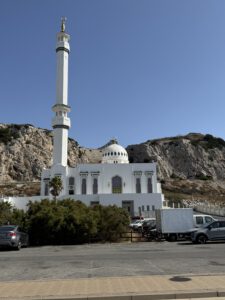
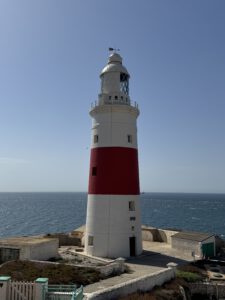
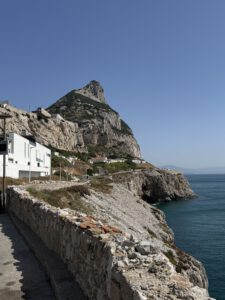
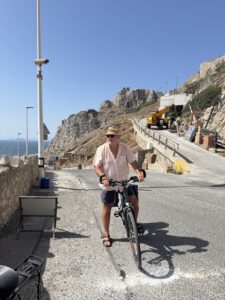
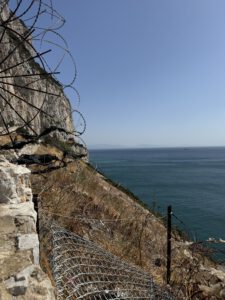
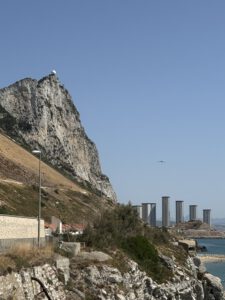
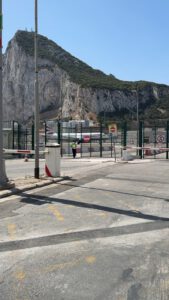
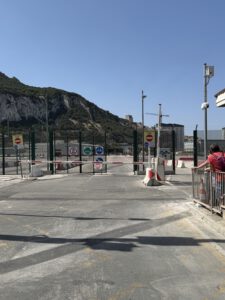
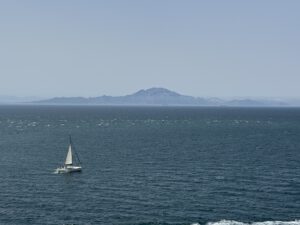
After a very quiet night, we get off to a slow start the next morning. Even Lucky doesn’t realize until around 8 a.m. that he hasn’t had any breakfast yet. Around 9 a.m., the sun peeks out from behind the rock and warms us as we eat breakfast in the cockpit. Afterward, we set off on a short bike ride around the rock. Unfortunately, the battery mount on my bike almost falls apart right at the start. Luckily, we’re able to make a makeshift repair for now, but we’ll definitely have to come up with something more durable. As happy as we are to have the bikes, the quality is really poor! Anyway, we set off counterclockwise around the rock. We weave our way into the traffic and cycle along Rosia Road to Rosia Bay, where we gaze at the old castle walls. Then we continue through the Keightley Way Tunnel, which was roughly hewn out of the rock. Beyond the tunnel, we reach the impressive Ibrahim al-Ibrahim Mosque and look out at the Europa Point Lighthouse. The view across the Strait of Gibraltar toward Africa is spectacular, and the water is quite choppy today. We continue along Europa Advance Road and have to tackle a steep climb past Gorham’s Cave. In the midday sun, our e-bike’s motor really has to work hard! We’re skipping Gorham’s Cave today and are considering whether to visit it another day. After all, the remains of what are said to be the last Neanderthals were found here. At the top of the hill, we enter another tunnel. The Dudley Ward Tunnel first continues uphill before leading quite steeply back downhill. It’s a little eerie to ride through with such dim lighting! After the tunnel, we reach the long stretch of beach at Sandy Bay and, a short while later, catch sight of modern high-rise complexes. A short distance beyond that, we enter another tunnel. This time, we ride through a modern tunnel that carries cyclists and pedestrians on the east side beneath the airport runway. After the tunnel, we ride along the border with Spain and eventually find ourselves back in front of the runway. Our journey is halted by a red traffic light and several uniformed officers. Barriers are lowered, gates closed, and roadblocks set up. Gibraltar is unique in that the path for pedestrians and cyclists runs right across the runway. But not just yet—one of the few planes that ever flies to Gibraltar is preparing for takeoff. So we have to wait about a quarter of an hour until the British Airways plane has zoomed past us and taken off. Then we’re allowed to cross the runway and continue on our way. Since we were very disappointed with the grocery store we visited yesterday, today we’re heading to another supermarket that supposedly has a much wider selection and likely offers better prices as well. We find Morrisons without any trouble and park our bikes. Then we head inside for a refreshing shopping experience. The selection is indeed much better, and the prices are lower, too. We fill a small shopping cart and load our purchases into the bike bags. We leave the bottle of Bollinger 007 champagne in the store, though (for now?). Then we’re back at the marina in less than ten minutes. Back on board, we start by enjoying some chilled melon with Serrano ham and take a little siesta. Meanwhile, I plan the rest of our sightseeing itinerary. Unfortunately, the cable car—which normally takes you up to the Upper Rock quickly and easily—is currently out of service. Parts of the system have already been dismantled, and it’s apparently set to be replaced. There are several alternative options. The cheapest option is to walk. However, we find the prospect of climbing nearly 500 meters in elevation at 30°C to be less than ideal. Another affordable option would be to ride e-bikes up. But based on our perspective and today’s experience, this option also seems rather difficult to pull off. That leaves only a bus or taxi tour. Taxi tours, however, are pretty expensive! For just under two hours, the one-way tour costs 370 £ (pounds!), and the VIP tour costs 600 £. Fortunately, though, taxi tours are fully booked until our departure. In the end, we book a bus tour for 49 £ per person. Not exactly cheap, but of course we don’t want to leave Gibraltar without having visited the Upper Rock! We can only book the bus tour for Thursday; all other days are fully booked. While I’m busy researching and making the booking, Axel tries to repair my bike. The lower part of the battery mount is completely crumbled and no longer holds the battery in place. Sure, we’ve already done a few tours on gravel roads with our bikes, and the roads in Portugal and Spain also offer plenty of opportunities to hit a pothole or two. But can the battery mount really be broken after just over 1,000 kilometers?! But Axel wouldn’t be Axel if he couldn’t fix it all again—thanks in part to the 3D printer. Of course, that takes a while. First, everything is carefully measured, then a design drawing is created on the laptop. Finally, the parts are printed. That takes a full five hours. So, unfortunately, it won’t be finished today.
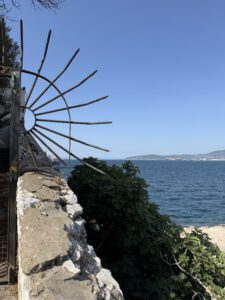

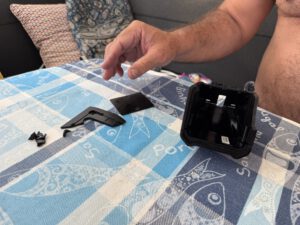
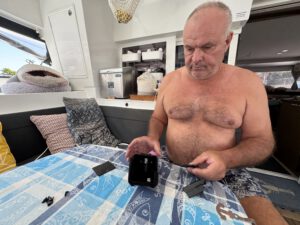
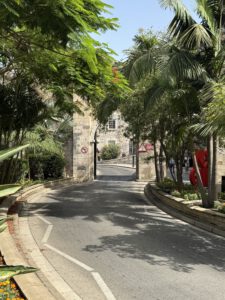
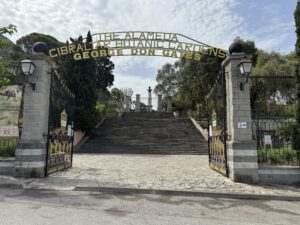
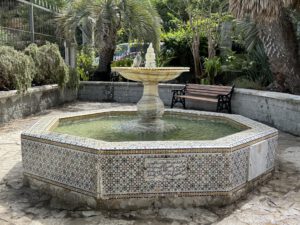
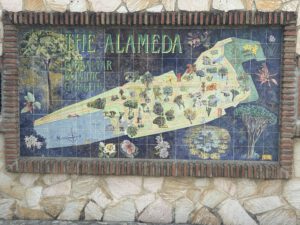
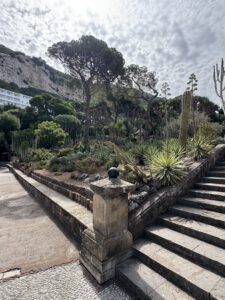
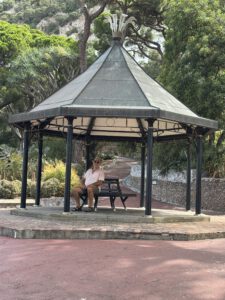
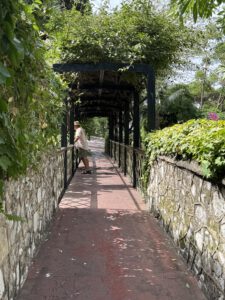
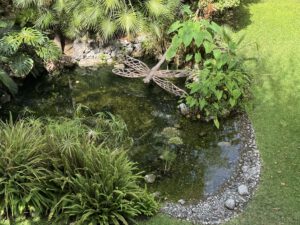
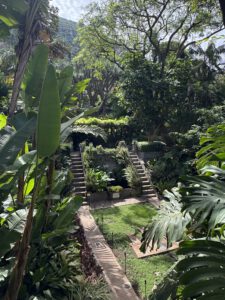
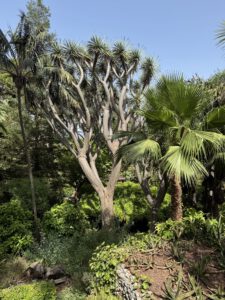
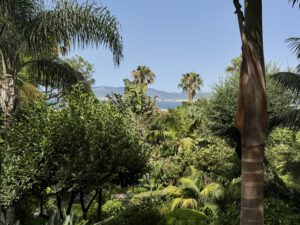
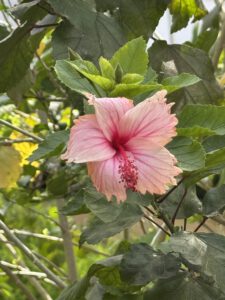
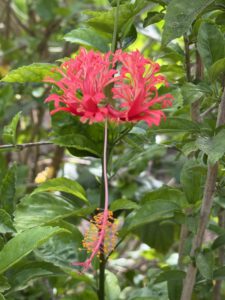
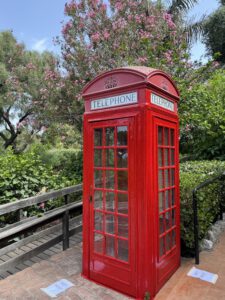
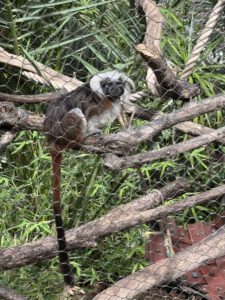
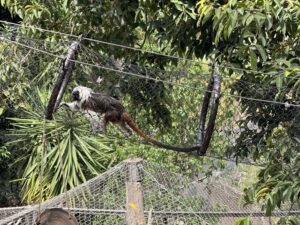
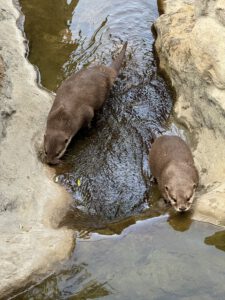
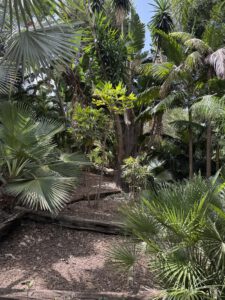
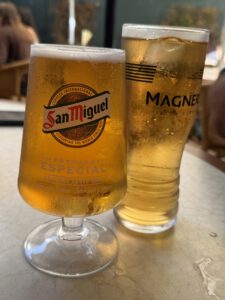
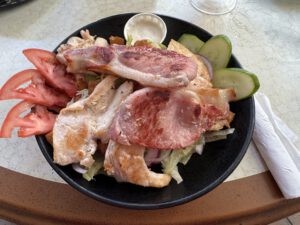
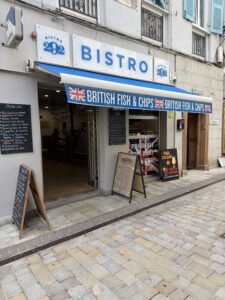
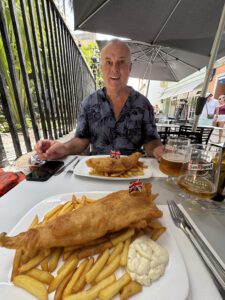
The next day, the printed replacement part is ready, and Axel expertly installs it. Everything fits perfectly and is now much sturdier than before. Great! On our third day in Gibraltar, we’re starting off on foot today. We walk about a quarter of an hour to the Botanical Garden. It’s right next to the former cable car station, which is currently being rebuilt, though. Although it’s a bit overcast today, we’re struggling with the high humidity. Every movement triggers a burst of sweat, and we’re soaking wet after working our way up the stairs to the Botanical Gardens. Luckily, there are plenty of shady spots in the park and plenty of places to rest. We stroll through the park and enjoy the Mediterranean vegetation. At the end of the garden lies the Alameda Wildlife Conservation Park. It’s a small “zoo” with exotic animals that were confiscated upon their entry into Gibraltar. The zoo is quite small and easy to navigate. The 8-pound admission fee is actually way too much, but we’re happy to go in anyway, because the park is dedicated to protecting endangered species—such as Liszt’s macaques—and conducts educational and research activities. After spending half an hour looking at all the animals several times over, we head back to the Botanical Gardens and make our way back to the boat. Once there, we have a light lunch and take a short siesta. A pleasant breeze blows through the cockpit, quickly drying our sweat-soaked clothes. In the evening, we head into downtown. Axel would like to eat fish and chips—after all, we’re technically in Great Britain! So, after exploring the pedestrian zone a bit, we head to the Royal Calpe Pub, which features a beer garden in the backyard. There, we sit comfortably in the shade and are served glasses filled to the brim. While Axel’s fish and chips not only look good but also taste good, my Caesar salad doesn’t have much to offer. And it doesn’t even look like a salad—more like a small meat platter. After shuffling things around a bit, I finally find some lettuce. Unfortunately, neither the bland chicken, nor the pre-made dressing, nor the greasy croutons are very impressive. Only the thick slices of bacon add any flavor. Oh well. In our internal global Caesar salad ranking, this one probably takes last place. After the meal, we head back to La Ola, where we listen to the World Cup semifinal between England and Argentina on the radio in the cockpit. In the end, unfortunately, my dream final—Spain vs. England—doesn’t happen, because Argentina beats England 2–1.
As of today, July 15, 2026, Gibraltar has joined the Schengen Area under an agreement. A historic day on which the border fences were symbolically removed! And we were practically there. As Europeans, we can now enter and exit without passport control or similar procedures. However, information is scarce regarding exactly what has actually changed. In particular, non-EU citizens who like to use Gibraltar to extend their residency status in the EU are currently completely in the dark as to whether the days spent in Gibraltar will now count toward their residency days in the EU. As a general rule, you’re only allowed to stay in the EU for 90 days within any 180-day period. After that, you have to leave for 90 days. However, this doesn’t have to be a continuous—i.e., consecutive—period. For our Canadian friends from Spisea, who are currently nearing the end of their 90 days, the question now is how much longer they can stay in Gibraltar. Similar restrictions naturally apply to Europeans in non-European countries as well, though they vary by country. Our trip to the Mediterranean makes things much easier for us, since we can enter and stay there easily and without complications. And for Lucky, too, no special vaccinations or titer tests are required within Europe. The standard vaccinations and the European Pet Passport are sufficient.
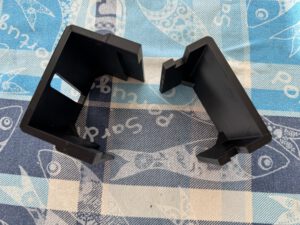
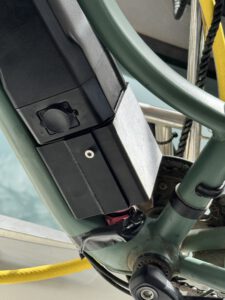
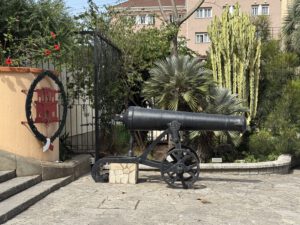
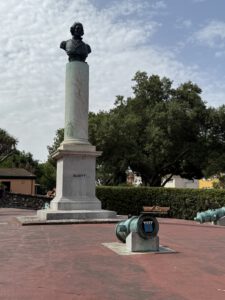
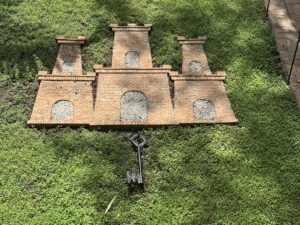
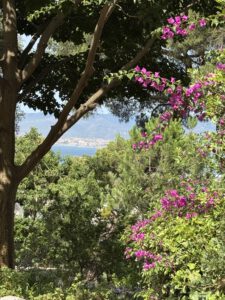
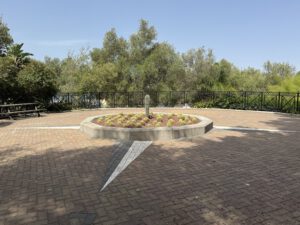
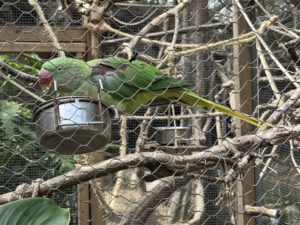
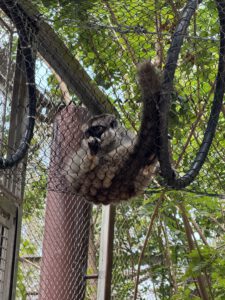
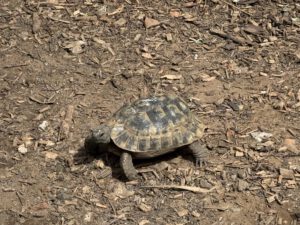
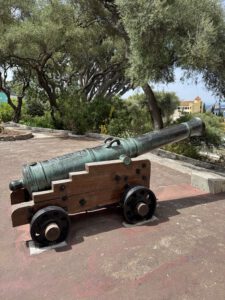
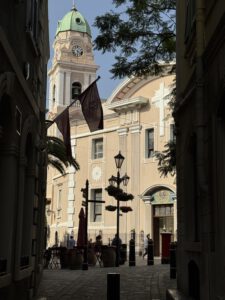
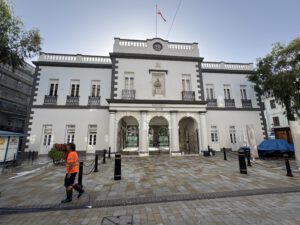
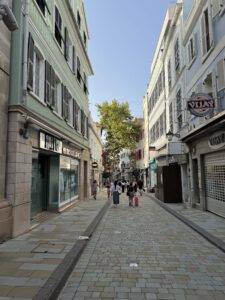
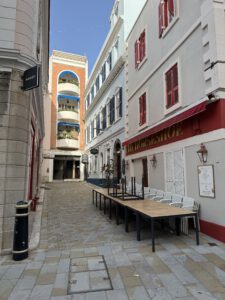
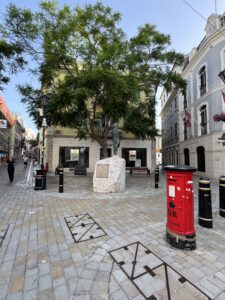
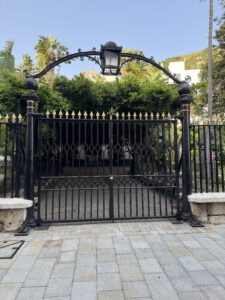
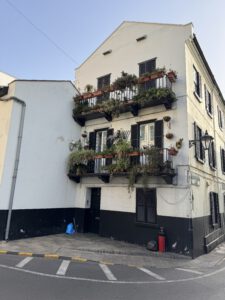
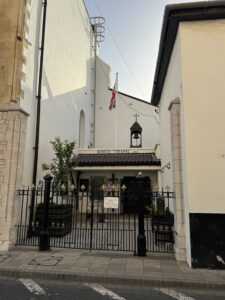
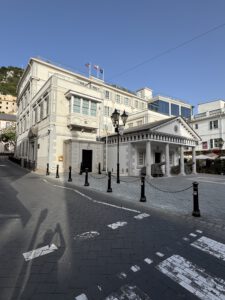
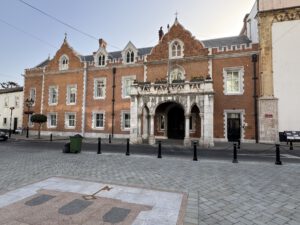
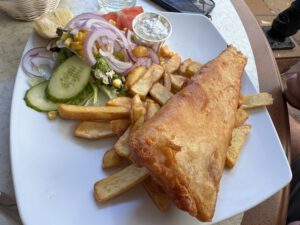
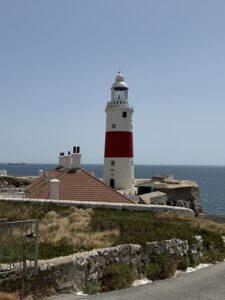
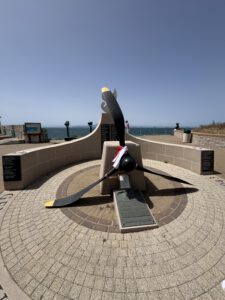
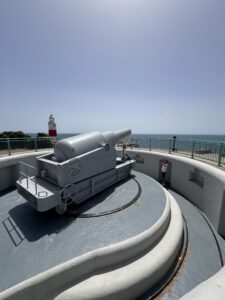
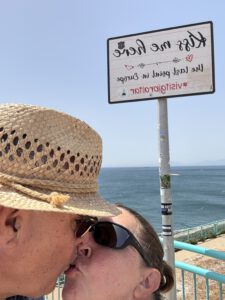
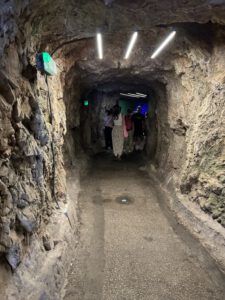
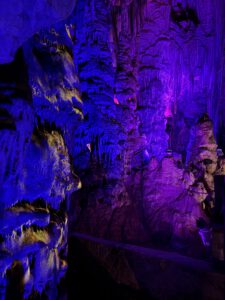
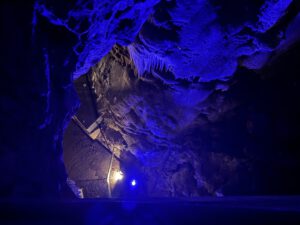
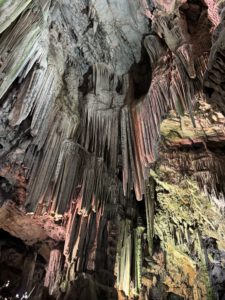
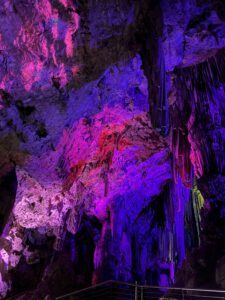
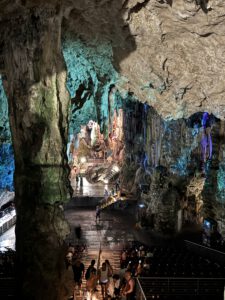
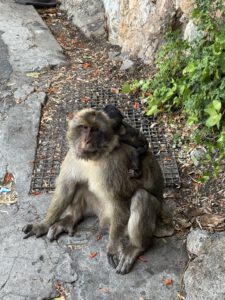
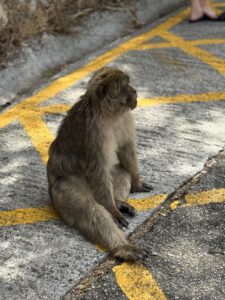
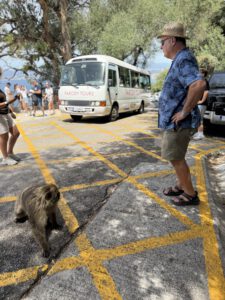
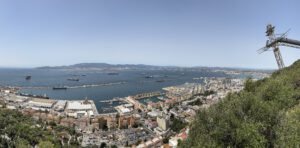
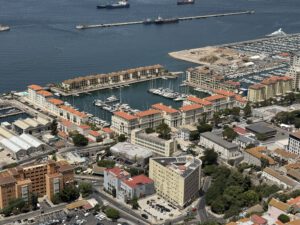
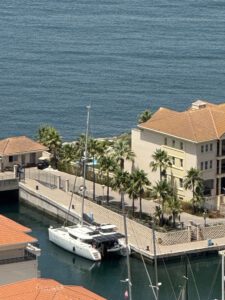
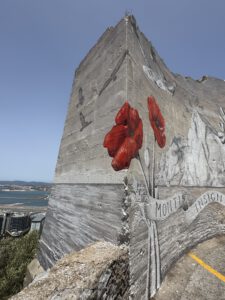
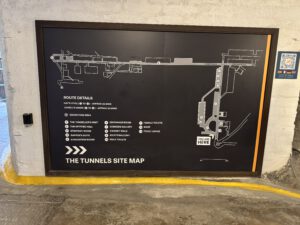
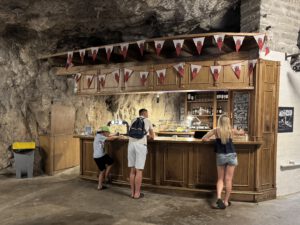
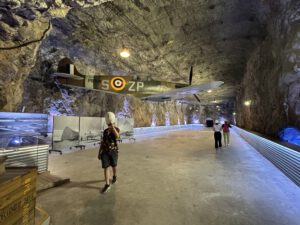
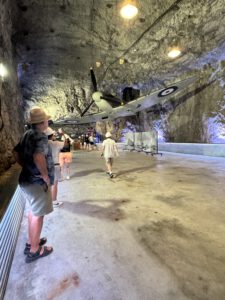
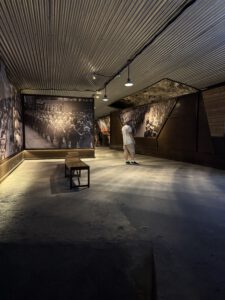
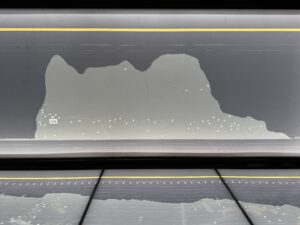
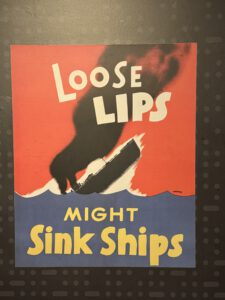
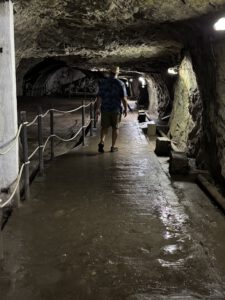
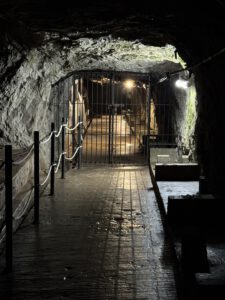
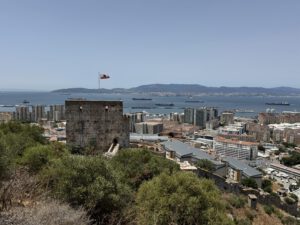
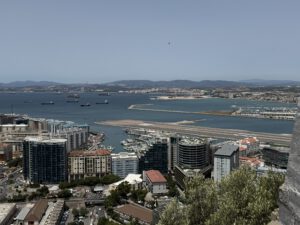
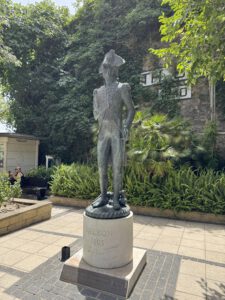
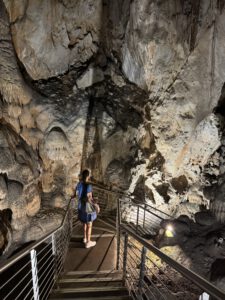
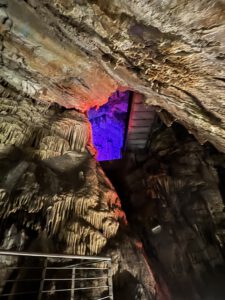
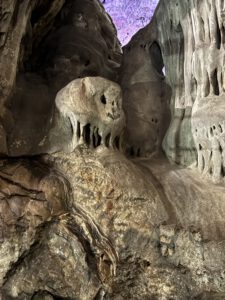
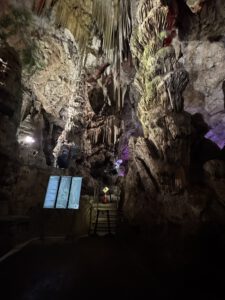
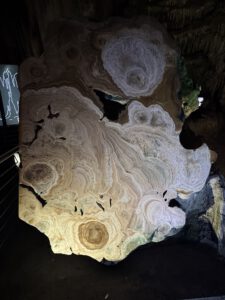
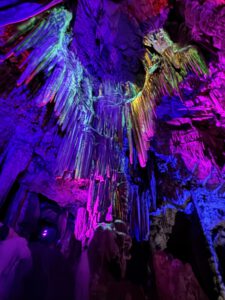
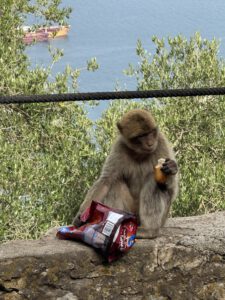
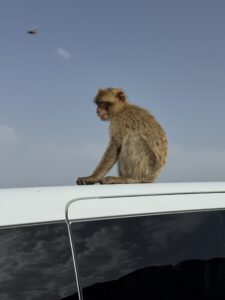
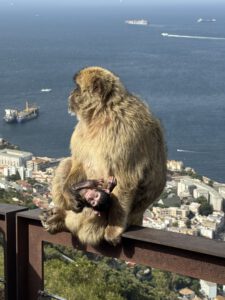
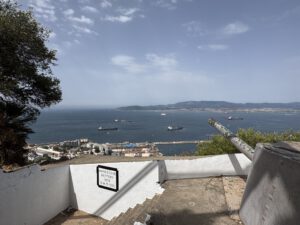
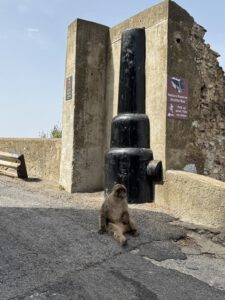
We’re in no hurry today, since our bus tour doesn’t start until 12:30 p.m. Until then, we’ll just laze around and eventually make our way to the Midway Coach & Car Park. A bus is waiting for us on the second floor to take us to the Upper Rock. We set off a few minutes late. We take the same route we’d already cycled along, all the way to our first stop at Europa Point. There, we take a look at the monument honoring Polish General Sikorski, whose plane crashed nearby. In addition to the lighthouse, there’s also Harding’s Battery with its massive cannon to see. Last but not least, we follow the instructions on a sign and kiss each other dutifully. After ten minutes, we continue on. Our bus struggles up steep roads toward the Rock and into the Upper Rock Nature Reserve. The 30-pound admission fee is included in our tour, along with access to all the attractions. Next, we stop at Saint Michael’s Cave. Beyond a simple entrance area lies an impressive stalactite cave. Its dimensions are enormous, and the lighting and music inside make the visit a very special experience. And at the exit, some of the famous Barbary macaques are waiting for us. A mother with her baby sits down right at my feet. Very photogenic and sooooo cute. Caution is advised, however, as the monkeys can become quite pushy and aggressive—especially when they’re trying to defend their young. Fortunately, nothing happens to us, but a little girl has a banana stolen from her, which naturally leads to loud screaming. By the way, feeding the monkeys is prohibited and carries a hefty fine of 300 pounds! Our next stop is at the Apes’ Den, where, surprisingly, we don’t encounter any monkeys at all. But we do get to enjoy a great view of the Bay of Gibraltar. We even spot a miniature version of La Ola moored in the marina. After five minutes, we move on again to the World War II tunnels. The Rock of Gibraltar was riddled with tunnels like Swiss cheese during World War II. There are a total of 50 km of tunnel systems! Of course, we only get to see a small part of the complex and check out the interesting exhibition. Unfortunately, with just a 25-minute stop, there isn’t enough time for a detailed look, but we do get a good first impression. Then the bus takes us back to the starting point and drops us off in the lowlands. We stroll through downtown a bit more before giving in to the temptation to try fish and chips again. This time we get a massive portion—it’s delicious but almost too much to handle. But we manage it! With our bellies full, we walk past Trafalgar Cemetery and the Lord Nelson statue. Lord Nelson, the hero of the Battle of Trafalgar, isn’t buried in the cemetery in Gibraltar, though—he’s buried in London. Incidentally, due to a lack of ice, his body was reportedly transported to London in a barrel filled with brandy. Take it or leave it… Back on board, we first need to take a break to rest and let our food settle. Then Axel turns his attention once again to his bike, for which he’s also just printed a new battery mount. Now nothing should stand in the way of our next long bike ride. We spend the rest of the day enjoying the fresh breeze in the cockpit and planning our itinerary for the next few days.
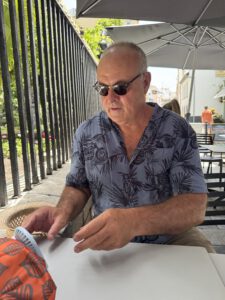
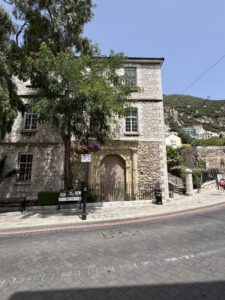
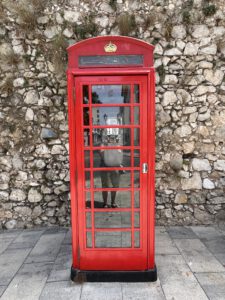
Finally Friday! But before the weekend can begin, there’s one more bit of action on the agenda. We bike over to the Morrison’s supermarket one last time to stock up on supplies for the weekend. Back on board, we quickly stow away all our groceries so the cold chain isn’t broken. At noon, we get quite a scare! There’s gunfire! From big cannons, right next to our marina. Did we miss something? The cannon blasts echo across the entire bay and back. They fire a total of 21 times, and clouds of blue smoke drift over the harbor. Luckily, we quickly find out that they’re “just” ceremonial salutes. The Grand Battery is firing in honor of Queen Camilla’s birthday. Well then, happy birthday and all the best! After we’ve recovered from the scare, we head to the marine supply store and buy two new spherical fenders, which we plan to use for our upcoming Med-Mooring maneuvers. We also pick up a few other odds and ends that weren’t actually on the shopping list. Just like always! Back on board, we get back to work: washing dishes, vacuuming, and getting the guest cabin ready. And then our guest is already waiting at the dock. Anja flew from Bremen to Málaga and then took the bus on to Gibraltar to see us. That’s quite a long journey! At least there were no more passport checks at the border. As is our Friday tradition, we prepared pizza dough, and after a welcome glass of sparkling water, we once again enjoyed perfect pizza in the cockpit.
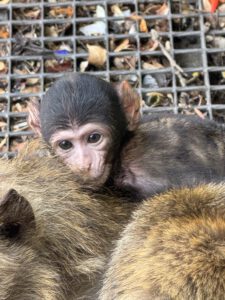
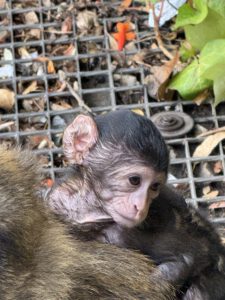
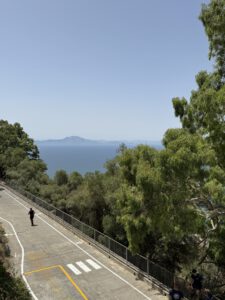
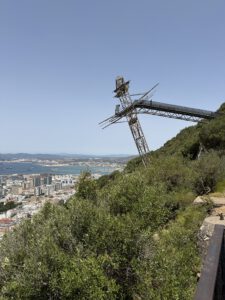
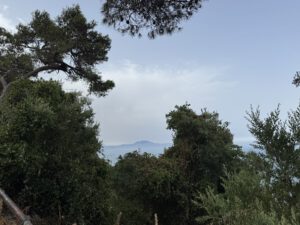
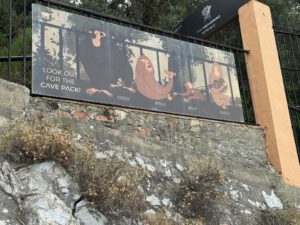
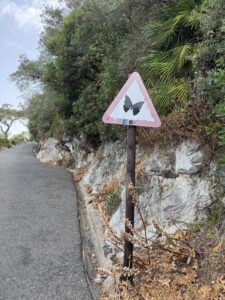
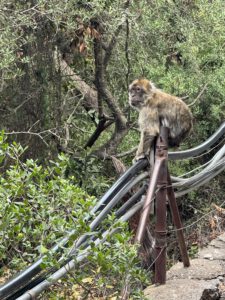
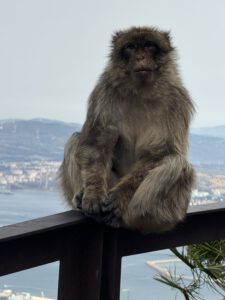
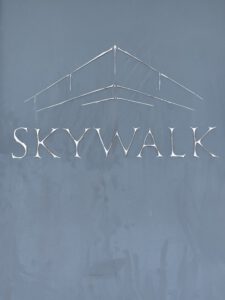
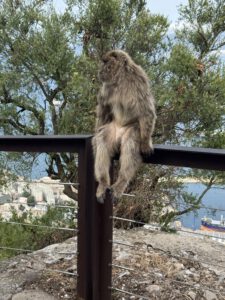
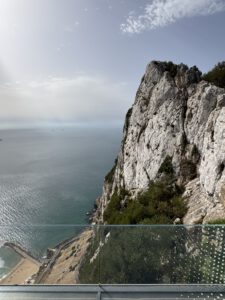
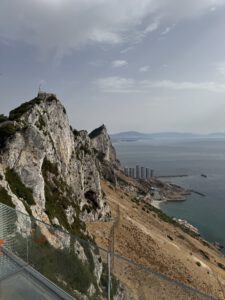
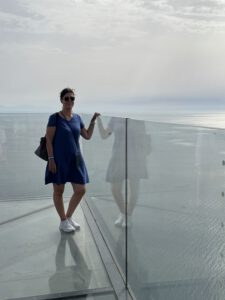
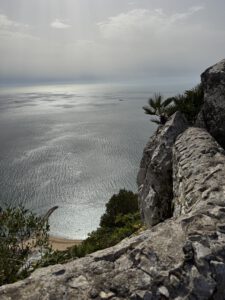
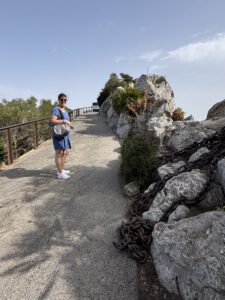
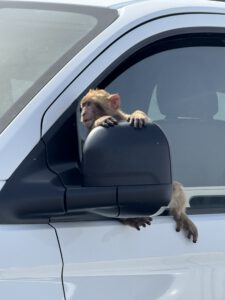
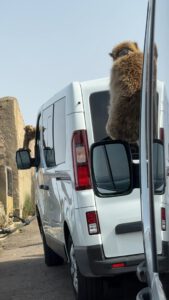
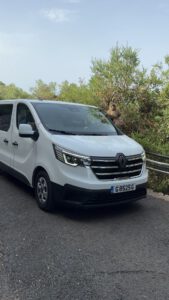
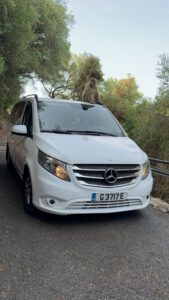
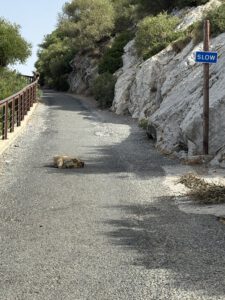
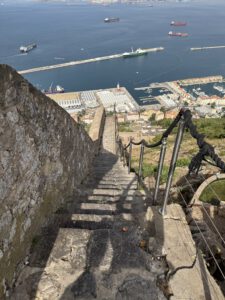
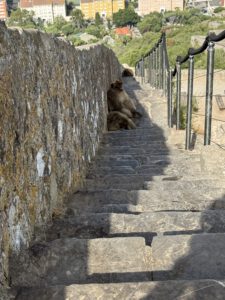
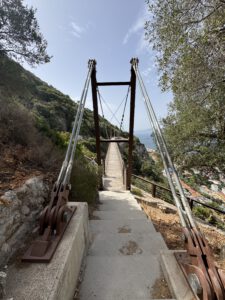
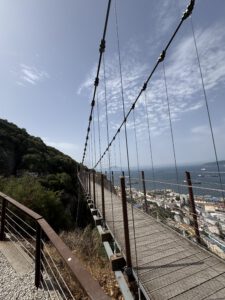
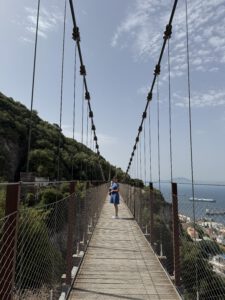
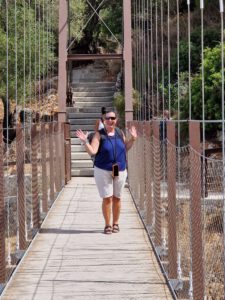
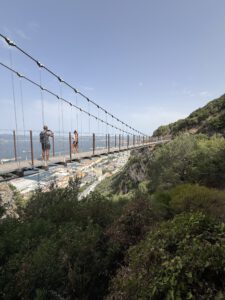
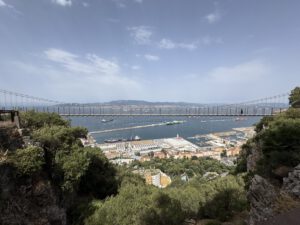
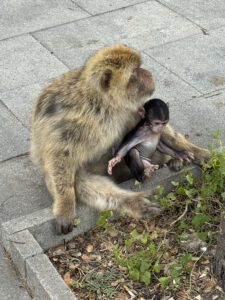
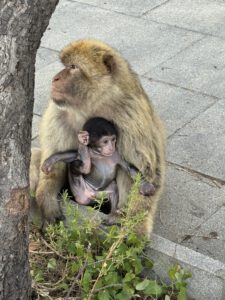
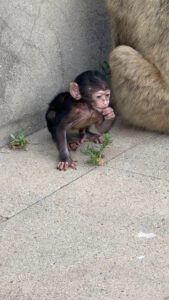
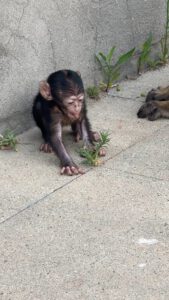
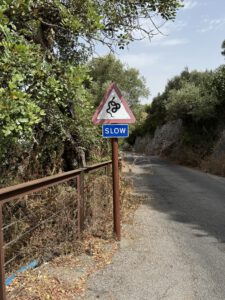
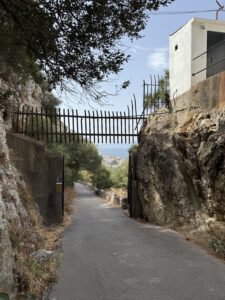
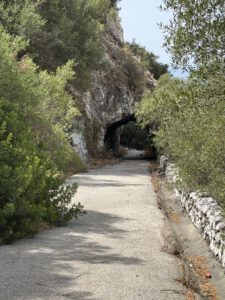
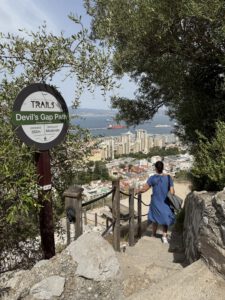
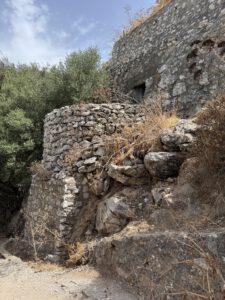
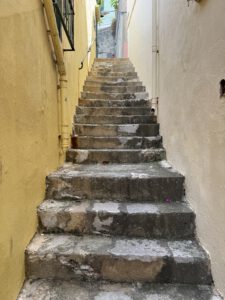
On Saturday, we’re up and out of bed at 8 a.m. After a quick breakfast, Anja and I are already on our way. We walk right across town and arrive at the bus station half an hour later. That’s where the ticket office for the Nature Reserve Shuttle Bus is located—another option for getting up to the rock. A little later, we’re not on the bus after all, but instead in a taxi that takes us and five other early risers up the mountain. We’re dropped off at Queen’s Balcony and continue on foot. We keep walking up the mountain and end up at St. Michael’s Cave. The 250-meter stretch is quite a challenge, as we have to tackle a 12% incline. It’s not very crowded yet, and we have the cave almost to ourselves. This time, a section leading down is also open, so we descend into the depths of the cave. The scale is impressive. After going down the stairs, we inevitably have to go back up again, and we’re glad we can enjoy the light show while seated. When we leave the cave again, the parking lot in front has already filled up with the first taxi tours. We head back uphill and this time battle our way up a 15% incline. Our heavy breathing is interrupted by children’s screams, and a little later, around a bend, we see the reason why. A Barbary macaque has stolen a roll and a bag of chips from a backpack that a father was just about to take out for his daughter. With every additional meter of elevation, the number of Barbary macaques increases. They’re sitting on the posts of the handrails, on the rocks, and on the road. We finally reach the highest point of our trip at about 300 meters above sea level. We climb the Skywalk, which was opened in 2018 by Mark Hamill, aka Luke Skywalker. Funnily enough, there’s a Barbary macaque sitting in front of the Skywalk that strongly resembles Chewbacca from Star Wars. While Anja dares to step onto the glass floor, I prefer to stay on solid ground. The view is absolutely breathtaking! We can see almost all of Gibraltar. Before us lie the Mediterranean Sea and the Strait of Gibraltar, Africa, and Europe. The steep cliffs drop right down to the sea. While we’re able to enjoy the Skywalk without many other tourists around, after we descend from the observation deck, one taxi after another lines up, and a small crowd streams toward us. We walk to the monkey feeding station, where the Barbary macaques are fed by the park administration. Breakfast has just been delivered, and the crowd of monkeys is correspondingly large. By the way, to get to the feeding station, the monkeys use the taxis as hop-on-hop-off vehicles. They sit on the posts along the side of the path and then jump onto the roofs or side mirrors of passing taxis, letting themselves be driven up the hill. Pretty clever! To get back down the mountain to the next attraction, Anja and I actually plan to take the long stone staircase on the Charles V Wall. However, the first twenty of the 600 steps already prove to be a bit of a challenge. The steps are old, high, and uneven. And you’re looking 300 meters down into the depths. If you stumble here, it feels like there’s no stopping you. On a small landing, we then see a whole troop of monkeys sitting below us. They take up most of the width of the steps and don’t seem at all inclined to make room for us. OK, then we’d better take a different route. We head back up the steps and then down the hill again, the same way we came up. We finally reach the turnoff to the Old Anglian Way, which takes us over gravel to the Windsor Suspension Bridge. The 70-meter-long bridge—which, according to the sign, is about the length of 6 1/2 double-decker buses—sways slightly in the wind and wobbles noticeably as you walk across it. While Anja simply walks right across it, the height and the wobbly bridge aren’t really my thing. For a moment, I consider just taking the solid path around the gorge, but then I force myself to cross the suspension bridge after all. On the way back, though, I’d rather take the route around the outside. Better safe than sorry! Next, we reach Apes Den. Here, we encounter numerous Barbary macaques, which have found a refuge here. To our delight, we also come across two baby monkeys. The babies, who look more like chimpanzees, are just 2 and 3 weeks old. Their dark fur won’t turn light brown until later. The little monkeys are already trying out a few things on their own, but as soon as their mother moves away, the screaming starts. Though the baby monkeys sound more like sparrows and hop after their mom in a funny way. Sooooo cute! Since the sun has now risen above the mountain peaks, we keep moving and try to stay in the shade along the side of the path. We continue downhill on the road until we reach the park exit at Devil’s Gap Battery. Here, the rest of the road is closed due to the danger of falling rocks, so we have to leave the paved road. Now the path continues quite steeply downhill over gravel and rocks. The sun is beating down by now, and we’re really working up a sweat. Eventually, we reach the first houses, built into the steep slopes. From here, the path mostly continues downhill via steps. It’s still exhausting, but luckily there’s a bit more shade and a refreshing breeze around every other corner. After 3 1/2 hours, we finally reach the marina again, noticeably exhausted and drenched in sweat. The cold beer fizzes audibly, and it takes a while before we’re somewhat recovered. Phew! Next time, we might prefer to take the bus back as well. Axel prepares a delicious Mediterranean pasta salad to recharge our energy, and the fresh sea breeze also helps us recover. While I go through the numerous photos from the trip, Anja takes a short stroll into downtown. Meanwhile, Axel prepares an avocado-olive dip for the evening. Later that evening, Julia, Marco, and their daughter Lia from the catamaran Nalu stop by to see us. We have a great chat and enjoy snacks together, along with a glass or two of wine and beer. Unfortunately, our paths will part ways again soon, as the Nalu crew is set to sail across the Atlantic on the ARC+ in November.
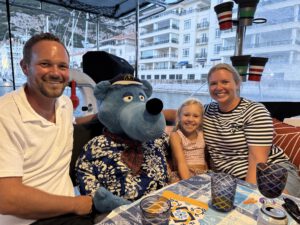
After yesterday’s day trip, it’s back to work today. Axel and I are once again scrubbing the grime off La Ola. This time, in addition to the usual sand and dust, we’re also dealing with fallen flowers and leaves from the trees and palm trees next to us. Meanwhile, Anja grabs my bike and rides over to Europa Point. By noon, everything’s done and Anja’s back, so we can take a siesta together in the shaded cockpit. Around 4 p.m., we get ourselves together and visit the Nalu on the other side of the marina. We always find it exciting to check out other catamarans, and Nalu is a sleek new Fontaine Pajot 44. Marco and Julia are currently still making a lot of modifications and additions, such as solar panels and a hardtop for the helm. After a thorough inspection, we head back on board La Ola, where we’re joined a little later by Julia and Paul from Spisea. We have a barbecue together and say our goodbyes for now. Julia and Paul are staying in Gibraltar a little longer and won’t be joining us for another few weeks. We’ll see when and where we meet again.
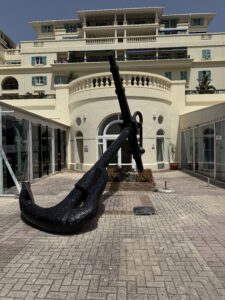
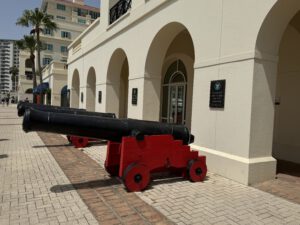
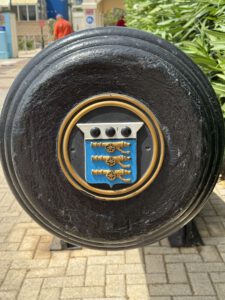
Gibraltar – Estepona 23,4 nm
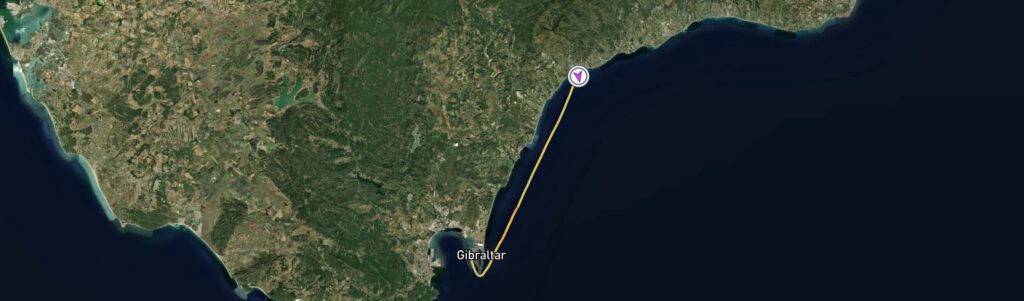
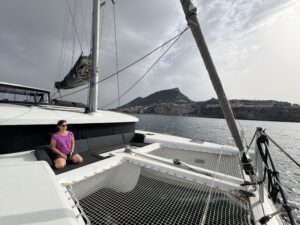
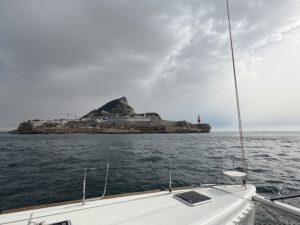
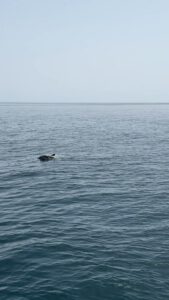
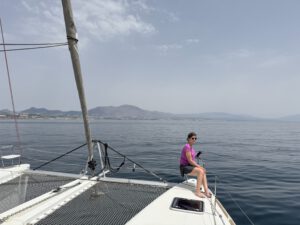
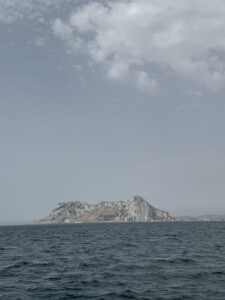
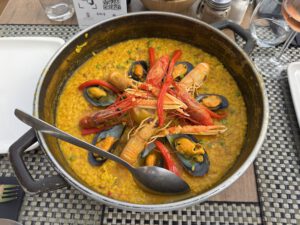
After a week in Gibraltar, we’re off again early Monday morning. Axel goes to clear customs, while Anja and I get La Ola ready to set sail. At a quarter to ten, we perform a classic “cast off and go” maneuver and leave Gibraltar. Anja had asked us to see dolphins on the trip, and of course—as good tour guides—we ordered some. But of course, you never know when or how many dolphins will actually show up. This time, we must have checked the right box when placing our order, because no sooner had we left the harbor than the first dolphins swam by. Along the coast of Gibraltar, whole pods of dolphins were frolicking in the water ahead of and alongside us. The whole experience is topped off by a large whale, which unfortunately remains too far away for a photo. Based on its dorsal fin and blowhole, however, we suspect it’s a sei whale or a fin whale. We continue past Europa Point. Now we’ve finally and officially arrived in the Mediterranean! We hoist the genoa and sail slowly toward the northeast, hugging the Spanish coast. Unfortunately, the wind eventually dies down again, but we’re treated to another fantastic dolphin show. Hundreds of dolphins come toward us as they hunt, and Anja, sitting on our Dolphin Seat, even gets to see “her” bow dolphin. Now that’s what I call service! Finally, in the early afternoon, we reach Estepona in Spain. We first dock at the waiting pier and are then assigned a berth. Axel masterfully handles his first Mediterranean mooring maneuver, and La Ola is securely moored in her spot. After that, though, it’s time to clean the boat, since the mooring lines left quite a bit of mud and dirt on deck while we were docking. We set up our sun awning, and Axel and Anja head out on their first exploratory trip to the nearest supermarket. In the evening, we treat ourselves to a meal at a restaurant on shore. With so many cafés, bars, and restaurants to choose from, it’s not easy to decide—we finally end up at Restaurante Halomon and order a seafood paella. Much to my chagrin, it’s served with peas, which I don’t like at all. Luckily, though, they can be removed fairly quickly. Back on board, we enjoy the evening atmosphere a little longer in the front cockpit and plan our stay for the next few days. We rent a car and make plans to meet up with our tax advisor Andreas, who owns an apartment in Estepona and is currently vacationing here.
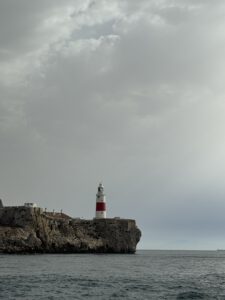
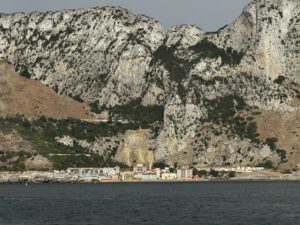
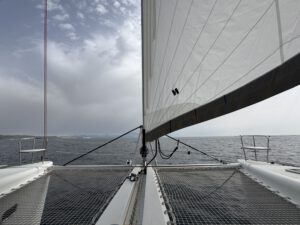
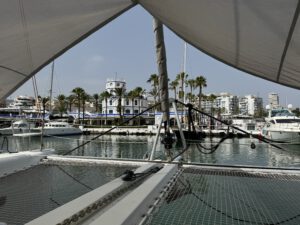
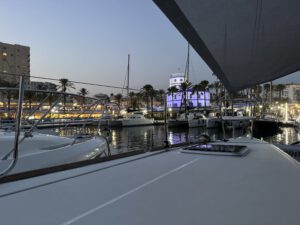
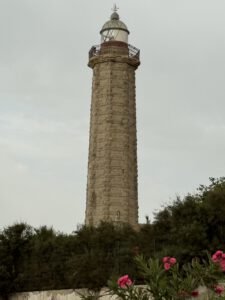
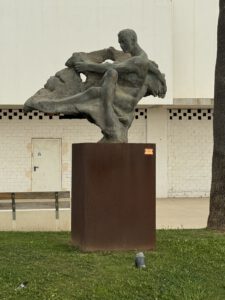
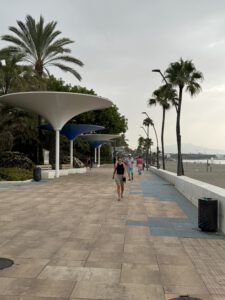
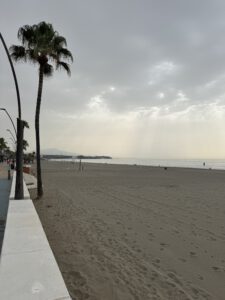
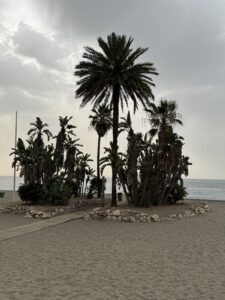
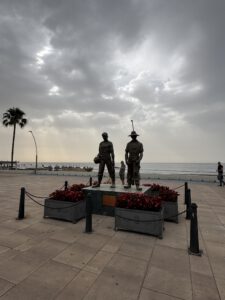
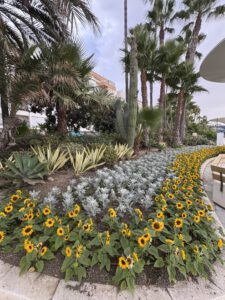
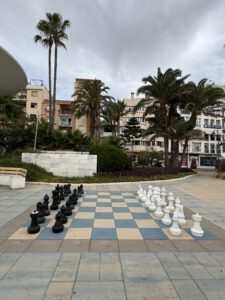
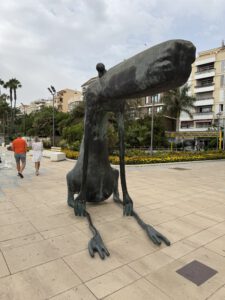
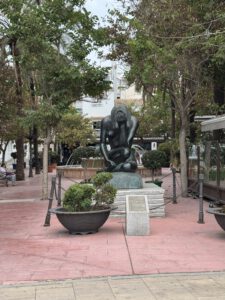
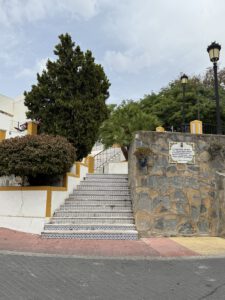
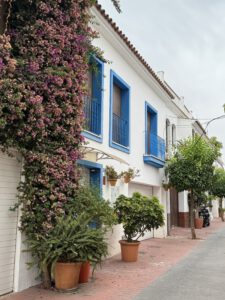
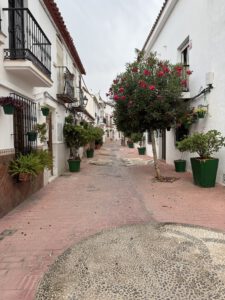
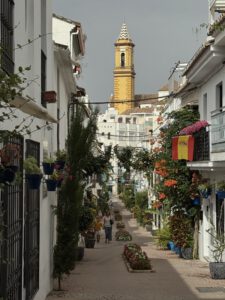
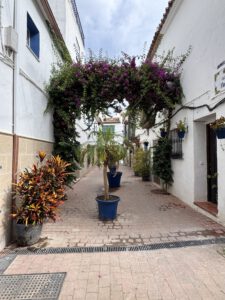
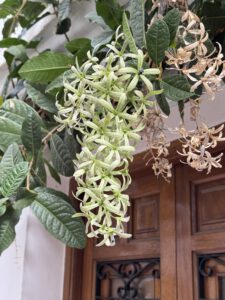
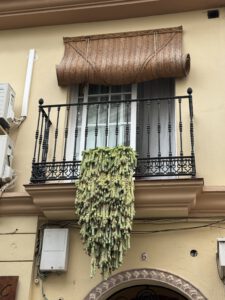
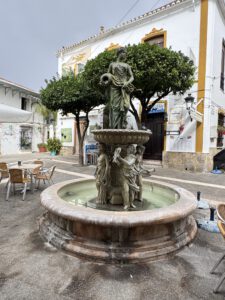
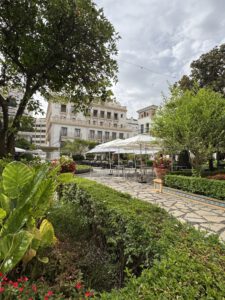
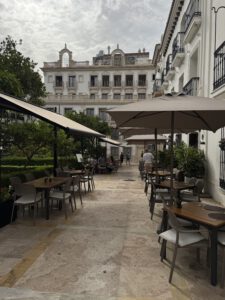
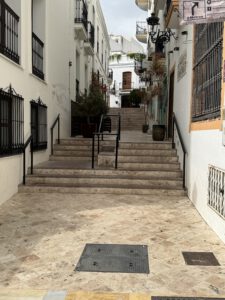
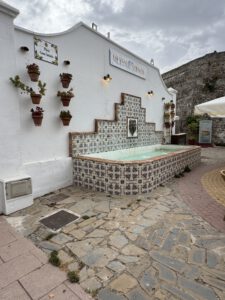
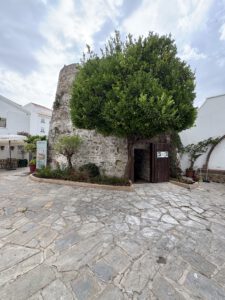
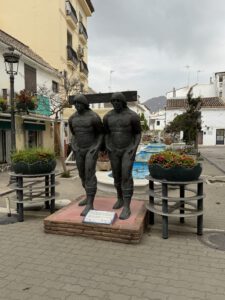
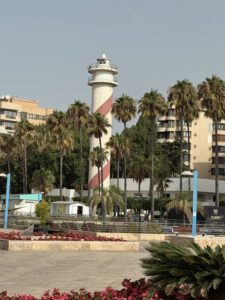
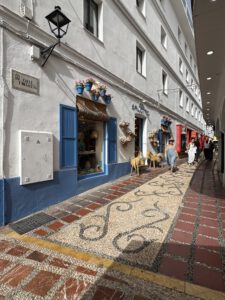
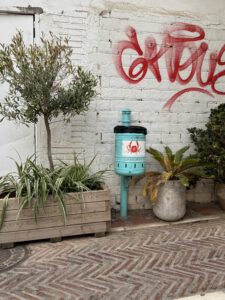
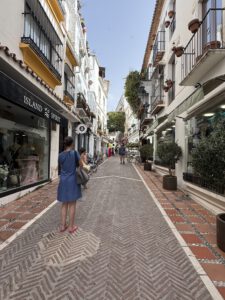
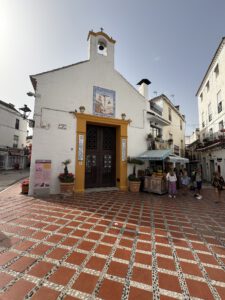
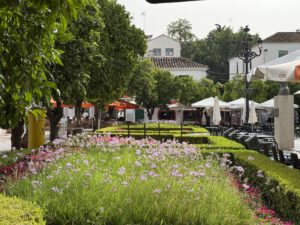
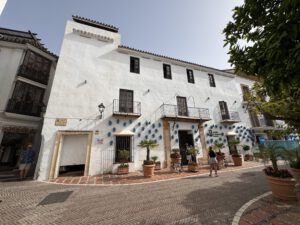
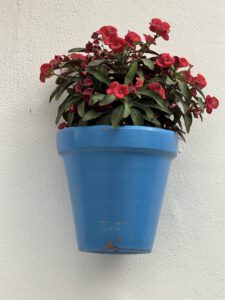
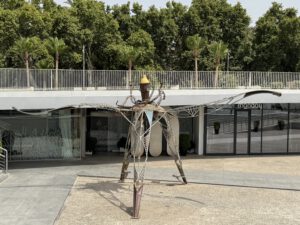
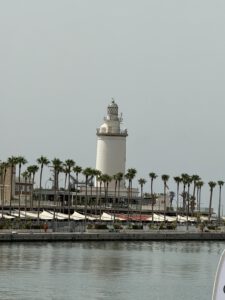
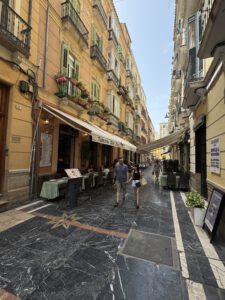
The next morning gets off to a quiet start. The sun struggles to break through a thick layer of haze. Life gradually returns to the boats and on land. While I enjoy the peace and quiet in the cockpit starting at 7:30 a.m., Axel and Anja don’t join me until around 9 a.m. We have some delicious muesli for breakfast, and then we’re already on our way to the old town of Estepona. We walk past the lighthouse along the beach promenade. The sky is overcast, and a cool breeze blows in from the sea. As a result, the beach isn’t really crowded yet. We pass countless joggers and other fitness enthusiasts. Along the way, we enjoy the view of the countless flower beds lining the promenade. Art can also be found at every turn. Finally, we turn into the city center at Plaza Ortiz and wind our way through the narrow streets back toward the marina. In every street, the houses are adorned with flowers. Countless pots hang from the walls. Something in bloom is growing out of every little hole in the ground, no matter how small. Tendrils of plants cascade down the balconies. And to tend to all this floral splendor, watering crews are out and about, watering every single pot. We reach Plaza de las Flores and, a short while later, arrive at the Mercado de Abastos. Contrary to our expectations, however, we don’t find a market here, but rather a market hall that’s been converted into a restaurant. Too bad, but still nice. Unfortunately, it’s too early for a few tapas. So we continue on and eventually end up back at the marina. After a short lunch break, Axel and I ride our bikes to go shopping and pick up some snacks for the evening. At 7 p.m., we’re joined by Andreas and his wife Natalia, along with their friends Karin and Michael. We spend a fun and pleasant evening together and are happy that the get-together worked out so spontaneously.
Trip to Ronda
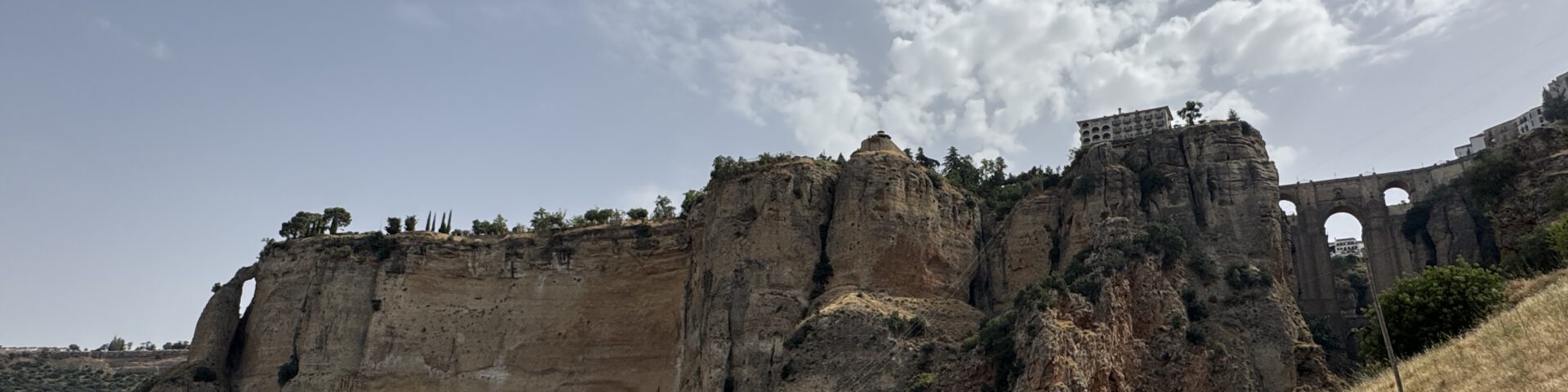
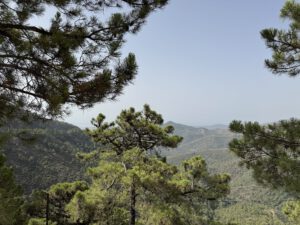
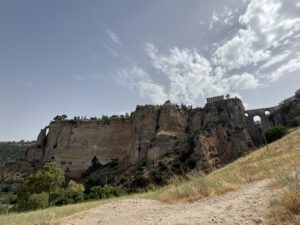
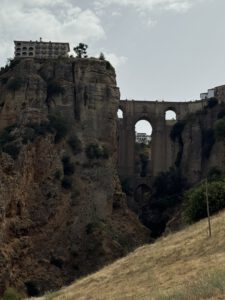
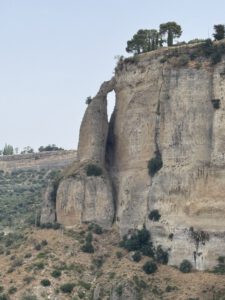
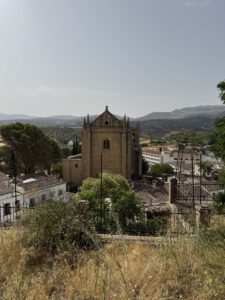
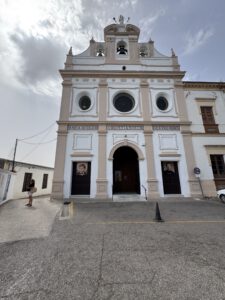
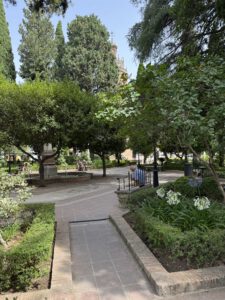
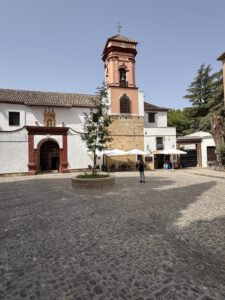
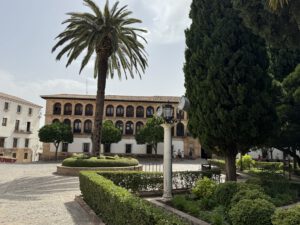
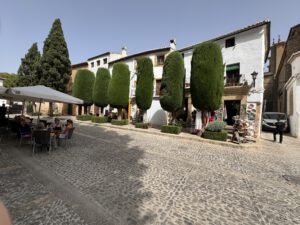
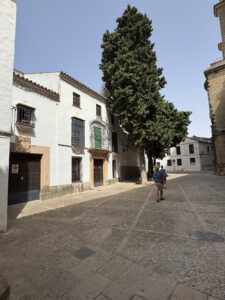
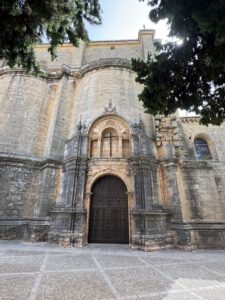
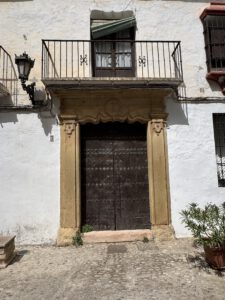
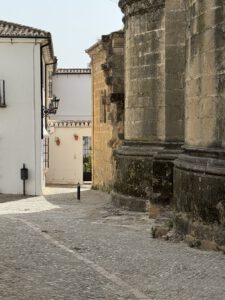
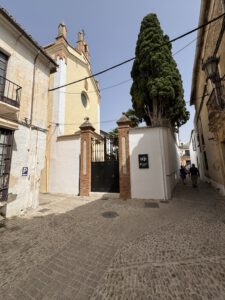
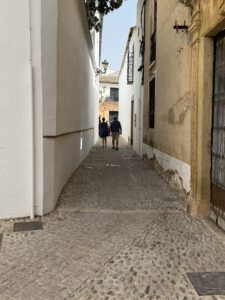
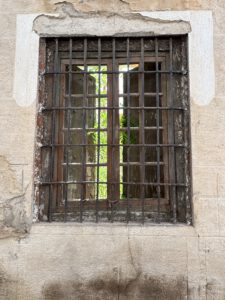
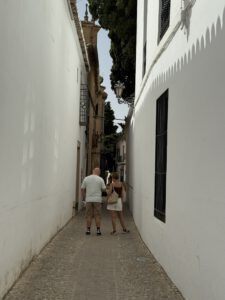
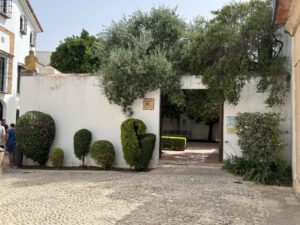
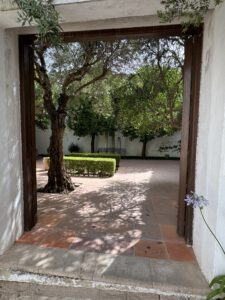
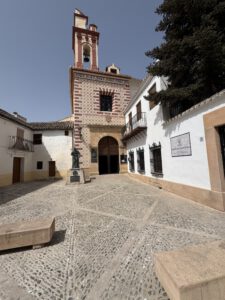
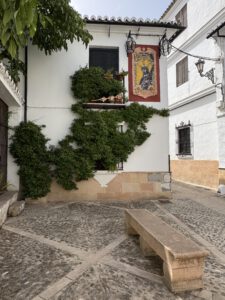
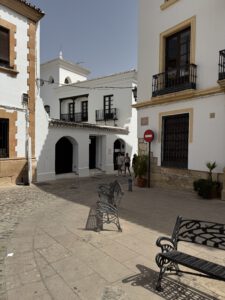
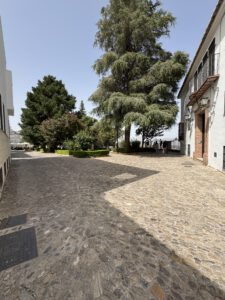
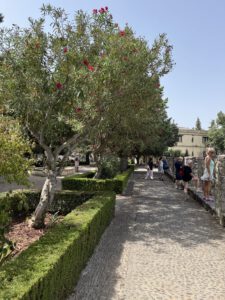
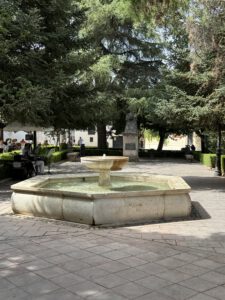
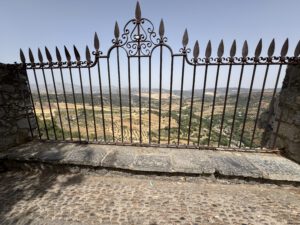
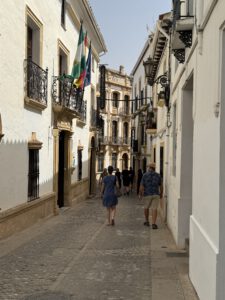
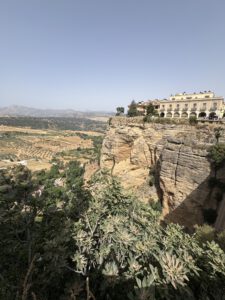
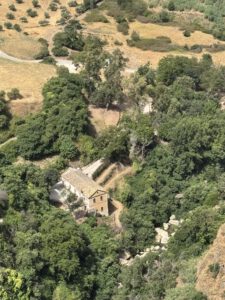
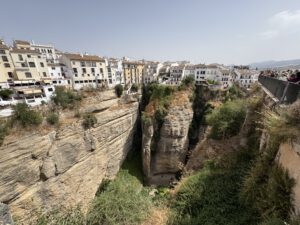
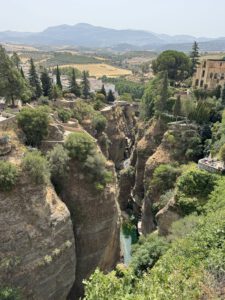
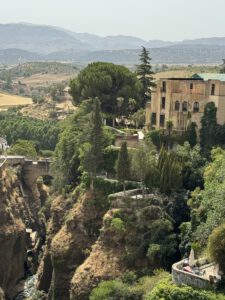
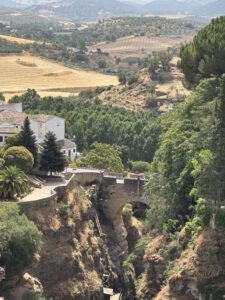
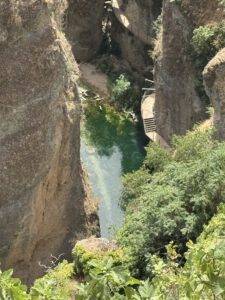
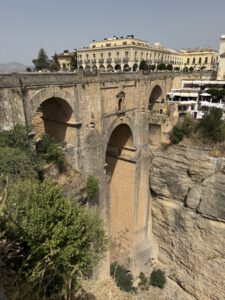
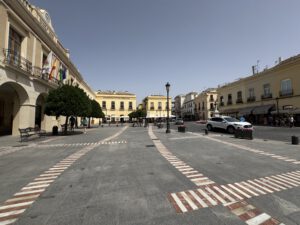
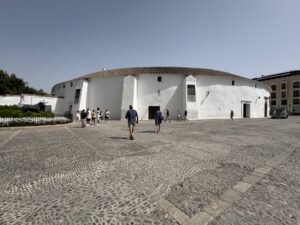
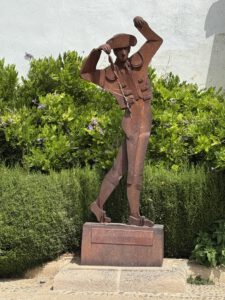
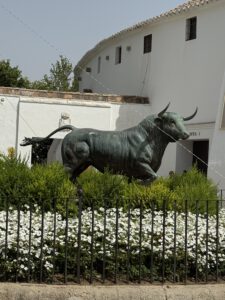
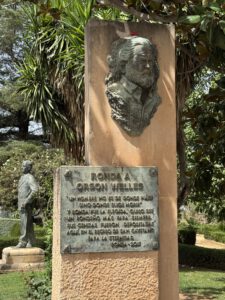
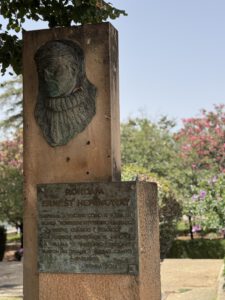
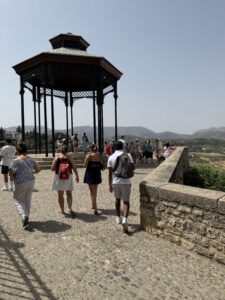
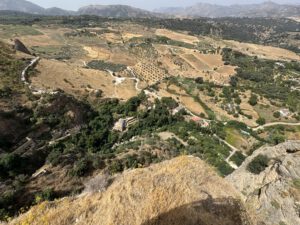
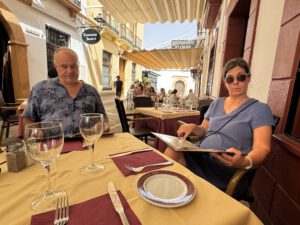
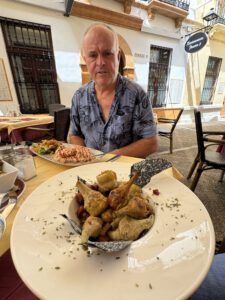
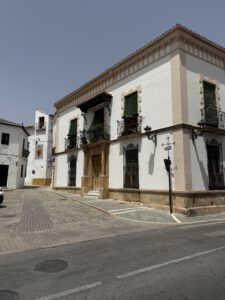
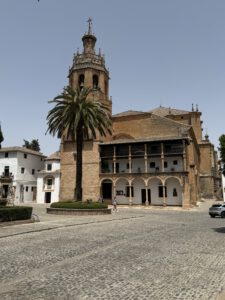
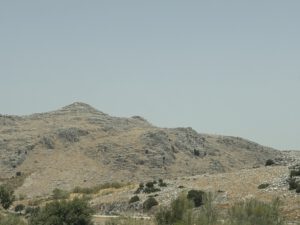
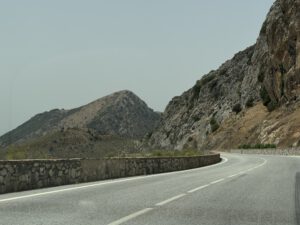
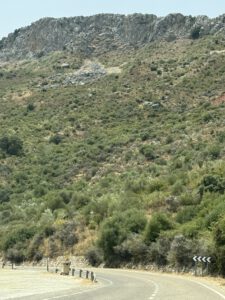
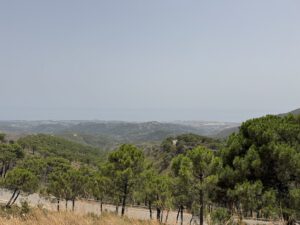
The morning starts off slightly hazy, as has become the norm, but you can tell it’s going to be very sunny and hot today. After breakfast, the three of us head over to the car rental office. It’s not far—just around the next block. Our car is already waiting for us, and the friendly Danish employee quickly takes care of all the paperwork. And off we go. We drive east on the highway to the San Pedro de Alcántara exit and then turn north. The road quickly becomes winding as we head up into the mountains. Fortunately, the road is well-maintained, and although there are many construction zones and single-lane sections, we’re waved through without stopping. At 11:30 a.m., we reach Ronda and first drive along a narrow but quite steep path to the base of the cliffs on which the city sits. From here, we have an excellent view of the white city atop the rocky plateau and the gorge that separates the Old Town from the New Town. On the way back up, our Kia gives it everything it’s got and manages to climb the hill with great effort, its tires spinning. We continue into the old town and immediately find a parking spot at the Iglesia María Auxiliadora. From here, we continue on foot. We cross the Plaza Duquesa de Parcent and admire the old buildings surrounding it. Through narrow alleys and past stunning buildings—mostly of Moorish influence—we make our way to the Mirador de María Auxiliadora. From here, we have a breathtaking view of the surrounding landscape and the mountains. We continue on to the Puente Nueva, which spans the 100-meter-deep El Tajo gorge. Over the course of millennia, the Río Guadalevín has carved its way deep into the rocks and now flows far below us with crystal-clear water. From the old town, La Ciudad, we look down on the newer district of El Mercadillo. A total of three bridges span the valley, and we use the 18th-century Puente Nuevo to cross the gorge. We continue on to the Plaza de Toros and the bullring. We skip a visit there and instead head on to the Mirador de Ronda. Along the way, we pass the busts of Ernest Hemingway and Orson Welles. Both writers spent a lot of time in the city and drew inspiration from Ronda for their novels. By now, the temperature has reached about 35° C in the shade, so we head to a shady spot in front of the tapas bar Puerta 2. We cool off with a refreshing beer and eat a few tapas before heading back to the old town. After two hours, we leave Ronda and head back toward the coast. This time we take a different route, which is supposed to take us further west back to Estepona. Google Maps guides us perfectly through the countryside as far as Algatocin, but then we accidentally follow the road signs toward Estepona. A mistake?! The road gets narrower and narrower, and the curves sharper. We laboriously make our way down the slope through the switchbacks at 30 km/h, only to climb back up the next mountain. The route is very challenging to drive, but we’re rewarded with stunning views of the gorges and valleys. At first, the slopes are densely covered with cork oaks, pines, and chestnut trees, providing lovely shade. Eventually, we reach the Paraje Natural Los Reales de Sierra Bermeja, and the landscape changes dramatically. The slopes are almost entirely bare, with only a few charred tree trunks jutting out from the rocks here and there. Devastating wildfires raged here in 2021 and 2022, and nature is still far from having recovered. After an hour’s drive, we finally look out over the sea from the Mirador Estepona-Jubrique, and Estepona lies before us once again. We make a quick stop to shop and are back on board around 4 p.m. In the shaded cockpit, we relax after the day’s exertions and prepare a delicious octopus dinner in the evening.
Trip to Marbella and Málaga
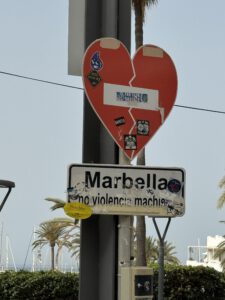
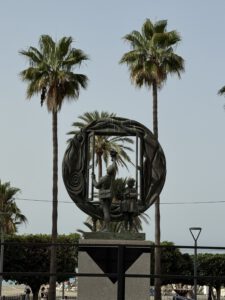
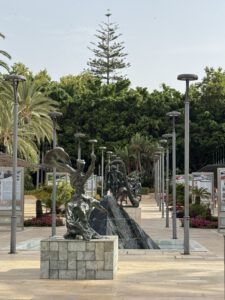
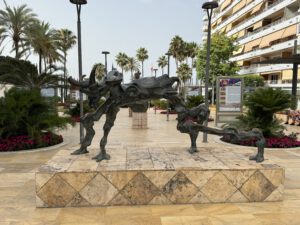
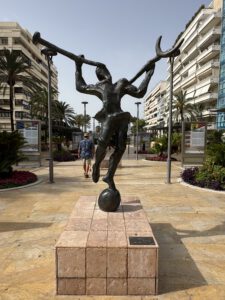
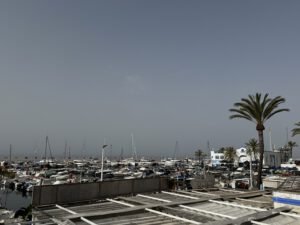
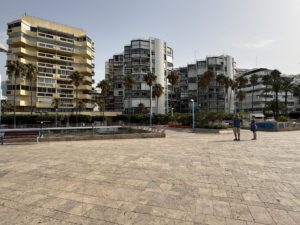
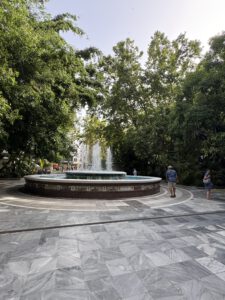
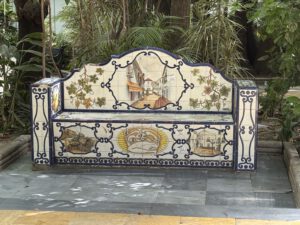
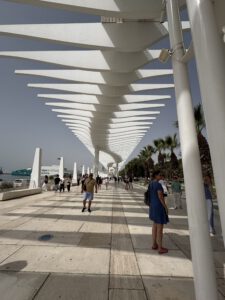
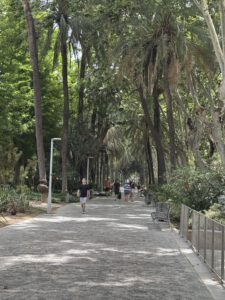
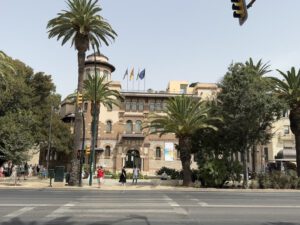
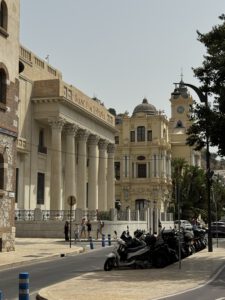
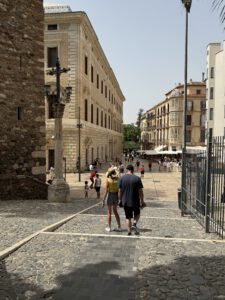
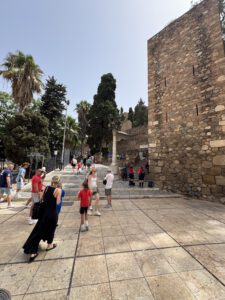
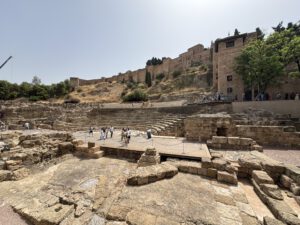
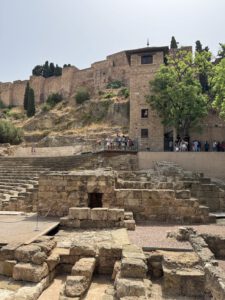
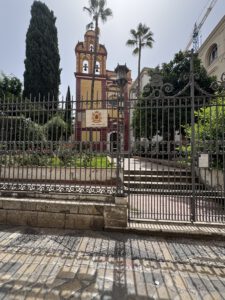
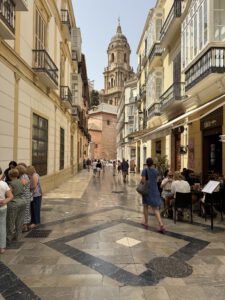
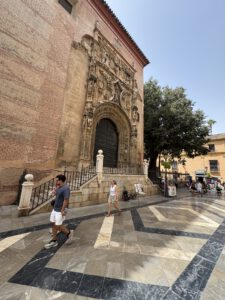
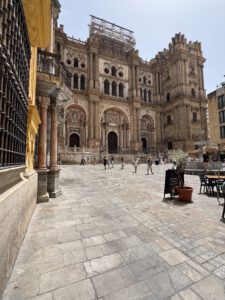
The next day, we’re off on another sightseeing trip. At Anja’s request, we’re heading to Marbella first. After that, a visit to Málaga is on the agenda. We set off eastward on the coastal highway and drive through a very touristy region. One hotel after another, interspersed with fenced-in and walled-off resorts featuring villas and apartments. Around Marbella, there are numerous high-rises as well. Not exactly chic! The traffic has also increased significantly, and we’re soon stuck in slow-moving traffic and a traffic jam. We’re somehow not used to this kind of thing anymore. That makes the heavy traffic all the more unpleasant for us. In Marbella, we pull into an underground parking garage on the promenade and exit right next to the Parque de la Alameda. Here, there are a total of ten large bronze sculptures by Salvador Dalí. Just like that, with no admission fee. That alone made the trip to Marbella well worth it. Otherwise, we find ourselves staring at some pretty ugly high-rises along the beach promenade. Even the marina doesn’t live up to what Anja had imagined Marbella to be. No rich and famous, no mega-yachts. These days, you’re more likely to find them in Puerto Banús, a neighborhood of Marbella. Anyway, we set out to find the old town and eventually do. It’s definitely nicer here, though we’d much prefer Estepona by comparison. So after half an hour, we head back to the car and continue on toward Málaga. The area remains very touristy and congested. It’s no comparison to the Algarve, where everything is more tranquillo. Even the drivers here are different from those in Portugal. No one lets you in, no one waits patiently. And motorcyclists race through the lines of cars at high speed, zigzagging their way through. That certainly doesn’t always end well. Finally, we reach Málaga and park our rental car in the underground garage at Muelle Uno. We walk along the futuristic, shaded Palmeral de las Sorpresas. We cross the Parque de Málaga near the Auditorio Eduardo Ocón open-air stage and reach the old town at the Alcazaba de Málaga, the ancient fortress. We decide to postpone our visit there, because with temperatures already over 30° C, we’re not in the mood to climb hills and explore old walls in the blazing sun. Fortunately, the Teatro Romano de Málaga can be viewed from the street without paying an admission fee or having to climb around. We walk through downtown and find a few shady spots where a cool breeze blows. Very pleasant. The delicious ice cream is also refreshing. For Axel, of course, it has to be Málaga-style ice cream! We pass by the Picasso Museum, where a line of people is waiting in the sun to get in. So, unfortunately, we skip that visit as well. Pablo Picasso was born in Málaga, and accordingly, there are numerous replicas and souvenirs featuring Picasso motifs in the surrounding shops. We reach the impressive cathedral, but given the 10-euro admission fee and the line, we skip this visit as well. After wandering through more alleys, past beautiful houses with cast-iron balconies, and passing the occasional church, we finally take another break at a tapas bar. You could spend hours exploring the old town even further. Every corner offers beautiful houses and at least three tapas bars. Since the temperature has now reached 37° C—outside temperature, not body temperature!—we head back to the car after our midday snack. We drive a short distance and then drop Anja off at a hotel on the Guadalmedina River. She has an early flight back to Bremen the next morning, so she’s found a place to stay closer to the airport. We say goodbye and head back to Estepona. As usual, we use the rental car to do a big grocery run at Carrefour. An entire shopping cart’s worth of groceries first disappears into the trunk and then into La Ola. Afterward, we return the car to Estepona Car Rental and spend the rest of the day relaxing once again in the shaded and well-ventilated front cockpit.
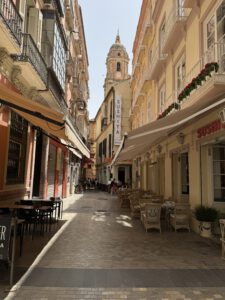
Finally Friday! Already? Time is flying by again. The day starts out overcast and slightly windy. It’s actually quite pleasant, since the temperatures are still very bearable in the morning. While Axel works on repairing our genoa furling line cleat, I prepare pizza dough for the evening. At some point, the cool breeze turns into a hot wind, and we just sit there, exhausted, in the cockpit. At 37°C, it’s too hot even in the shade. Fortunately, it stays pleasantly cool inside our hulls at 30°C. My pizza dough loves the heat and practically explodes. I have to work it several times to keep it from spilling out of its container. Unfortunately, we don’t have any room in the fridge, since it’s crammed full of fruits and vegetables. In the evening, Gabi and Holger from Panacea join us. The two of them are from Bremen and, like us, are also TO members. They’ve already spent several winter seasons in Cartagena and are on their way back there now. So our paths will cross even more often. Surprisingly, my pizzas turn out wonderfully despite the exploding dough, and we have a fun evening with the two of them. It’s well past midnight before we settle into our cool bunks—thanks to the air conditioning.
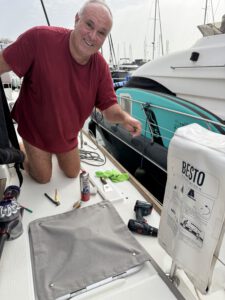
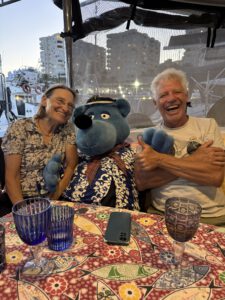
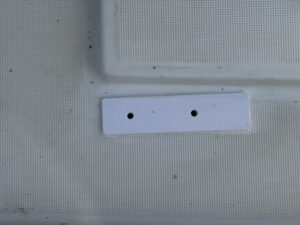
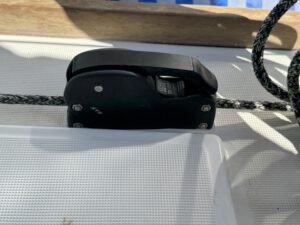
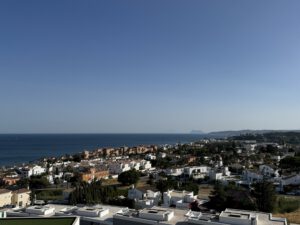
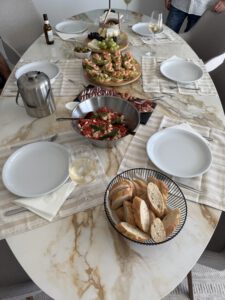
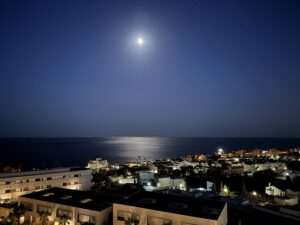
It was a long evening, so I’m not sitting in the cockpit with my coffee until around 8 a.m. today. The weather is finally clearer today and not as hazy as it has been the last few days. It looks like it’s going to be another beautiful, sunny day. Luckily, it looks like we’ve weathered the heat wave for now, and it’s supposed to “only” reach 31° C today. While I fire up the washing machine again, Axel is finishing up his boat project. The cleat for the genoa halyard now has a 3D-printed base that holds the cleat firmly in place. The repair became necessary because last year we had to install a new cleat, and in the process, the nuts that secured the cleat’s screws down into the deck simply disappeared into the hull. Unfortunately, that spot is inaccessible from both the outside and the inside, so we’d simply glued them in place back then. Unfortunately, that didn’t hold, so we had to come up with a new solution. We’re hoping this repair job is finally finished. With the current temperatures and the very low humidity of 30%, my laundry is drying in no time today. No sooner have I hung it up than I can take the clothes off the drying rack again. The freshly washed guest bedding is put back on the bed and bagged right away. So the next guests can come anytime. Tonight we’re invited over to Andreas and Natalia’s place. Andreas is kind enough to pick us up by car at the marina so we don’t have to pedal uphill on our bikes in this heat. When we arrive, everything is already set up. A beautifully set table with all kinds of treats is waiting for us. The view from the air-conditioned penthouse apartment of the Strait of Gibraltar and the Mediterranean Sea is impressive. We could definitely imagine something like this for our future someday. Karin and Michael are there too; they live in the adjacent building. We spend another very pleasant evening together and make plans to meet up again the very next morning. At some point, Andreas drives us back to the marina, where life is still in full swing on Saturday night. In a pleasant way, because loud music isn’t blaring out onto the street from every bar and restaurant. No karaoke bellowing or thumping bass. Just lively conversations, laughter, and a lone guitarist singing “La Bamba.” While the air conditioning cools down our cabin, we wind down the evening in the forward cockpit and enjoy the scenery.
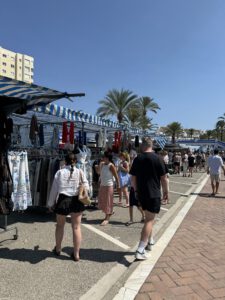
The marina is already bustling early in the morning, because Sunday is market day and numerous market stalls are being set up. For us, though, Sunday starts with a delicious breakfast featuring eggs. Afterward, we make some fresh juice again and move La Ola a bit further forward. We actually wanted to continue on tomorrow, but the wind is against us once again. It’s supposed to be a force 4 from the east, and we’d have to sail into the wind. But we’re not doing that anymore! The wind could also have pushed us against the quay wall before we moved the boat, so we’d rather take care of that beforehand. Around 10:30 a.m., Natalia and Karin stop by to see us. First, we have some coffee on board, and then Acel and I get our second dengue vaccination. We’ve had the vaccine on board since Vilamoura and actually planned to get our second dose in Madeira. In Portugal, you can just get it done at a pharmacy. In Spain, unfortunately, that’s only possible at a doctor’s office, but since Natalia has medical training, she agreed to give us the shots. She’s very good at it—you don’t even feel the slightest prick, and it’s over before you know it. We don’t necessarily need the vaccine for the Mediterranean anymore, though, since dengue hasn’t spread very far into Europe yet. But in isolated cases, local transmission is already occurring via the Asian tiger mosquito, and the tiger mosquito is spreading further and further across Southern Europe. So we’re prepared for the future. After getting vaccinated, we head to the market together. We quickly walk through the stalls, which offer lots of colorful clothes, “real” designer goods, even “realer” luxury watches, ceramics, art, and other kitsch. We successfully resist the shopping temptations and are back on board by 12:30 p.m. The boats around us are taking advantage of the calm, sunny weather to go out for a cruise with their owners, extended families, and entire circles of friends. We’re too lazy for that. We’d rather sit in the shade and are glad when, eventually, all the motorboats are gone and the stench of diesel and exhaust fumes subsides. In the afternoon, our new friends from Bremen, Gabi and Holger, stop by and give us some tips and recommendations for marinas and anchorages in the Mediterranean. Now we’re all set for the next few weeks and know where it’s pleasant, beautiful, and safe. All we need now is the right wind, and then we’ll head further east. In the evening, we enjoy some delicious tapas in the front cockpit and watch as one motorboat after another returns to the marina. Laughter, soft music, and the clatter of cutlery drift over to us from the shore once again. Estepona has so far proven to be a very lovely marina where you can enjoy the charm of the Mediterranean in a laid-back atmosphere. So it’s no big deal that we once again “have to” stay here longer than planned or expected!