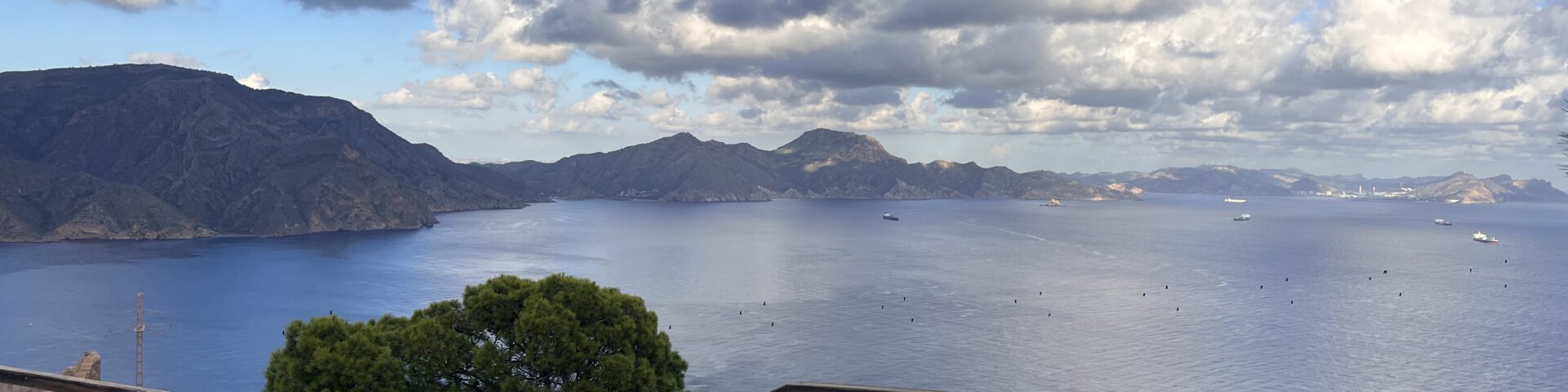
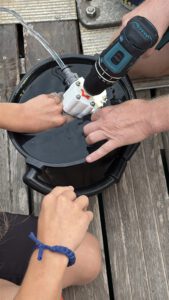
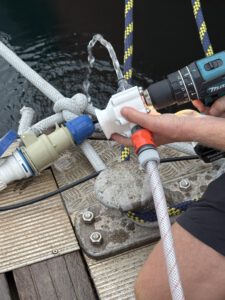
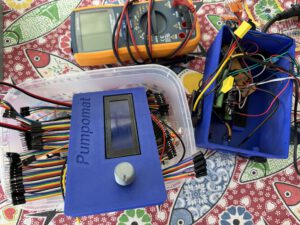
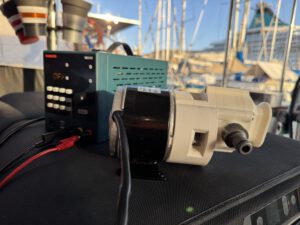
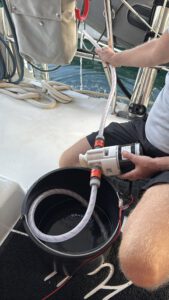
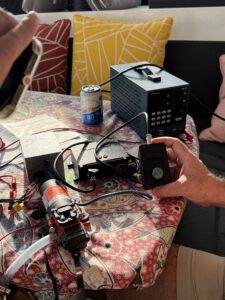
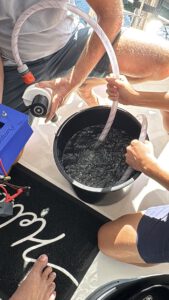
October begins with a change in the weather. The temperature drops from 30° C to 26° C, and rain sets in. We close all the hatches and the sunroom and hope the sun comes out again soon. Parts of Spain are once again experiencing flooding and extensive damage. Fortunately, we don’t notice much of it here in the marina in Cartagena. The big rain clouds seem to be giving us a wide berth. In the countryside around Cartagena, however, things don’t look so good—roads are flooded, and there have been numerous accidents. But before the rain, there’s still a success to celebrate. The 3D printing project has cleared its first developmental hurdle. Axel and Hildbrand have actually managed to build a pump together. It’s successfully and quite efficiently pumping water from a bucket into the sea. For now, it’s still powered by a cordless screwdriver, but the motor and control system are already in the works. It shouldn’t be long before the two of them can start production. After Axel’s bike broke down again shortly after being repaired, my e-bike suddenly stops working too. It hasn’t made a peep. One minute I’m cycling uphill with a 75% charge, and suddenly nothing works anymore. The power’s completely out, and the pedals are hard to turn. I’m thrilled! Not!!! Maybe we need to completely rethink this whole bike thing. It can’t be right that they’re constantly needing repairs. Sure, the salty air might be taking a bit more of a toll on them. But we take good care of them and cover them up when it rains. Well, you get what you pay for. That’s probably the case here, too. Or maybe we’ll come up with an alternative. For now, though, we’re taking the battery back to Decathlon and hoping to get a new one under warranty. We’ll see…

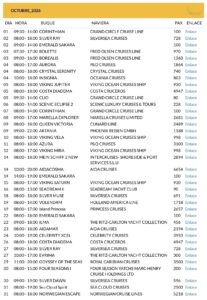
October 3, 2026. German Unity Day. A holiday! Well, we don’t have many of those here in Spain. And in Germany, it’s kind of a Saturday anyway—and for most people, it’s a weekend off from work. It’s a shame we’re not in Bremen, because that’s where the German Unity Day celebrations are taking place today. With Fanta 4 and probably some prominent politicians. That happened 16 years ago, and back then we were right in the thick of it. Christian Wulff walked right past us back then. In any case, we wish everyone a wonderful holiday! For us, the day starts once again with a loud rumbling. Two huge cruise ships are docking, and the Borealis from Fred Ohlsen Cruises is one of the noisiest of its kind. Luckily, it sets sail again in the early afternoon, and we have peace and quiet once more. However, numerous other cruise ships will be following in the coming days. October and November seem to be peak cruise season in Cartagena. Up to three ships arrive almost daily. Otherwise, a shopping trip with Brigitte and Kay to Aldi brings holiday-worthy culinary highlights. Most of the Christmas gourmet selection is already available. Among other things, I manage to snag a piece of my absolute favorite cheese, Langres! And there’s smoked cheddar! We always made that ourselves at the mill, and, and, and… The fridge is well stocked with treats. But they probably won’t last until Christmas.

Since we unfortunately missed out on celebrating German Unity Day, we get to join in the festivities here in Spain instead. As is to be expected from the party-loving Spaniards, they’re playing it safe and celebrating for a few days straight. Since Cartagena is one of Spain’s most important naval bases, the national holiday is celebrated with particular enthusiasm and features a large-scale cultural and military program lasting several days. The program kicks off as early as Friday with the ceremonial raising of the Spanish flag and numerous gun salutes. Incidentally, the Día de la Hispanidad commemorates October 12, 1492, when Christopher Columbus first landed in the Caribbean on behalf of the Spanish royal family. Of course, the day is also viewed critically due to the centuries-long oppression and colonization of the indigenous peoples in the Caribbean and the Americas by European conquerors. However, efforts are made to highlight the historical and cultural ties between Spain and Latin America, and so there are numerous Latin American-inspired events. So on Fridays, during our evening stroll through downtown, we can listen to a great live concert by El Combo Batanga and dance to samba rhythms—in T-shirts and shorts, mind you, since the evenings have once again reached a pleasant 20° C.
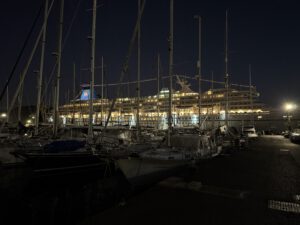
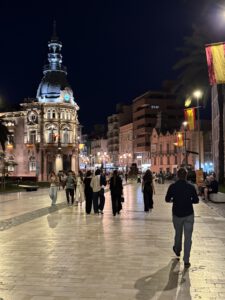
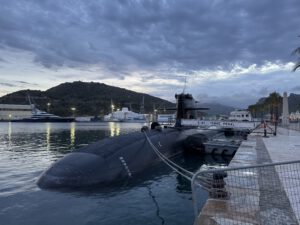
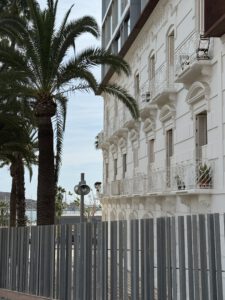
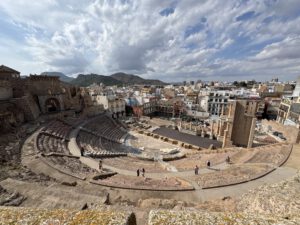
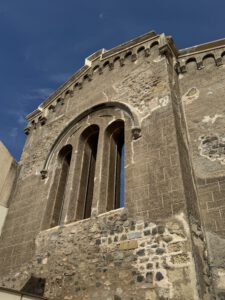
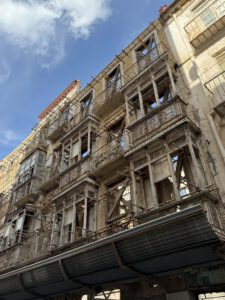
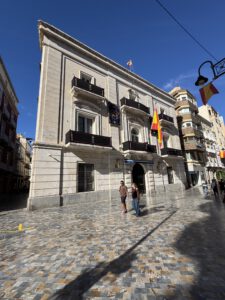
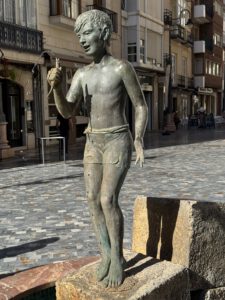
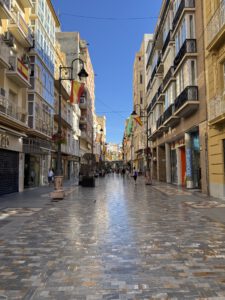
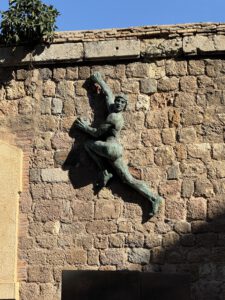
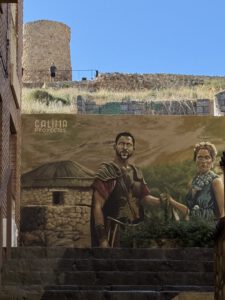
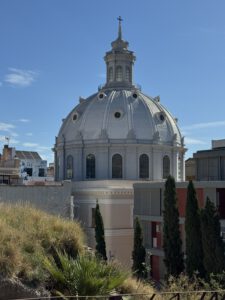
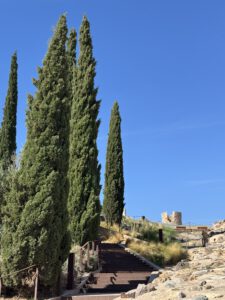
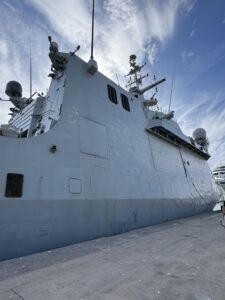
The festivities continue on Saturday. Instead of a cruise ship, a gray steel colossus docks at the marina behind us and is open to visitors. We skip the tour because the line is long and our Spanish isn’t good enough for a guided tour. Instead, I walk into downtown and buy some new herbs for my onboard garden. Along the way, I discover some lovely new spots and am delighted by how pleasant and lively downtown is. The walk back takes me over a small hill. Right in the middle of downtown, on this hill, lies one of the country’s most significant archaeological sites. Spanning about 2.6 hectares, it contains remains from more than 2,200 years of history, ranging from the Punic and Roman eras all the way to the 20th century. You can walk through part of the hill for free. There’s an admission fee for the Foro Romano Molinete museum. Today, I’m just enjoying the view of the city for now and saving the rest for a visit with Axel.
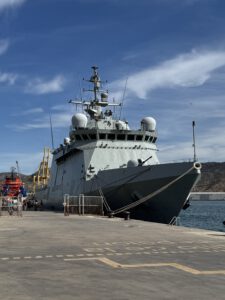
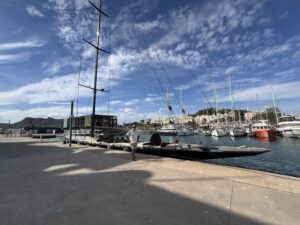
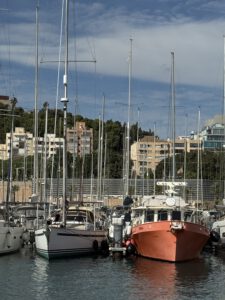
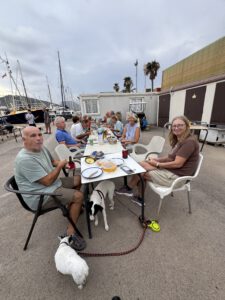
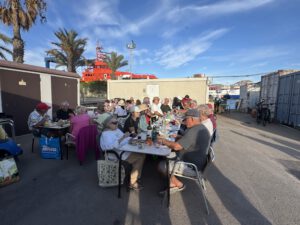
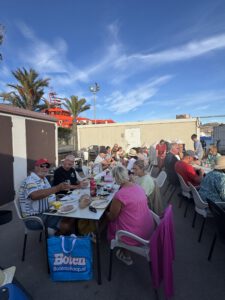
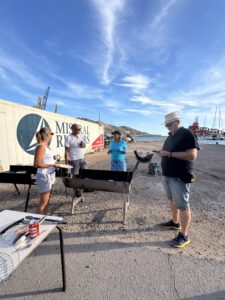
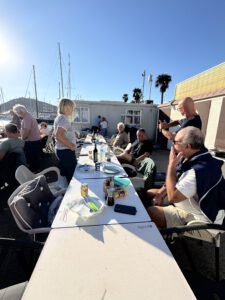
Next up is the sailors’ Sunday barbecue. The group has grown considerably in the meantime, and we’re seated at two rows of tables with about 40 people. The group is still a lovely international mix, and people cheerfully switch back and forth between languages. That way, we always pick up a little French and Dutch. We’re adding Scottish to our English skills. You never stop learning!
The next few days pass without much happening. Axel and Hildebrand continue working on their pump. I keep practicing the piano. We go shopping, take walks in town, and join other sailors for tapas at Rincon del Manchego. During the day, it’s still a pleasant 25–30°C. In the evenings and at night, it’s now cooling down to below 20°C at times. All in all, very pleasant. Unfortunately, renting a car as planned isn’t turning out to be quite so easy. Prices are still very high, and there are surprisingly few options available. So we’re simply postponing our trip plans until early November and hoping the weather will still be good then. Meanwhile, our plans for our trip to Germany are also taking shape. Thanks to our dear friend Elke, we’ll be meeting almost all of our friends for a dinner together in Bremen. We’re already looking forward to it! By the way, we’ve arranged for a cat sitter to take care of Lucky while we’re away—they’ll feed him in the mornings and evenings and even keep him company on board in the afternoons.
The weather is taking a turn for the worse again in mid-October. While it remains relatively warm, the cold air aloft from Storm Adam, combined with the still very warm Mediterranean waters, is causing intense atmospheric instability. Valencia receives as much rain in a single day as it normally does in two years! Alicante is also flooded, and the region around Murcia and Cartagena is once again under water. The drainage channel, which we could have walked through just a few weeks ago without getting our feet wet, is full, and streets are being washed over. We stay on board and are treated to a free deck rinse from the storms, along with an impressive spectacle of lightning and thunder. The thunder echoes back and forth between the surrounding hills, making us feel like we’re inside a giant tin drum. We also stay on board because our last visit to the tapas bar left us with a nasty stomach bug. Six out of eight of us are laid up, and unfortunately, we’re among them. What a pain in the…!!! It doesn’t help much that the Sunday BBQ is canceled due to the weather and, at the same time, our cockpit fridge has given out. Mechanic Juan Pedro stops by, takes it out, and tries to fix it. We’ll see how that turns out.
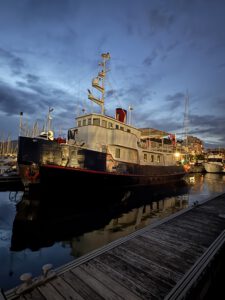
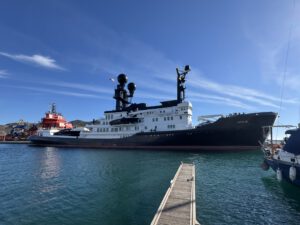
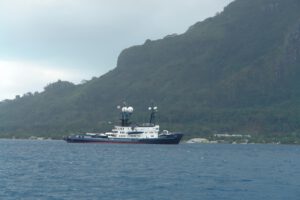
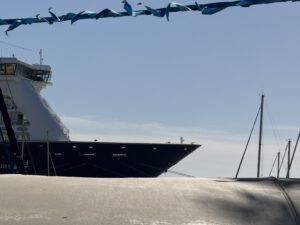
But eventually, even the worst storm passes, and we’re back in shape just in time. Our marina keeps filling up with more overwintering guests. More German yachts are arriving, as well as some fellow members of the TO club. And an “old acquaintance” docks in Cartagena. The former ocean-going tug Arctic moors inside the cruise pier, and we can watch the daily scrubbing. We first encountered this ship—which has been converted into a luxury megayacht—15 years ago in Bora Bora, when it was still called the Arctic P. Back then, we spent a pleasant evening with some of the crew at the Bora Bora Yacht Club. By the way, you can now charter the ship for a nice vacation. The fun costs a whopping 590k euros. In words: five hundred ninety thousand euros. Per week!!! OK; I guess we’d rather stay on La Ola after all.
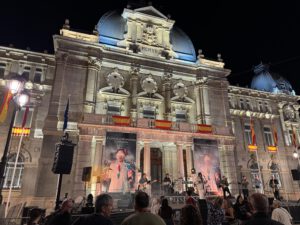
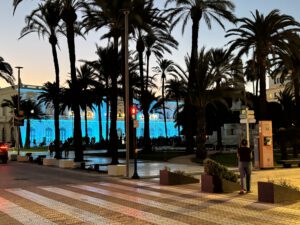
After two weeks, I’ll finally be able to pick up my new bike battery. It’s under warranty, so it’s free—we’ll see how long it lasts this time. Or what breaks on the bike next. And, brave as we are, our tapas group is going out to eat together again. This time, though, we’re heading to a different tapas bar. On the way there, we pass by an open-air concert—as we so often do. This time, the band Belter Souls is performing from the balconies of the Autoridad Portuaria de Cartagena. The occasion is the building’s 100th anniversary. And there’s pizza again aboard La Ola. This time with our neighbors Jörg and Steffi from 4Grobis and the Swiss couple Carola and Christian from Blue Wave. And, surprisingly, the pizza just keeps getting better.

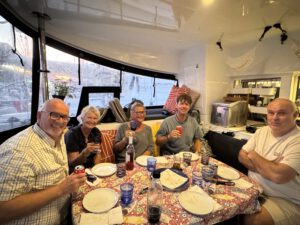
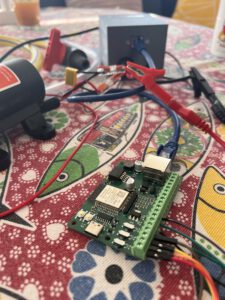
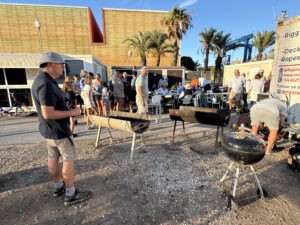
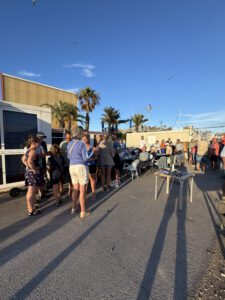
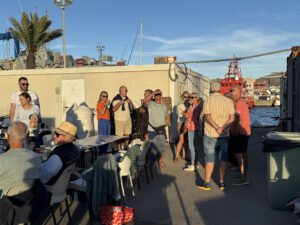
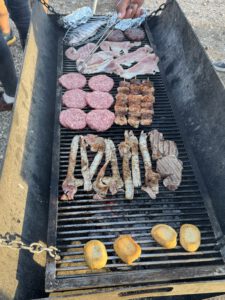
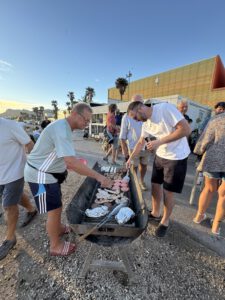
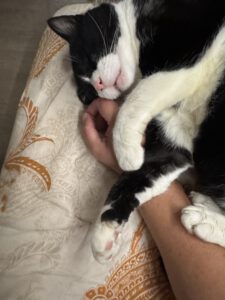
The weekend isn’t much different from the week. It’s still busy. Axel helps a few sailors with technical problems, works on his pump project, and keeps making progress. In the meantime, he’s had a circuit board made for the electronics—produced according to his specifications—and everything works! My bike gets a new, improved battery mount and is now fully operational again. Meanwhile, I’m continuing to practice my piano skills. The two-handed accompaniment for Billy Joel’s “Pianoman” is a real challenge for me. But at least I can now play it 95% error-free. After four weeks, maybe that’s all you can expect, right? Other songs are easier and can be played flawlessly after just a few tries. The neighbors are already asking about concerts, but I think I’d rather wait a little longer on that. Otherwise, it’s time for the Sunday barbecue again. There are now over 50 guests crowding around the grill. There are lots of nice conversations by the grill, at the buffet, and at the tables. However, thanks to the switch to standard time, it’s getting dark quite early now, and at 19° C, it’s getting noticeably chilly. So the social gathering wraps up as early as 7 p.m. A good opportunity to watch an episode of Tatort on TV again. Lucky joins us in the living room and is happy to be able to snuggle up on the sofa again.
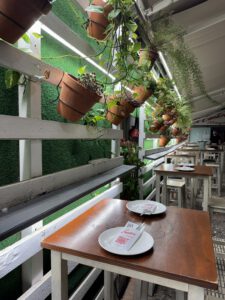
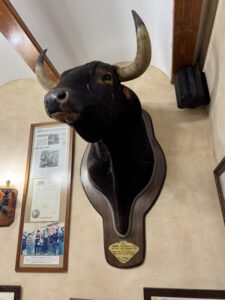
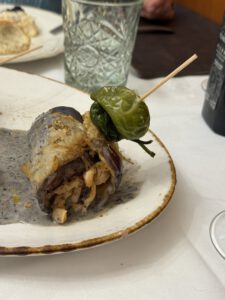
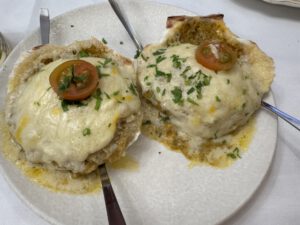
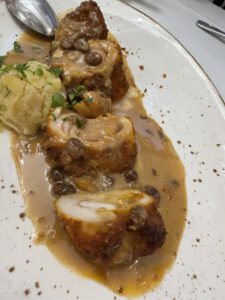
The last week of October is here, and somehow we feel like nothing much has really happened. No great outings, no big news—just everyday little things. But that’s just how it is. And we’re in the home stretch! We actually used October to take on the Sober October Challenge—no alcohol for 31 days. We do Dry January regularly, but this is our first time doing Sober October. Was it hard? No, not really. Sure, when you’re sitting with others at a barbecue or in a tapas bar, there’s no denying a certain temptation. But even that’s manageable. In Spain, there are plenty of different 0.0% beers, and even our non-alcoholic wine—which we’ve often enjoyed back in Germany—is available at Carrefour. And we’re also in the home stretch when it comes to our planned vacation. Just a few more weeks and we’ll be on the plane. Excursions are booked, and meetups are set. The only thing missing is the right clothes. While we’re still running around all day here in shorts and T-shirts, it’ll probably be much cooler on vacation. We probably can’t count on great sunny weather in Germany in late November/early December either. It’s just a shame that most of our winter clothes ended up at an animal shelter in Portugal. So we really need to get on that. So I bike over to El Corte Inglés for my first shopping trip and bravely make my way through the women’s clothing section. With limited success, since Spanish sizes aren’t really tailored to German body types. Or at least not to mine. Still, two cardigans end up in my shopping cart. The rest will have to wait. At the end of October, Carola and Christian from Blue Wave join us for tapas at Tio Andrés. Seated beneath an impressive bull’s head, we enjoy eggplant rolls, scallops au gratin, and much more. Cartagena is a little culinary paradise! Let’s see how many tapas bars we can try during our winter break.

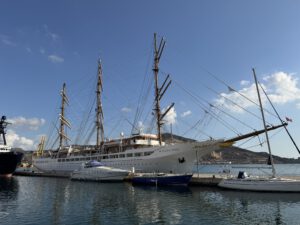
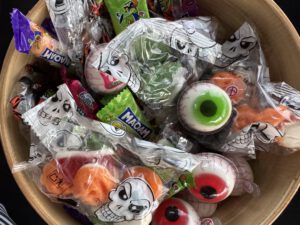
October 31—Reformation Day and thus a holiday in parts of Germany—begins with a lovely view. Behind us, the Sea Cloud Spirit, a three-masted full-rigged ship, has docked. A luxury cruise under sail. Right next to it is the Norwegian Escape, complete with a roller coaster on the upper deck. The contrast couldn’t be greater. We go about our daily tasks and projects, while a yoga class is being offered on deck aboard the Sea Cloud. It’s funny to watch as people stretch their legs over the railing. Besides Reformation Day, it’s also Halloween, of course. We’re well prepared, of course, so in the evening we can appease the “boat kids”—dressed as ghosts, witches, and assassins—and ward off misfortune. Or so we thought. But thinking is sometimes more a matter of luck. While we’re sitting comfortably in the cockpit enjoying moules frites, it suddenly starts to smell strongly of a burnt-out electrical appliance. Not good! At least no cable is smoldering or on fire, but a quick search for the source of the smell reveals that our inverter is no longer working. Shortly before, we’d connected to shore power, and a relay must have blown in the process. So we no longer have 220 V available. And the batteries are now being charged solely by solar power. The latter isn’t a problem for now, given the sunny weather. The former problem needs to be solved right away. Because our cooler isn’t working anymore, and neither are the coffee maker, stove, microwave, air fryer, etc. As a temporary fix, we’ll run a cable from the shore power to the cockpit. With the appropriate extension cords, we’ll at least be able to operate the appliances one at a time. We’d rather postpone the rest of the repair until the next day, since that would require us to take apart our berths. The inverter is built into the space under our bed, and weighing 34 kg, it’s not exactly a quick job to remove. That settles our plans for Sunday.
November 1. Sunshine, and it’s already 25° C in the cockpit this morning. Thanks to the sunroom. Otherwise, it would only be 20° C. Not that we want to make anyone jealous—after breakfast, we’re busy below deck, taking apart the beds. Then Axel gets down to the real work. He disconnects the broken inverter step by step. It’s no easy task—one that has to be carried out with great care. By the way, we only had the inverter installed in Cuxhaven back in May 2024. So it’s actually still quite new, which makes it a bit surprising that it’s now broken down without warning. However, this seems to happen fairly often with these devices. It’s a well-known problem that we’re unfortunately only finding out about now. But we probably wouldn’t have been able to prevent it anyway. Fortunately, the unit comes with a 5-year warranty, and there’s a dealer and repair shop right around the corner. With the help of the Troll crew, the unit is quickly removed and placed in the cockpit. Next, we test the 3D-printed pump once more. In the meantime, a stainless-steel shaft has been fabricated, and in theory, the pump is now ready for endurance testing. However, a seal is leaking, so the test is unfortunately halted after a short time. But this minor issue will work itself out somehow. Meanwhile, Axel bypasses the inverter, which is no longer connected, and we have access to shore power again. Everything’s back to normal on board for now—we just can’t run too many power-hungry devices at the same time. And we have to hope for sunny days so the batteries don’t run dry. After so much excitement and work in the morning, the afternoon brings another relaxed barbecue with the other marina residents. The weather cooperates, and we start as early as 4 p.m. so we can sit out in the sun longer.
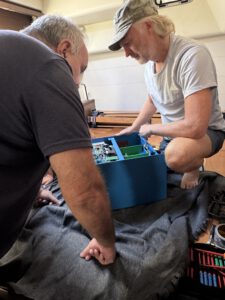
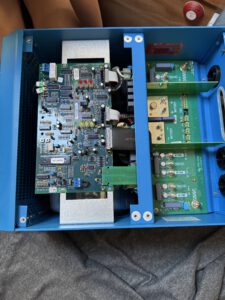
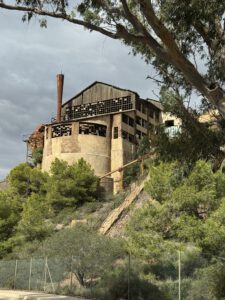
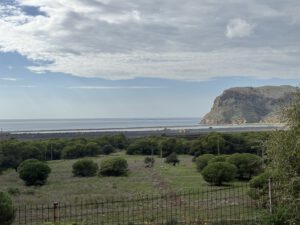
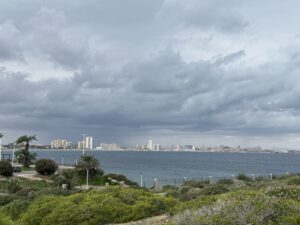
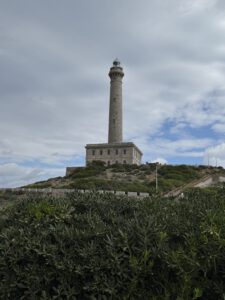
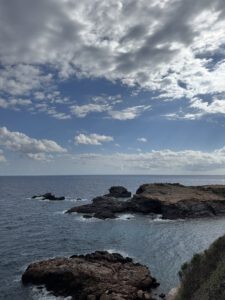
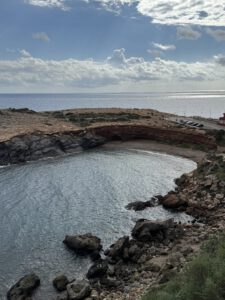
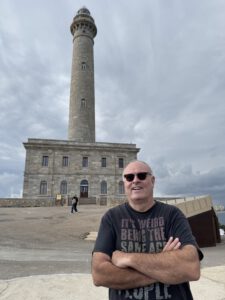
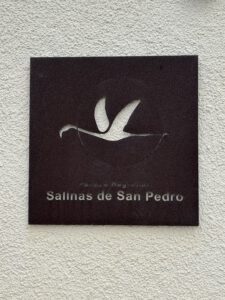
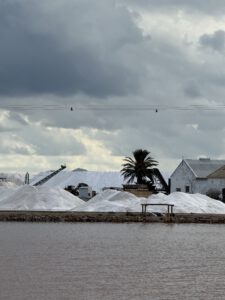
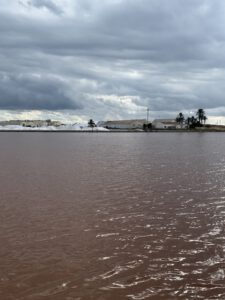
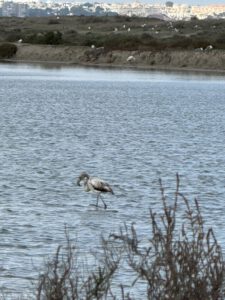
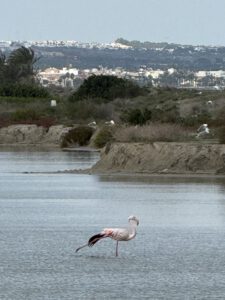
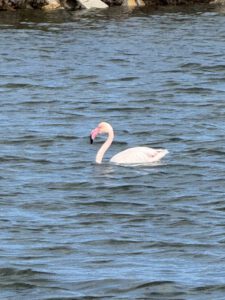
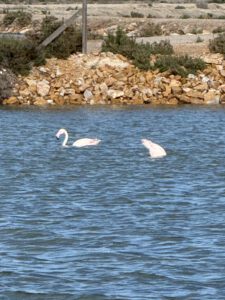
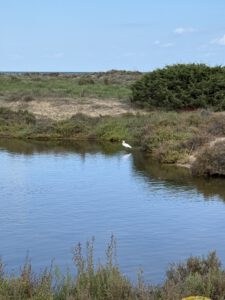
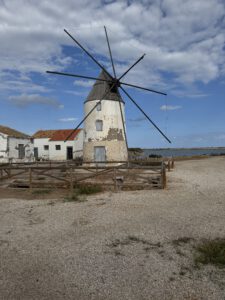
The new week starts with an early morning. We need to get the inverter repair underway, and we finally have a rental car to explore the area. So, after our breakfast cereal, we set off on foot. It’s just a short walk to the Europcar location at the bus station. Or so we thought! Because although we quickly find a Europcar office at the bus station, it’s boarded up and clearly hasn’t been in use for quite some time. A call to the number listed on the reservation also goes unanswered. We do a quick search and find a second rental location a few kilometers away. To get there faster, we treat ourselves to a taxi—and end up stuck in traffic. But eventually we reach an NH Hotel and find, in the basement—charmingly located next to the musty gym—a rather sterile Europcar office. We get our key relatively quickly and are sent out onto the street alone to look for a blue Seat. We find lots of cars, some blue and a few of them even Seats. Unfortunately, though, we can’t find a vehicle that matches our key. Hmm. So back down to the “charming” basement and back upstairs with the Europcar employee. He looks around for a bit too and finally finds our dark gray (!!!) Seat. It’s pretty scratched up and quite dirty both inside and out. And the car smells like cigarette smoke. Great! We find scratches not listed in the rental agreement and have them noted right away. The employee also acknowledges the vehicle’s overall condition—but only with an “I’m sorry.” We’ve never experienced such poor service in any of our numerous car rentals over the past two years. Later than planned, we head back to the marina. We load the broken inverter into the trunk and drive to the Ascar shipyard around the corner. There, we’re able to drop off the unit without any trouble and are assured that they’ll take care of the problem. We like this service much better. Then we finally move on to our leisure activities. First, we drive to the former mining town of Portman. Supposedly, there are a few accessible industrial ruins and abandoned mining cars and railcars to explore there. Unfortunately, however, we find only rather dilapidated houses and fenced-off facilities. Perhaps it’s for the best that they’re fenced off, since entering them would likely no longer be safe. A brief rain shower puts an end to our search, so we decide to drive on instead. We drive over a few hills and look down on the Mar Menor from above. A short while later, we’re in Cabo de Palos at the southern end of the Mar Menor and walk up to the lighthouse. To the west of us, bands of rain are sweeping across the countryside, but we’re lucky and stay dry. We continue along the Mar Menor to the northern end of the lagoon. There, we take a look at the vast basins of the Salinas de San Pedro. The water, which is actually pink, unfortunately looks rather brownish due to the clouds and rain, but at least we spot numerous flamingos. We drive a little further to the mud baths, where you can rub healing mud on yourself for free. Or so one might say, since there’s not a single person in the water today. But there are more flamingos. We walk a bit along the equally deserted beach and finally get back in our car. Next stop: the shopping center! On the way, we saw a sign for an Al Campo supermarket and head straight there. Even though we’ve been spoiled over the past few weeks and Brigitte and Kay have often given us rides to go shopping, there are always a few heavy items we still need. Mostly things for Lucky. We go through cat litter and cat food by the bucketful. The Al Campo turns out to be a little gold mine, and we fill the Seat’s trunk to the brim. Well-loaded, we head back to Cartagena in the late afternoon. Thanks to the handcart, the car is unloaded quickly, and we put our feet up. Axel cooks ribbon pasta with salmon while I go through photos and write this report. Then we plan where to go tomorrow. Unfortunately, it’s supposed to stay cloudy and rainy for the next two days. We’ll see what we come up with.
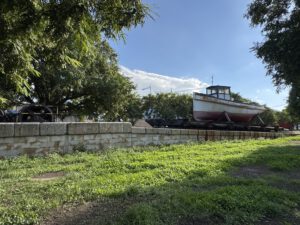
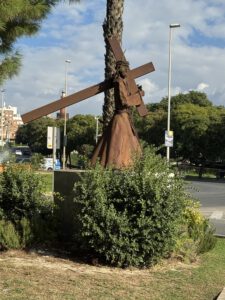
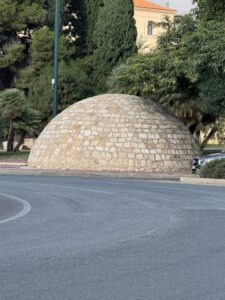
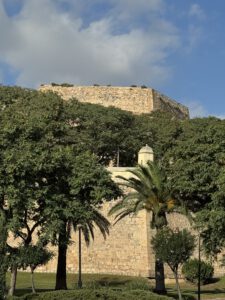
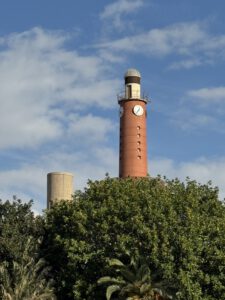
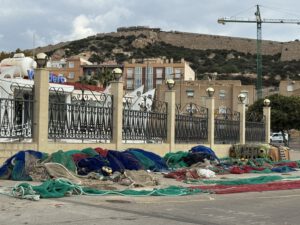
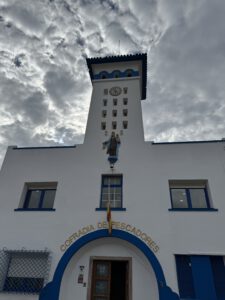
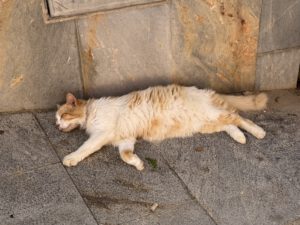
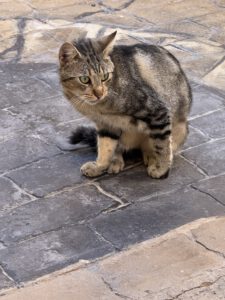
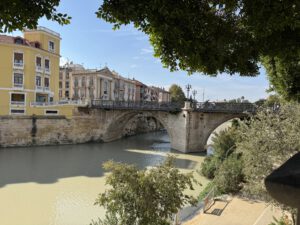
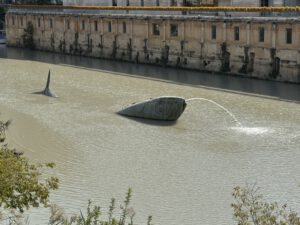
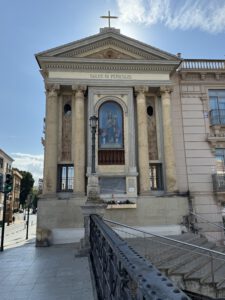
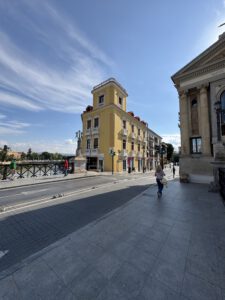
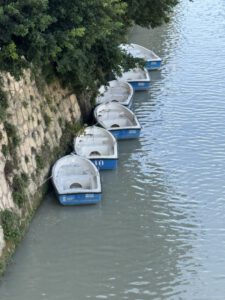
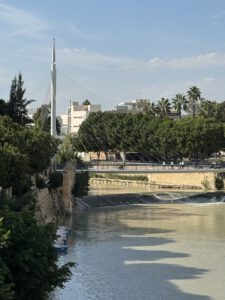
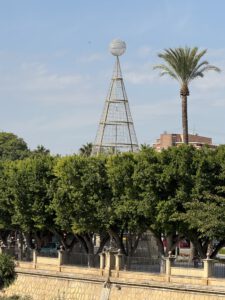
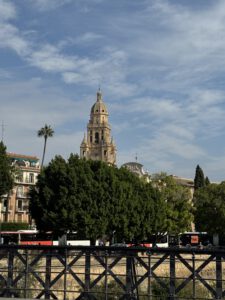
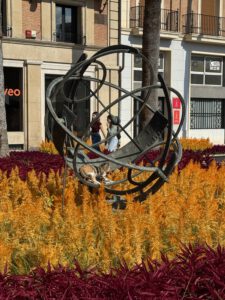
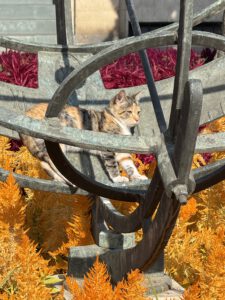
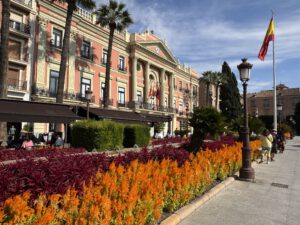
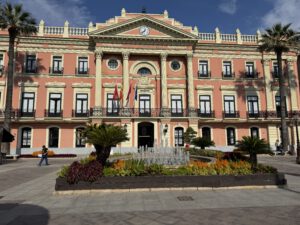
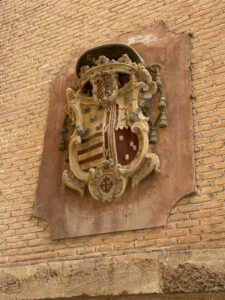
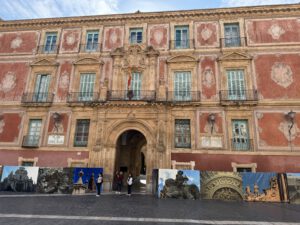
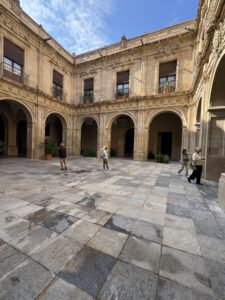
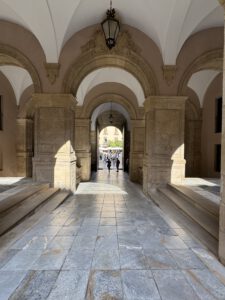
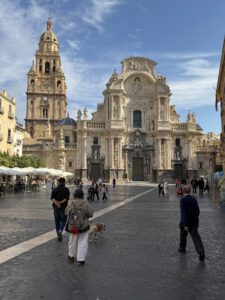
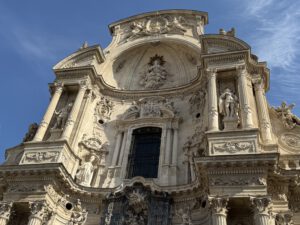
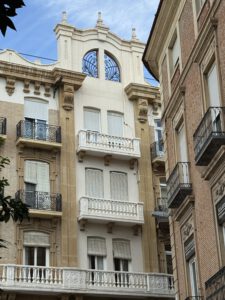
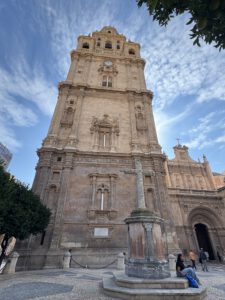
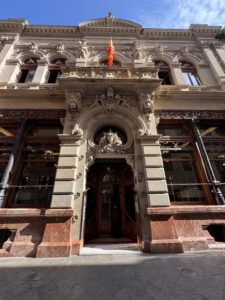
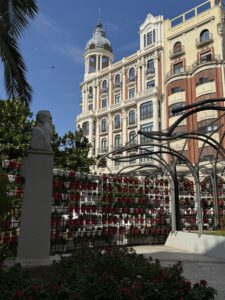
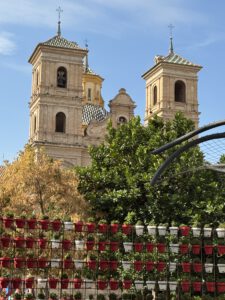
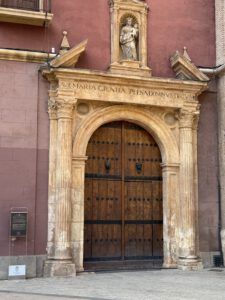
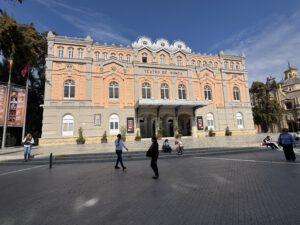
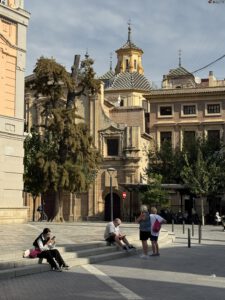
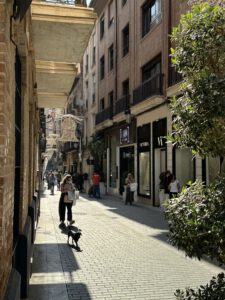
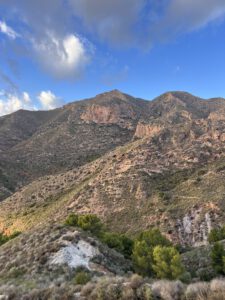
The next day, we continue with our sightseeing tour. We decide to take a city trip. The regional capital, Murcia, is said to be beautiful and offers plenty to see even on a cloudy day. We set off in the late morning. We take the highway. Unfortunately, once we leave Cartagena, the landscape quickly becomes unattractive and bleak. Lots of trash, many abandoned buildings, and a lot of arid land. After a few kilometers, we reach a heavily farmed plain. Orange trees, freshly planted lettuce seedlings, heads of cabbage. Despite the rain over the past few weeks, the soil looks parched and dry; there’s really nothing for the eye to linger on—except for the mountain ranges that mark the horizon. Eventually, we reach the Sierra de Carrascoy mountain range and drive over a winding pass. Beyond the mountain range, the next large plain opens up, and right in the middle of it we see Murcia. Axel is skeptical at first as we enter the city, but is convinced of the city’s beauty the moment he steps out of the elevator from the underground parking garage. We park right beneath City Hall and, even as we’re parking, catch a glimpse of the historic remains of the Muralla del Sol, the medieval defensive system of the old Islamic medina. Before taking a closer look at City Hall, we first cross the street and gaze out at the Río Seguro, which cuts through the city. We take a quick stroll across the Puente de los Peligros and, after taking in the panoramic view, head back to the small city garden, the Glorieta de España. In a flower bed, we spot a tiny kitten basking contentedly in the sun inside a sundial. If it weren’t for the flower beds, someone would probably have already snatched her up and adopted her. In any case, I was on the verge of diving into the flowerbeds myself. Cute to the power of three! But we already have a cute tomcat on board, so we finally move on. We like the town hall, which glows pink in the rather lovely sunshine. We turn left around a corner and end up at Plaza Cardenal Belluga. Alongside some nice restaurants, we spot the reddish Bishop’s Palace and the opulent Baroque Cathedral of Santa María. The cathedral is the undisputed jewel of Murcia and stands out as one of the most significant masterpieces of Spanish Baroque architecture. Construction on the cathedral began in 1394 on the foundations of the former Moorish main mosque. The Gothic core of the building was consecrated in 1467. In 1733, a severe flood of the Segura River damaged the Gothic façade so severely that the cathedral was given an entirely new Baroque-style façade between 1736 and 1754. Impressive! We’ve never seen such a well-preserved and highly detailed façade before. The cathedral’s interior is said to be impressive as well, but the doors are locked. The Bishop’s Palace, on the other hand, is open, and we take a peek into the courtyard. Afterward, we continue walking through the city center, turning from one charming corner to the next. Unfortunately, the many tapas restaurants aren’t open yet, so we eventually decide to drive on. We head east toward Torrevieja. We’d thought the landscape between Cartagena and Murcia would be monotonous and bleak, but now we’re driving through an area that looks like a desert landscape. Sand-colored soil, hardly any natural vegetation—but a surprising number of orange and almond trees. How can the trees survive in this dusty landscape? And what about the delicate saplings that are being planted here by numerous workers? Irrigation, presumably. And fertilizer. We drive past the Embalse de la Pedrera reservoir and now know where the water comes from. We can smell the fertilizer in some places. A good half-hour later, we look out over the Torrevieja salt lagoon. It’s actually a beautiful, bright pink, just like yesterday’s salt flats, but right now it’s more of a brownish-red color. As we enter the city limits, a feeling creeps in—not just for Axel, but for me as well—that visiting Torrevieja isn’t worth it. High-rises, lots of construction sites, not much charm. Instead, countless speed limits and just as many speed cameras. You don’t really get caught by them, though, because a traffic light turns red every 50 meters. We drive to the marina and spontaneously decide it’s not worth getting out here. So we just drive back to Cartagena and spend the rest of the day relaxing on board.
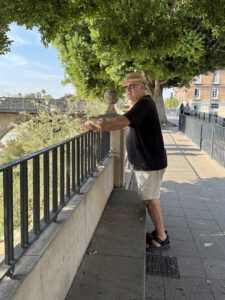
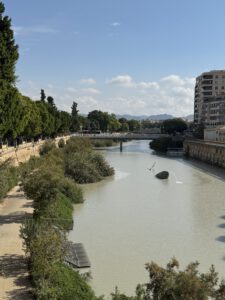
Rain pelted the deck all night, and the next morning dawned overcast and wet. Perfect weather for shopping. Now, shopping isn’t exactly our favorite pastime. Groceries? Sure, we like to shop for those—and maybe even buy too much. But clothes?! Nah, Axel and I agree on that—it’s not really something that gets us excited. Since Axel thinks he already has enough warm clothes for our vacation, the tedious task falls solely on me. Axel drives me to the Centro Mediterraneo just outside the city gates and drops me off there. I dutifully work my way through every store and finally find what I’m looking for in one of them. Seven tops—some chic, some warm—find their way into my shopping bag for 70 euros. And then I find a nice pair of sandals at the Skechers store, too. Okay, I wouldn’t have needed them for our November stay in Germany. But the next summer is sure to come, and I can still wear them here in Spain for now. Axel picks me up again at some point, and together we stock up on a few groceries and drinks at Aldi. As always, they have great deli items, and Aldi here offers a fantastic selection overall. And all at very reasonable prices. A large whole-grain baguette roll for 29 cents, 750 grams of “Weltmeisterbrot” for 1.79 euros. Broccoli—which is being harvested everywhere here right now—for 1.78 euros per kilo. Well-stocked, we finally head back on board, where I first need to recover from this incredibly exhausting day! Meanwhile, the rain is pelting down on the deck, and we’re making ourselves comfortable inside.
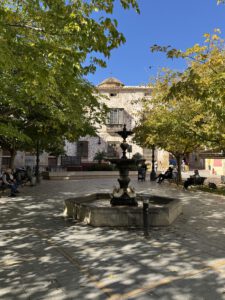
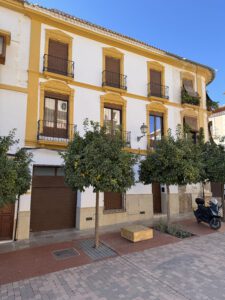
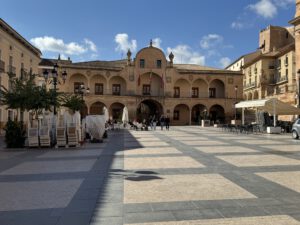
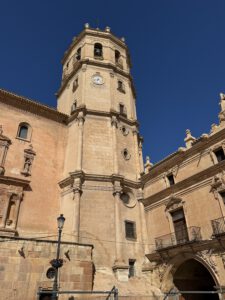
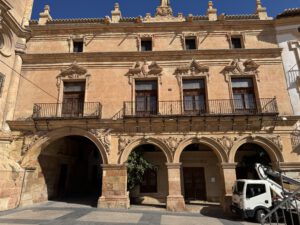
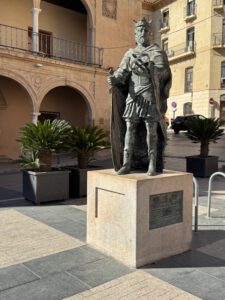
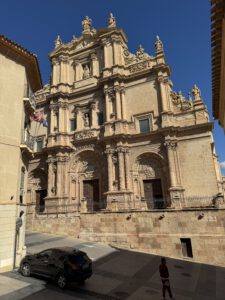
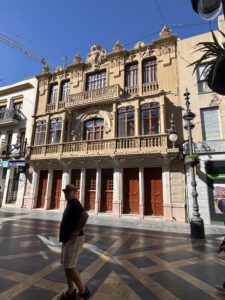
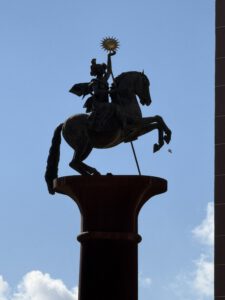
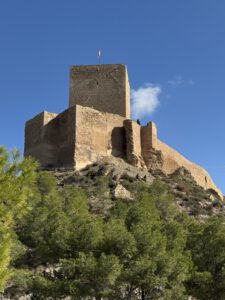
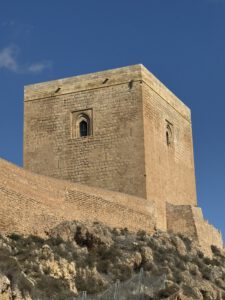
The next day is sunny again, and after breakfast we set out on our next excursion. We head inland and once again drive through the rather boring plain behind Cartagena. This time, we turn west before reaching the mountain range, and the landscape becomes a bit more pleasant. The vegetable fields and fruit orchards are interspersed with vineyards, and the landscape becomes more hilly. After about an hour’s drive, we reach the city of Lorca, also known as the City of the Sun or the “Baroque City.” We only learned about Lorca the day before yesterday, when Rob gave us a few sightseeing tips at the marina. It’s surprising that we’d never heard of the city before, since Lorca looks back on a turbulent history spanning over 5,500 years. Due to its strategic location on the border between Castile and the Moorish Kingdom of Granada, Lorca was a fiercely contested border town for centuries. In the Middle Ages, Lorca was under Islamic rule and developed into an important fortified city. In 1244, the future King Alfonso X “the Wise” conquered the city for the Christian Kingdom of Castile. Lorca subsequently became a strategic bastion on the perilous border with the Moorish Nasrid Kingdom of Granada. After the end of the Moorish threat and an economic boom driven by agriculture and trade, Lorca experienced a golden age in the 17th and 18th centuries. This period saw the construction of magnificent Baroque palaces, monasteries, and monumental squares that continue to shape the cityscape today and earned Lorca the nickname “Baroque City.” Two tragedies influenced the city’s development over time. On April 30, 1802, the monumental Puentes Dam burst shortly after its completion. A gigantic flood wave claimed the lives of over 600 people and destroyed large parts of the lower town. Not too long ago, on May 11, 2011, the second catastrophe struck. Lorca was rocked by a 5.1-magnitude earthquake. Because the epicenter was very shallow, nearly 80% of the buildings and almost the entire historic heritage were severely damaged. The subsequent reconstruction is now regarded worldwide as a model example of historic preservation and has earned the city international recognition.
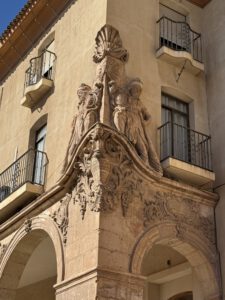
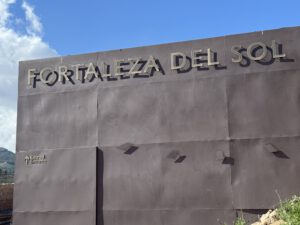
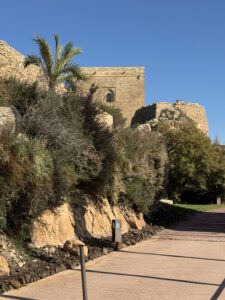
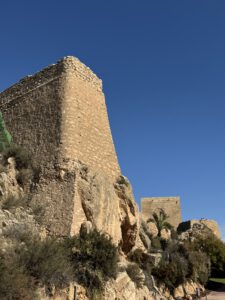
High above Lorca, the Fortaleza del Sol towers over the city, visible even from a distance. But first, we’re heading into the city center. We park at the small market hall and set off on foot. We pass the Óvalo de Santa Paula and head to the Plaza de Colón, which adjoins the back of the Teatro Guerra. We continue on to the Palacio de Guevara, one of Lorca’s most beautiful Baroque city palaces, with a magnificent facade and a historic courtyard. Next, we take a look at the Palacio Huerto Ruano, a stately 19th-century palace. Then we head to the Plaza de España and the Colegiata de San Patricio. This central historic square is also lined with magnificent Renaissance and Baroque buildings. The palaces and churches all sustained severe structural damage during the earthquakes, and the church tower was in danger of collapsing. When you look at photos online of the devastation from that time, it’s hard to believe that hardly any traces of the earthquake damage remain today. Many buildings have been restored to their former glory, and houses are still being renovated and restored all over the place. Whether this is due to earthquake damage or simply the passage of time, however, is not clear to us. Finally, we head back to the car and drive up to the Fortaleza del So. We walk the last stretch up to the fortress and enjoy the view, but decide to skip a tour. Instead, we turn our attention to other destinations.
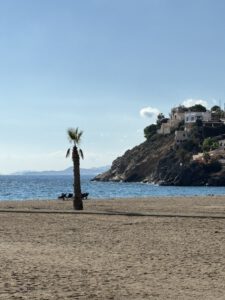
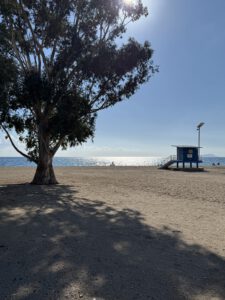
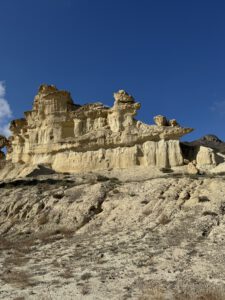
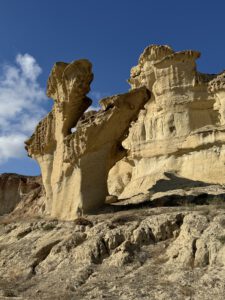
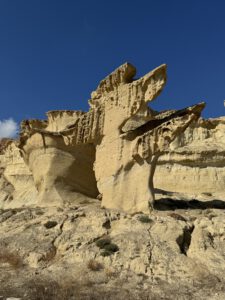
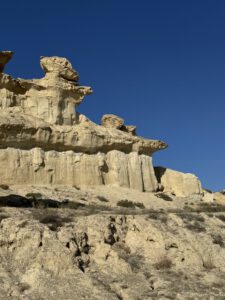
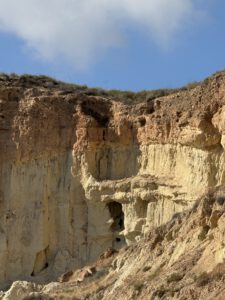
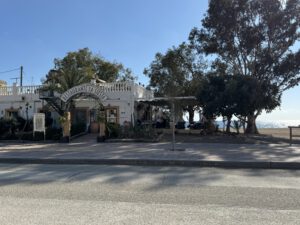
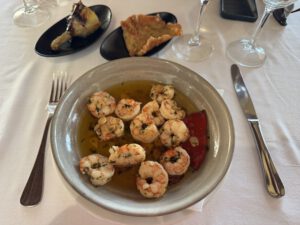
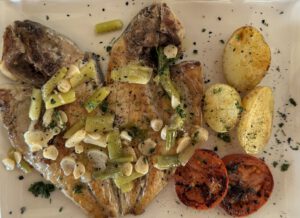
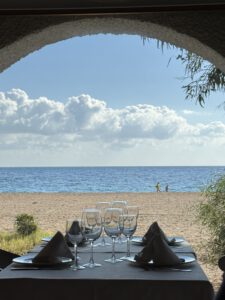
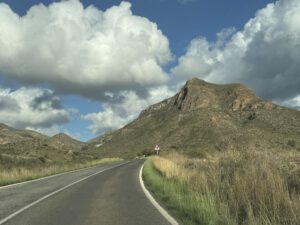
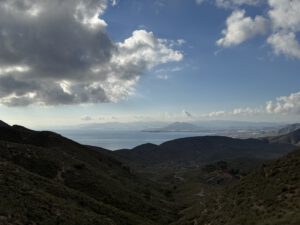
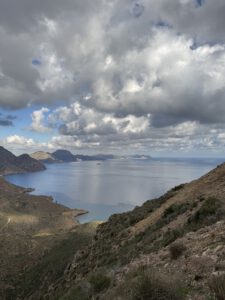
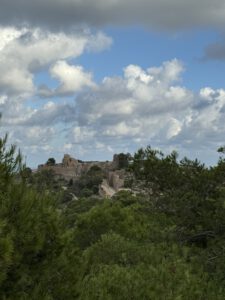
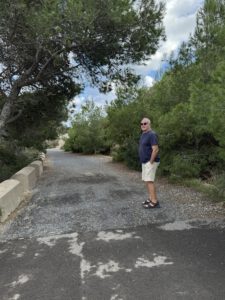
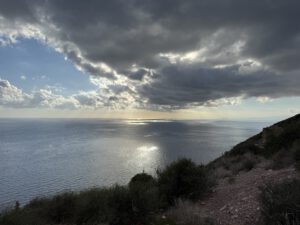
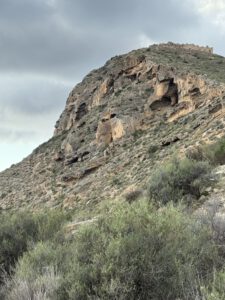
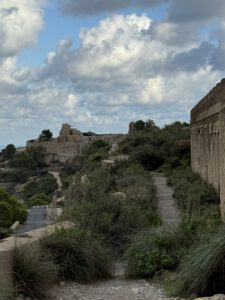
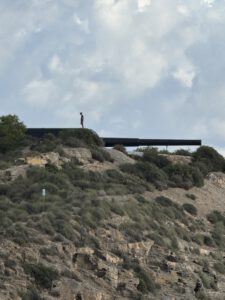
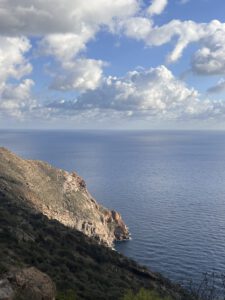
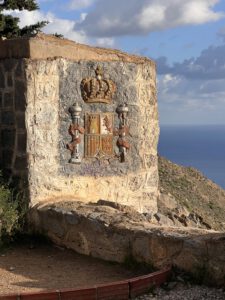
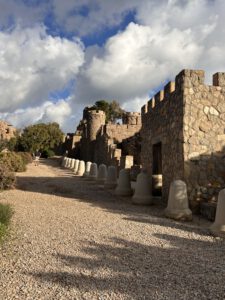
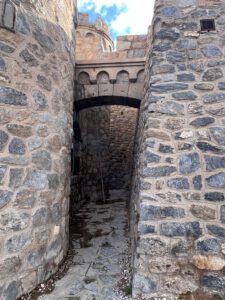
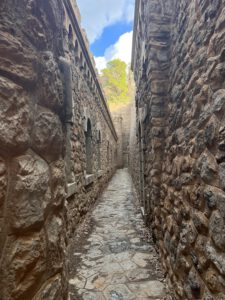
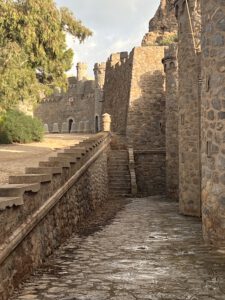
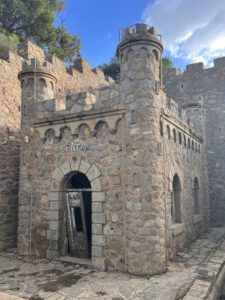
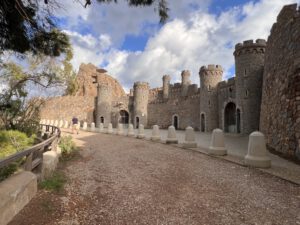
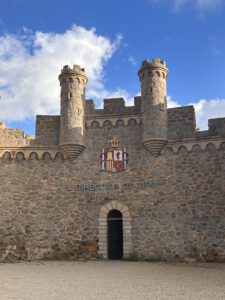
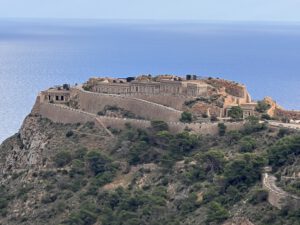
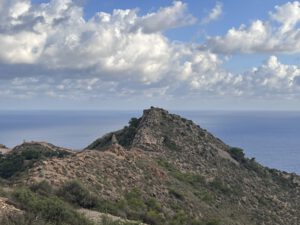
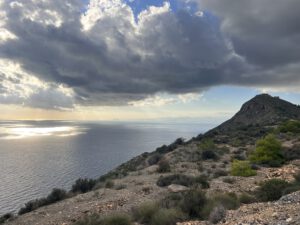
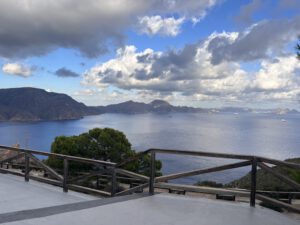
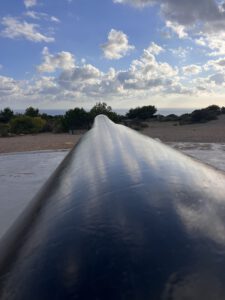
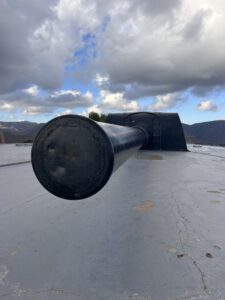
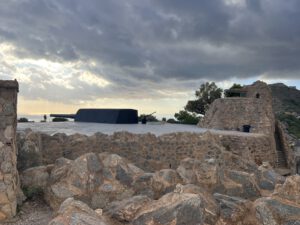
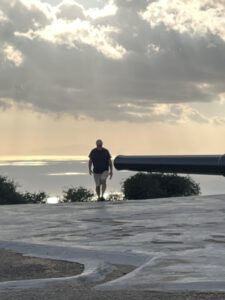
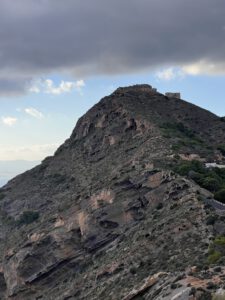
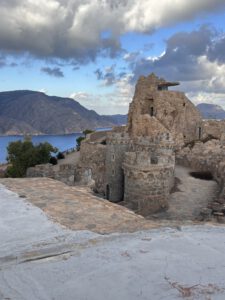
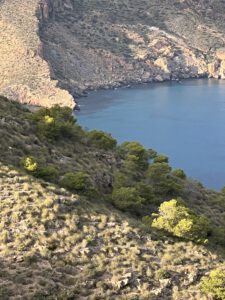
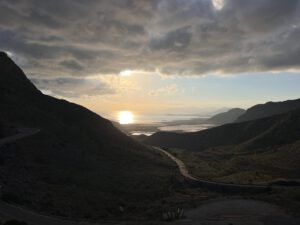
We’re heading south toward Mazarrón. However, we won’t be visiting the town of Mazarrón. Our destination lies a bit further west in Bolnuevo. That’s where the Las Gredas de Bolnuevo natural monument is located—heavily eroded sandstone cliffs that stand out from their surroundings with their whimsical shapes. It never ceases to amaze me what works of art nature can create! And somehow, you might think that the artist Salvador Dalí drew some inspiration for his paintings here. Right across the way is a beautiful beach and a beachside restaurant. Tempting! And after seeing all these sights, we can’t resist the temptation. Without much hesitation, we stop at the restaurant La Siesta de Oliver. Not our worst decision, because a short while later we’re feasting on grilled sea bream, shrimp fritters, artichokes stuffed with foie gras, and a pan of scampi—all with a view of the sea. Delicious! Well-fortified, we continue on our way. We’re heading toward our former anchorage, La Azohia. Charming little villages with chic vacation homes stretch along the coast. It reminds us a little of the Algarve. Before reaching La Azohia, we turn off and drive up into the coastal mountains. The road is narrow and very winding, but well-maintained and drivable. And fortunately, there isn’t much traffic on the road, so we don’t have too much oncoming traffic. That’s a good thing! With every turn, the view becomes more impressive. At the end of the road, we reach the Batería de Castillitos. On the cliffs of Cabo Tiñoso, a fortress modeled after a medieval castle was built in the 1930s. It served to protect the naval base in Cartagena and was officially decommissioned in 1994. The fortress has been a designated historic landmark since 1997. In addition to the Disney-like walls, there are two gigantic Vickers cannons to marvel at. These guns could fire shells weighing nearly a metric ton up to 35 kilometers away. Today, they are locked and serve only as climbing structures for the occasional visitor. We enjoy the panoramic view of the Mediterranean. The sun and the clouds create an atmospheric play of light. A little below, we can spot the Batería del Jorel; above it lies the Batería del Atalayón. Cartagena was definitely well-protected in the past! We drive back down the winding road and, after an eventful day, arrive back in Cartagena in the late afternoon. No sooner are we back on board than Juan Pedro stops by with our repaired cockpit refrigerator. The evaporator was replaced, and now the refrigerator should be working properly again. An overnight test will show whether the repair was successful. We spend the rest of the day relaxing and watch one of our favorite shows, MareTV, in the evening. We’re heading to Bergen, Norway’s rainiest city. Oops, couldn’t someone have told us that sooner? Or does the rain just fall as snow in the winter anyway? And why does that even matter to us here in Cartagena?! We’ll see…
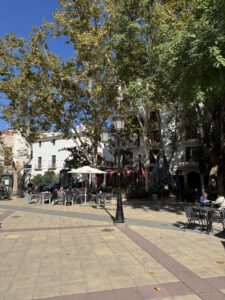
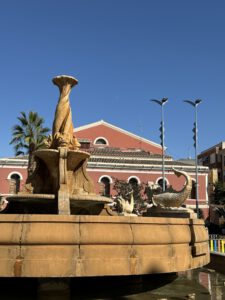
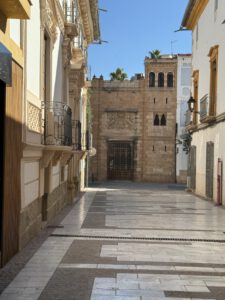
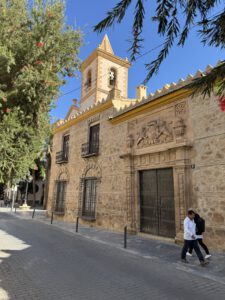
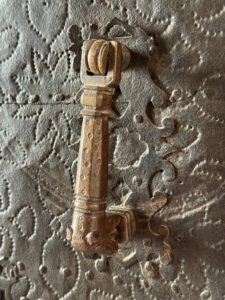
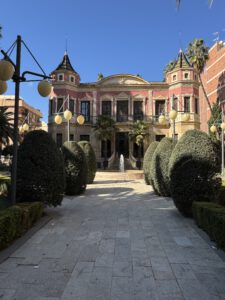
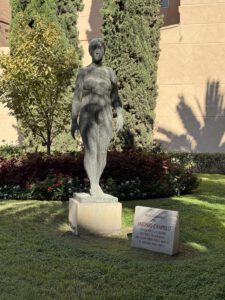
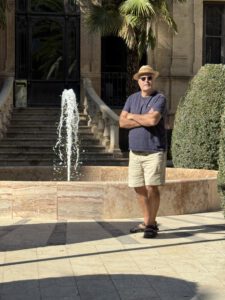

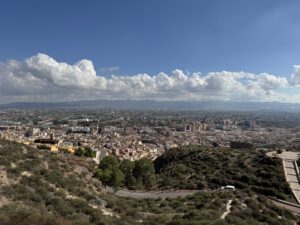
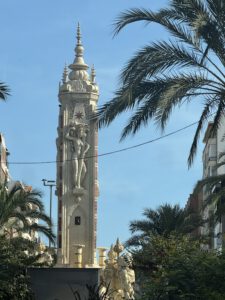
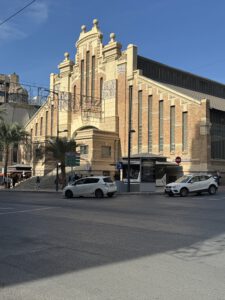
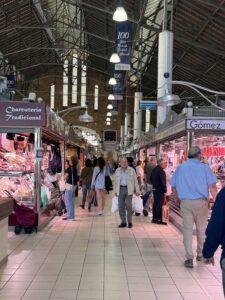
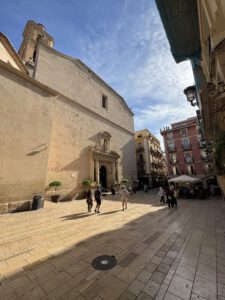
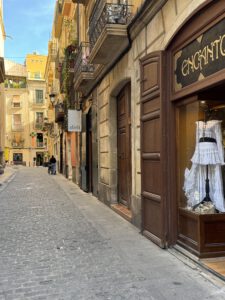
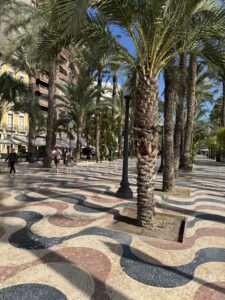
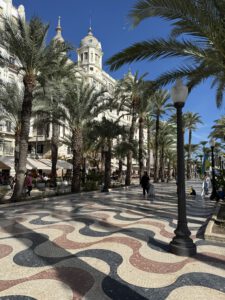
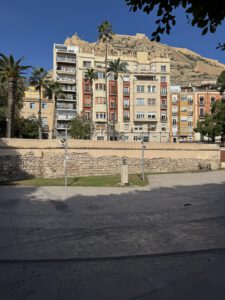
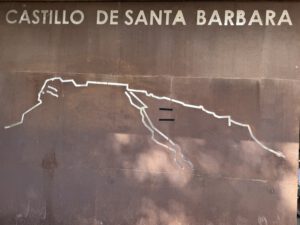
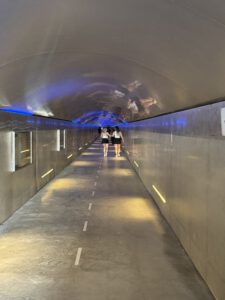
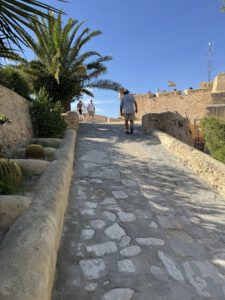
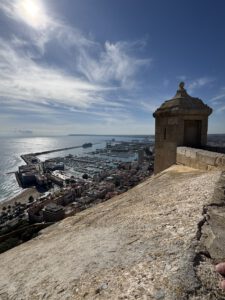
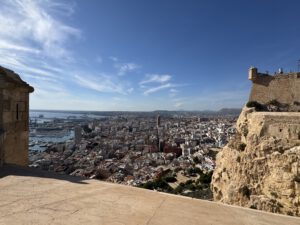
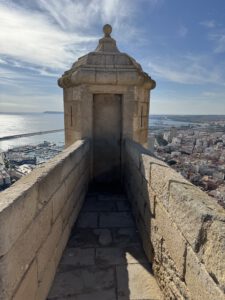
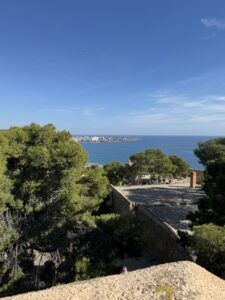
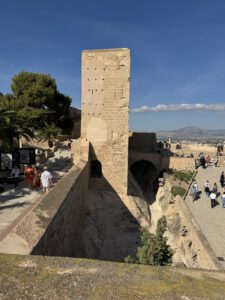
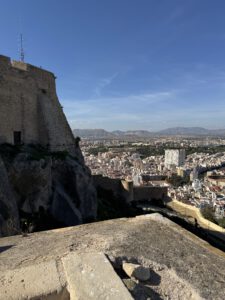
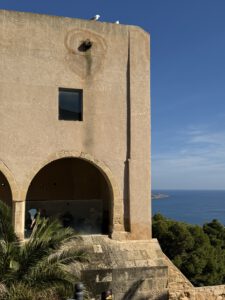
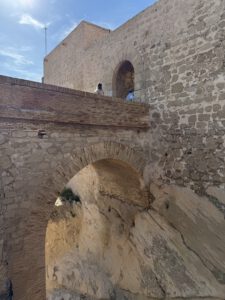
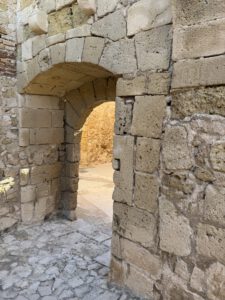
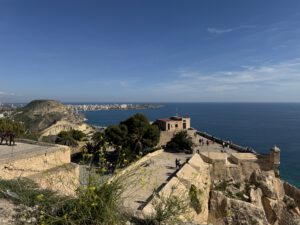
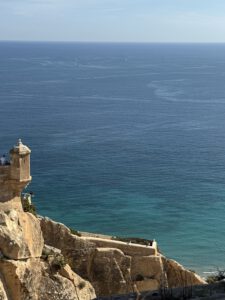
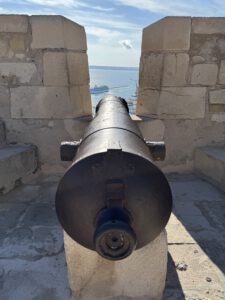
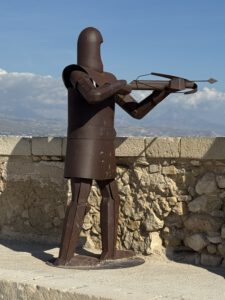
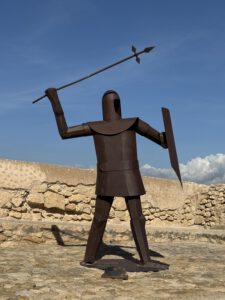
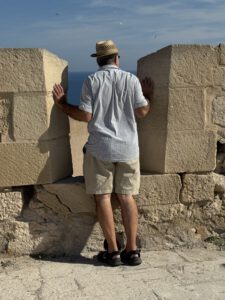
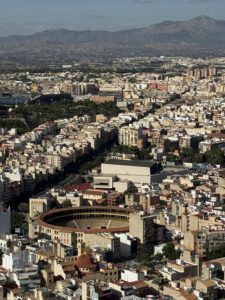
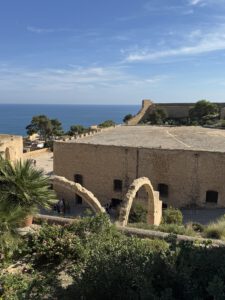
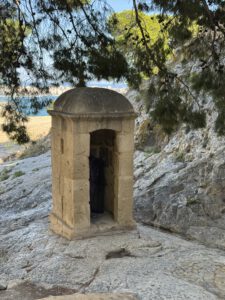
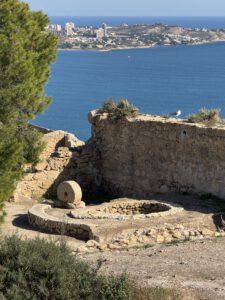
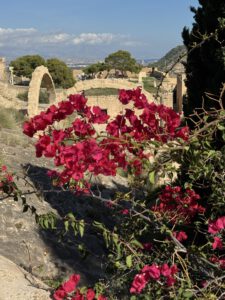
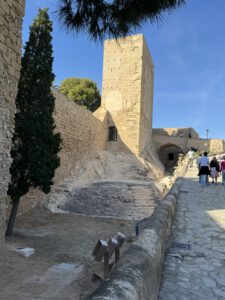
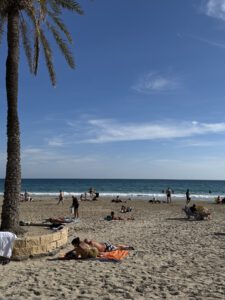
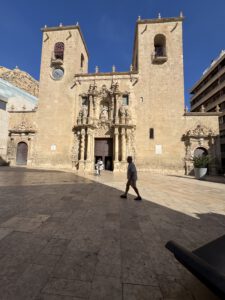
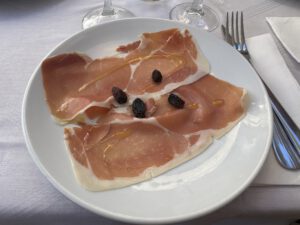
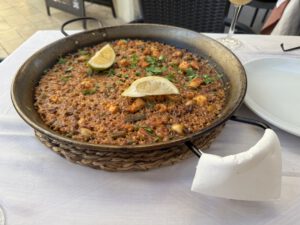
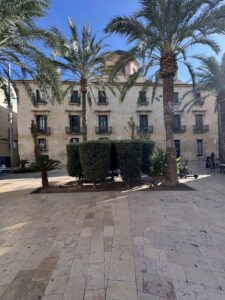
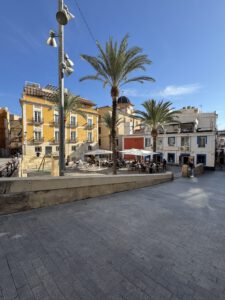
It’s Friday again! And it’s bitterly cold! Only 17° C in the morning. But eventually the sun peeks out from behind the hills and brings back the usual warmth. It’s our last day with the car, so we set out on one last combined sightseeing and shopping tour. This time we’re heading to Alicante. Funnily enough, Google Maps—which we use as our GPS—pronounces it “Ali Kante.” According to Google, we’re starting from Kater Gena. But Kater Lucky stays on board, as always. The drive to Alicante takes about an hour and a half and goes along a toll highway. Although Alicante has fewer residents than Murcia, the city feels more like a big city to us. From the highway exit, we struggle through the traffic and it feels like it takes forever before we finally reach our intended parking garage. Our first stop is the impressive Mercat Central d’Alacant market hall. The historic central market, dating from the early 20th century, is a gourmet paradise with fresh fish, top-quality ham, and small tapas bars. We’re really sorry we can’t buy anything here, since we’re only at the beginning of our day’s itinerary. We continue toward the sea through the beautiful old town. Here, too, tapas bars and charming cafés line the streets. Every small square is furnished with seating. We finally reach the Explanada de España, a palm-lined promenade about 500 meters long right by the harbor. It’s paved with a wave-like mosaic pattern made of over six million tri-colored marble stones and flanked by some truly magnificent villas. We walk north and catch our first glimpse of the imposing medieval Castillo de Santa Bárbara. It towers high atop Mount Benacantil and offers a sweeping panoramic view of the coast—a sight we don’t want to miss. We don’t have to climb the 166 meters on foot; instead, we can take an elevator. The elevator travels straight up through a 142-meter-deep shaft right through the mountain. We patiently get in line and pay 2.70 euros per person. This fee already includes admission to the fortress grounds. The museum, however, costs extra. And unfortunately, Axel is too young. The ride would actually be free for those 65 and older! After buying our tickets, we walk along a long tunnel to the elevator, where we wait again, since only 10 people fit in the elevator at a time. Incidentally, the elevator had already been inaugurated and was extensively modernized in 2011. Finally, it’s our turn, and in no time at all we’re transported to the middle level of the fortress. Santa Bárbara is one of the largest medieval fortresses in Spain and truly offers an impressive view of the city, the harbor, and the coast. On the middle level are the Baluarte de la Reina, the Macho del Castillo watchtower hanging outside the walls, and buildings dating back to the 16th century. We walk across a small bridge to the uppermost level, La Torreta. Here we find the old keep, the Torre del Homenaje, the oldest Moorish ruins dating back to the 9th century, and the Plaza de Armas. And, of course, this is where you get the best panoramic view. We continue on to El Revellín del Bon Repós, the lowest level, whose buildings date primarily from the 18th century. We head back to the middle level and take the elevator down again. We walk back to the old town along the city beach, Platja del Postiguet. The beach is teeming with sun-seekers, and people are happily swimming in the sea. Is it really November? All these sights and experiences have worked up our appetites once again. We find a nice tapas bar and order the lunch special for 16 euros. It consists of Serrano ham—interestingly served with four raisins—for me, and ham croquettes with papas bravas for Axel. Next up is a huge paella alicantina with seafood and chicken, which we can’t quite finish. But there’s just enough room left in our stomachs for dessert: crème caramel and crepes with chocolate sauce. Well-fed, we continue through the old town and back to our car. The traffic has thinned out a bit, so we’re quickly back on the highway heading toward Cartagena. We exit at La Zenia and take advantage of the opportunity once again to stock up on drinks at Al Campo for the next few weeks without a car. By late afternoon, we’re back on board and, exhausted, put our feet up in the cockpit.
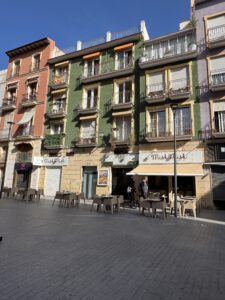
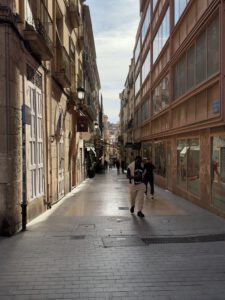
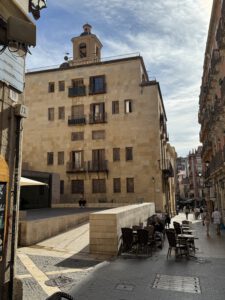

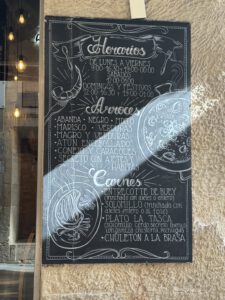
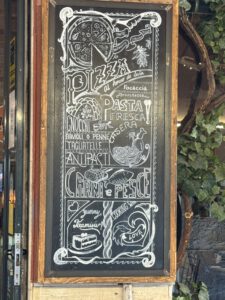
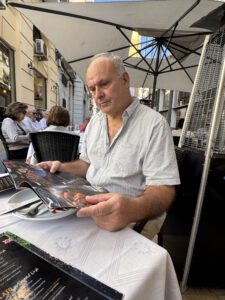
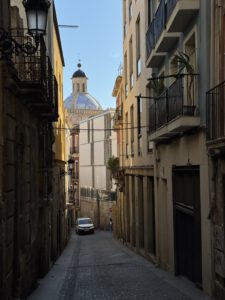
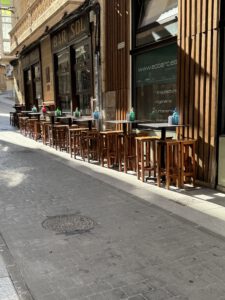
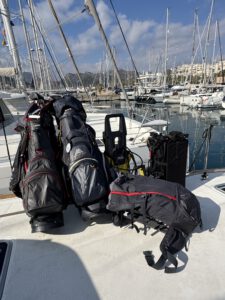
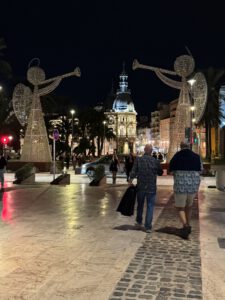
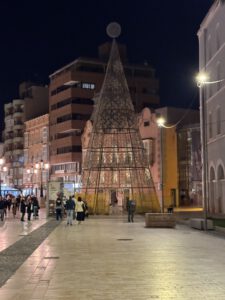
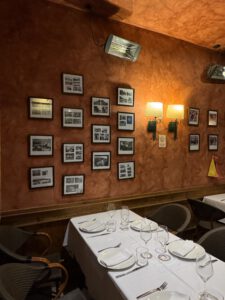
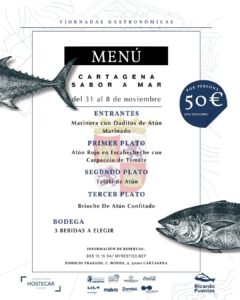
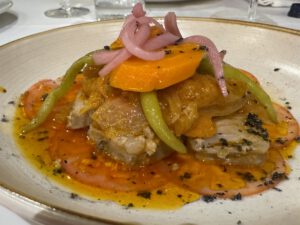
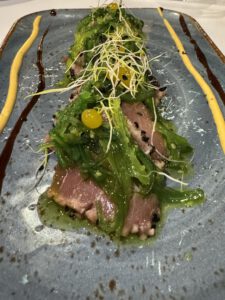
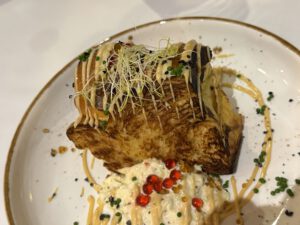
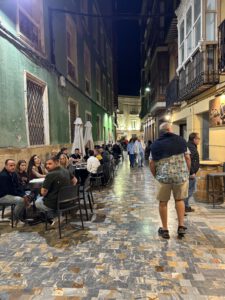
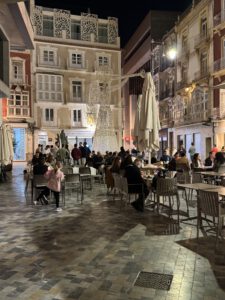
On Saturday morning, Axel returns our rental car to Europcar, and our daily routine on board resumes. We have to do laundry, clean, and get ready for the trip. Our travel bags, which we’ve had since New Zealand, need to be taken out of the storage locker and checked for mold and mildew. Unfortunately, on board, you never know exactly where moisture is spreading and things start taking on a life of their own. Once again, the task sounds simpler than it really is, because our bags are, of course, hidden all the way at the bottom of the storage locker—under the golf gear, the diving equipment, and the handcart, along with various other items. At least the bags look good and don’t have any mildew stains or anything like that. Amid all this chaos, mechanic Juan Pedro is hard at work on our cockpit refrigerator. The test was successful, but a newly installed, more powerful fan is too loud and kept me awake all night. So, everything’s out again, and two quieter fans have been wired in series. According to Juan Pedro, the existing ventilation isn’t sufficient for the hot summer temperatures, which is why the evaporator was overloaded. Meanwhile, Axel is still trying to repair Kay and Brigitte’s autopilot remote control and is quickly installing a warning system he developed and built himself to protect our onboard electrical system from overload. And in between, I run the vacuum cleaner over the floor. In the end, everything is somehow tidy again, and we’ve earned a reward. So in the evening, we go out to eat with Brigitte and Kay once more. In Cartagena, bluefin tuna is celebrated at the Sabor a Mar gourmet festival, and a few restaurants are offering special menus for the occasion. We opt for the set menu at Las Termas del Pincho for 50 euros per person. After a delicious Aperol Spritz aboard the NOA, we head into downtown at 7 p.m. Preparations for Christmas have begun in Cartagena as well, and the decorations—though not yet lit—hint at something grand. The pedestrian zone is bustling with life, and half of Cartagena seems to be out and about. We arrive at the restaurant where we’d already been a few weeks earlier with Julia and Paul from Spisea. Today we’re seated on the other side of the street, partially outdoors in front of a large, open window. After a brief discussion about the drinks included in the set menu and placing our orders, the first course of our meal is on the table in no time. It’s Marinera con Daditos de Atún Marinado. The Marinera is arguably the region’s most famous tapa and consists of Russian potato salad on an oblong cracker stick, traditionally garnished with an anchovy. In our first course, the anchovy has been replaced with marinated tuna cubes, and it tastes absolutely delicious. No sooner have we finished it than the next course, Atún Rojo en Escabeche con Carpaccio de Tomate, is already in front of us. On wafer-thin tomato slices—which leave us wondering how anyone can slice tomatoes so thinly—is a mound of cooked but chilled tuna topped with pickled vegetables. Lightly seasoned with Middle Eastern spices and equally delicious. The portions are so large that we’re actually already full. But there’s more to come. Next up is Tataki de Atún: raw tuna slices with wakame and passion fruit pearls. Needless to say, this course is also a delight. Unfortunately, we can’t manage to finish the fourth and final course entirely. A large piece of light, airy brioche filled with tuna confit sits before us. As delicious as it is, we simply can’t fit any more into our stomachs. Stuffed to the brim and happy, we leave the restaurant and stroll back to the marina. In the city center, tables and chairs have now been set up in nearly every alley, all occupied by hungry guests. It’s amazing how much life there can be in a city! And this is in early November. We decide to end the evening with a nightcap in the cockpit and eventually fall into our bunks, happy and tired.

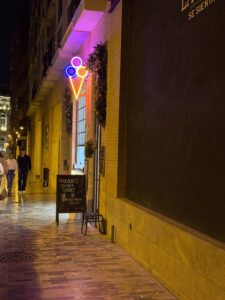
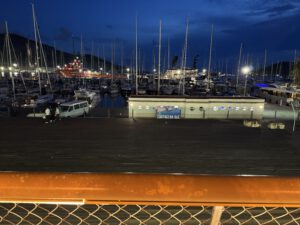
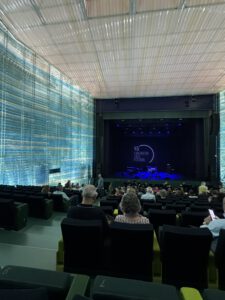
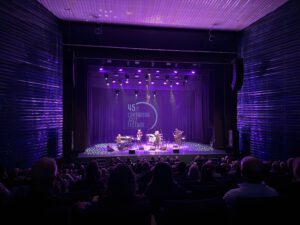
Sunday starts off a bit hazy, but with slightly warmer morning temperatures. We start the day off leisurely with a delicious breakfast in the cockpit. Afterward, I work on this report and the accompanying posts for Instagram and other social media. The day flies by, and before we know it, it’s time for the Sunday BBQ again. The group is growing, and thankfully, the marina has provided ten more tables and new chairs. So there’s a spot for everyone. We can’t stay long this time, though, because we still have some evening plans ahead of us. The Cartagena Jazz Festival kicked off before the end of October. Through November 15, there’s a mix of public, free performances and paid concerts. And for tonight, we’ve booked tickets for ourselves, Brigitte, and Kay to see Kurt Elling & The Yellow Jackets at the Auditorio El Batel. The concert hall isn’t far away. We stroll out of the marina grounds and we’re already there. On the rooftop terrace of the Auditorio, we enjoy another glass of cava before heading into the hall. We have a great view and extremely comfortable seats, but unfortunately the concert isn’t sold out. It’s a shame, because Kurt Elling & The Yellow Jackets are truly worth hearing. The Chicago-born singer has already won two Grammy Awards. We’re particularly impressed by his duet with drummer Will Kennedy, in which the two engage in a veritable battle of vocals and drums. The rest of the band—pianist Russell Ferrante, saxophonist Bob Mintzer, and bassist Dane Alderson—also impress with their solos and flawless ensemble playing. All in all, it’s a very successful evening, which we wrap up with a glass of wine with Brigitte and Kay back at our place in the Cockpit.
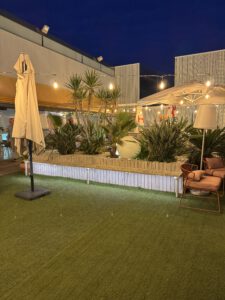
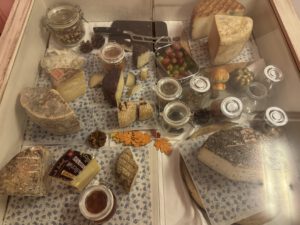



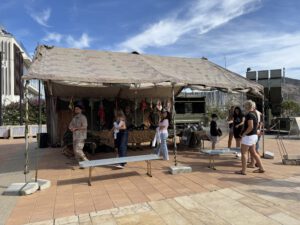
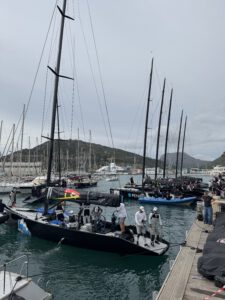
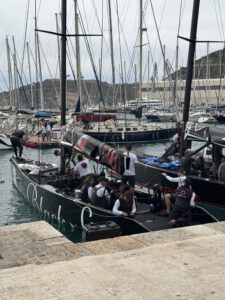
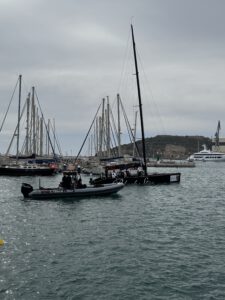
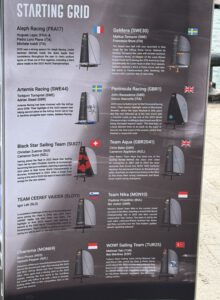
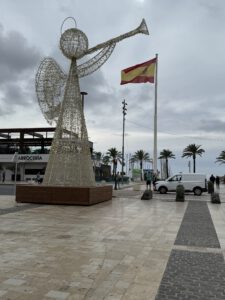
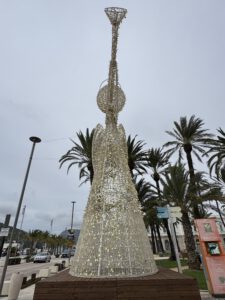
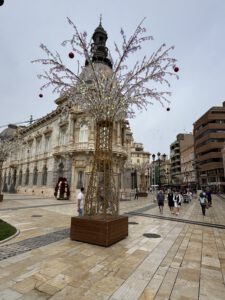
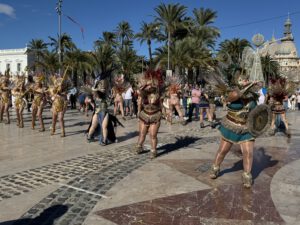
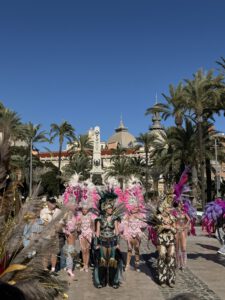
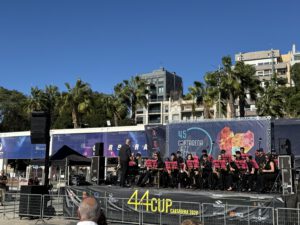
The new week begins with a storm warning. The two storm systems, Bruna and Charles, are sweeping across the Canary Islands and racing toward Portugal and Spain. Even the start of the ARC+ regatta was postponed because of them. Here in Cartagena, Charles is expected to arrive on Wednesday, but fortunately, he won’t bring too much wind or rain with him. After a day of gray skies and rain, the sun is shining again the very next day. To keep us from getting too bored, Cartagena is once again offering a nice lineup of events. The international, high-caliber RC44 regatta series is making a stop in Cartagena. In addition to the races on identical carbon-fiber racers, there’s an extensive program of events along the marina. From a maritime market to a meet-and-greet with the professional sailors to an open-air concert by a big band. In the city center, the elaborate Christmas lights are being put up and are waiting to be turned on. But apparently, this won’t happen until after we return from Germany. And the carnival season is kicking off. It seems we’re not missing a thing here in Cartagena compared to Brazil! And here’s a little personal victory for me: I can finally play the accompaniment to Billy Joel’s „Piano Man“ without any mistakes!

After some wonderful weeks in the warmth of Cartagena, we’re heading into the cold next week. We’re flying to Germany and will start our vacation from there. We’re looking forward to great experiences up north, lots of get-togethers with family and friends, and we hope that packing a little sunshine in our luggage doesn’t violate any of Ryanair’s rules. Meanwhile, our cat Lucky is staying on board with his cat sitter Jack and studying with him for chemistry exams. In any case, it’s going to be exciting once again.